










Product Details
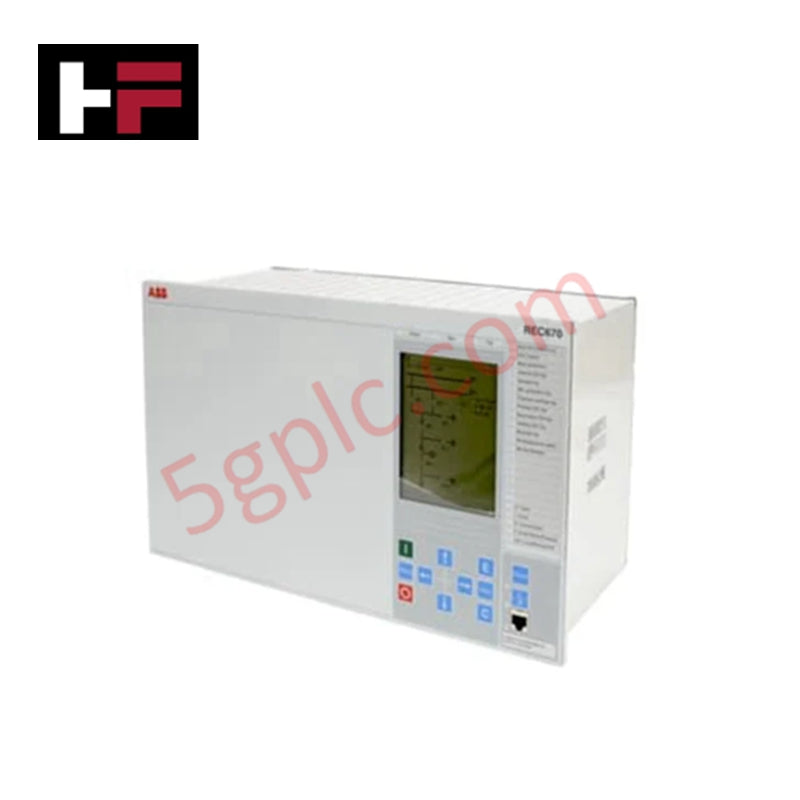
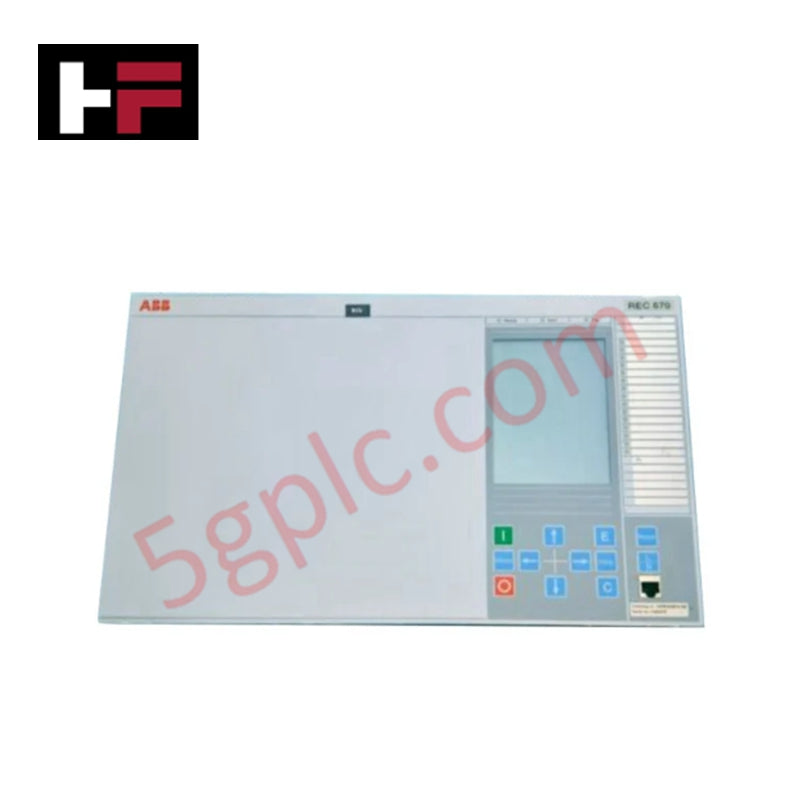
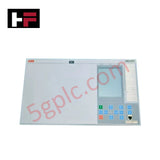
The ABB 1MRK000008-MB, also cataloged as the REC 670 LCD-HMI Display Unit, operates as a dedicated hardware component for local visual tracking and control execution within substation automation networks. The device processes embedded graphical layouts and localized bus system states to render real-time switchgear positioning, alarms, and analog measurements across its display faceplate.
Hardware Specifications
| Parameter | Specification |
|---|---|
| Model | 1MRK000008-MB |
| Brand | ABB |
| Origin | Sweden |
| Product Type | LCD-HMI Display Unit |
| Display Configuration | Medium-sized graphic display rendering ANSI symbols |
| Frame Size | 3/4 x 19 inch format |
| Operating Temp | -20 to +70 deg C (Standard platform environment) |
| Power Consumption | Sourced via internal CPU module connection rails |
| Weight | Standard subrack panel fascia specification |
| Dimensions | Fixed to fit 3/4 x 19 inch rack frame window openings |
Profinet / EtherNet/IP Deterministic Networks Performance
To guarantee instant update latencies on the graphical screen, the local registration layer maps data packets received from the main CPU module. This interface structure coordinates with fixed parameters matching the backplane bus communication velocity licences configured inside the primary Bay Control Unit (BCU) subrack. The static I/O density scaling configuration requires absolute firmware flash compatibility between the liquid crystal display logic board and the main calculation sub-assemblies to prevent screen refresh drift or communication packet timing failures during localized electrical grid transitions.
Frequently Asked Questions
Q: Does the 1MRK000008-MB HMI display unit support independent hot-swap replacement routines?
A: No. live extraction of the front fascia HMI unit during active power distribution is restricted. The subrack auxiliary power supply lines must be completely isolated before disconnecting the ribbon cables linked to the internal processing boards to prevent communication bus collapse.
Q: How are customized ANSI control symbols updated or loaded into this hardware component?
A: Graphical symbols and Single Line Diagrams (SLD) are compiled within the engineering application and transferred directly to the internal flash memory chip via the primary controller processor interface.
Q: What actions occur if a firmware flash mismatch is present between this HMI module and the BCU backplane?
A: A firmware variance will disable communication across the internal display bus, causing a blank screen matrix or yielding a standard initialization failure code on the LED indicator block.
Field Installation Guidelines
- Fascia Seating and Mounting Alignment: Mount the 3/4 x 19 inch frame assembly into the predefined panel cutout. Secure all retention lugs evenly along the perimeter to maintain uniform gasket compression against dust infiltration.
- Ribbon Cable Interface Security: Verify that the high-density internal ribbon cable is fully seated into the locking collar sockets. Improper latching generates signal reflection and distorts symbol rendering on the LCD panel.
- Static Discharge Precautions: Ground all installation tools and wear an approved ESD wrist strap linked to the chassis earth terminal prior to handling the rear connection boards of the display unit.
Additional Information
- 100% Genuine Parts: All products are original and authentic, ensuring reliable industrial performance.
- 30-Day Refund Guarantee: Return any in-stock item within 30 days in original, unopened packaging for a full refund (excluding shipping and fees).
- 12-Month Warranty: Covers defects in materials or workmanship; excludes misuse, normal wear, or unauthorized modifications.
- Worldwide Shipping: We ship via USPS, UPS, FedEx, and DHL. Delivery times vary by country and may be subject to customs or import fees.
- Support & Contact: Technical and warranty assistance is available anytime. Contact us here: Contact.
- Purchase Guidance: Check product specifications and compatibility carefully before ordering to ensure proper application.









Tech & Buying Guide

Demystifying the DDE Protocol in Legacy Industrial Automation Systems
Modern control systems rely heavily on seamless interprocess communication to exchange operational data between software programs. Microsoft first introduced the Dynamic Data Exchange (DDE) protocol in 1987 to enable real-time data sharing. In factory automation, DDE served as an early bridge between control software and Windows desktop applications. Therefore, understanding DDE mechanics provides crucial insights into how legacy industrial networks established software-level connectivity.

Demystifying CPU Communication Ports in Siemens PLC Architectures
Industrial automation relies heavily on robust data exchange between devices. Without seamless connectivity, field instruments, network switches, human-machine interfaces, and programmable logic controllers cannot coordinate effectively. Therefore, understanding the various CPU communication ports available in Siemens hardware ensures efficient factory automation design and seamless system integration.

Mastering the Siemens PLC Scan Cycle: How the CPU Executes Automation Programs
Industrial automation relies heavily on programmable logic controllers (PLCs) to manage complex manufacturing processes. Many engineers dive straight into programming without mastering the underlying architecture. However, understanding how a PLC CPU executes a program ensures reliable system design. Therefore, mastering the scan cycle optimizes both performance and troubleshooting in modern control systems.