










Product Details
Product Overview
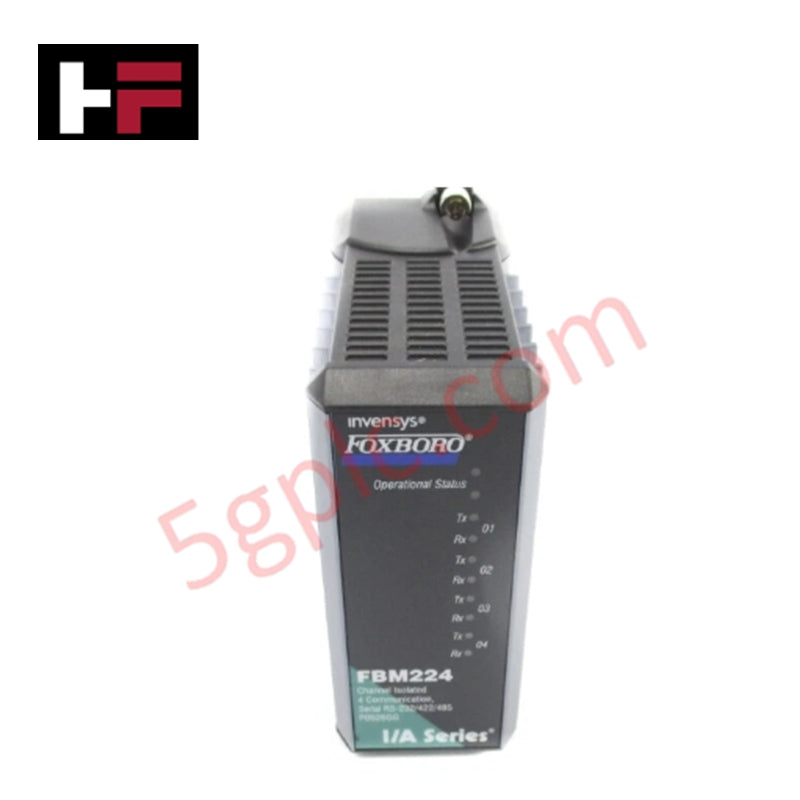
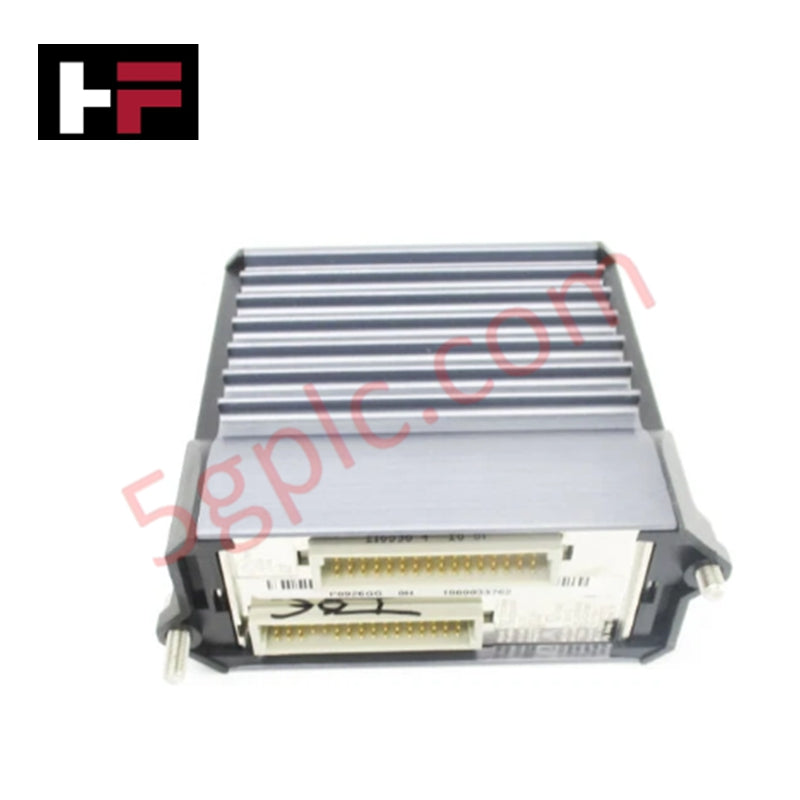
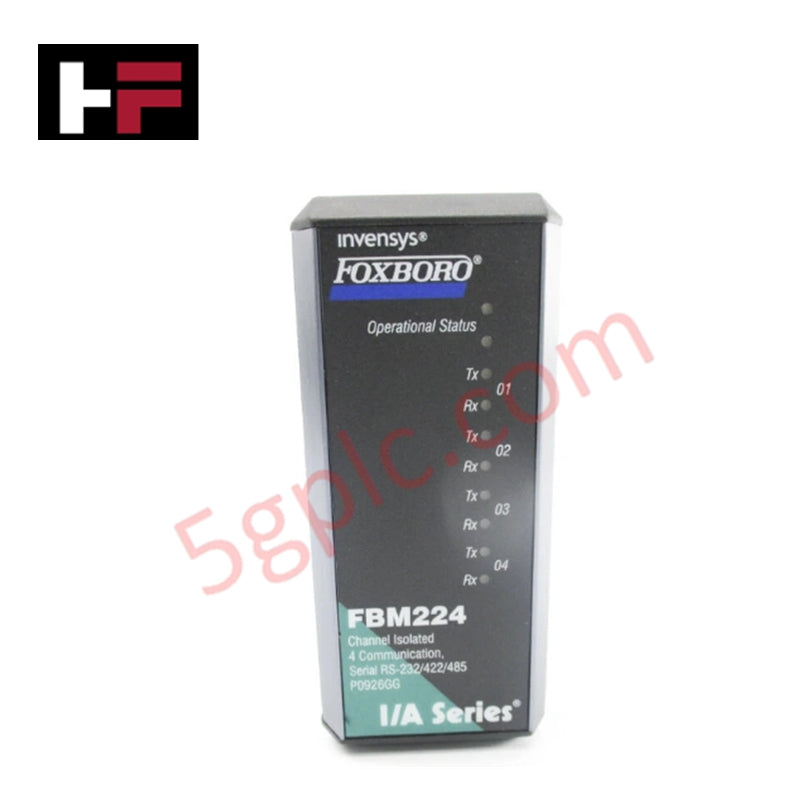
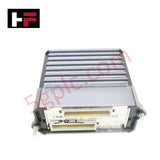
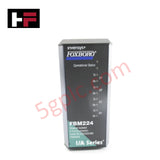
The Foxboro FBM224 (P0926GG) functions as a high-performance serial communication interface within the Foxboro I/A Series Distributed Control System (DCS). This module manages data exchange between the DCS and external field devices via RS-232, RS-422, or RS-485 protocols. It serves as a critical link for integrating third-party PLCs, motor controllers, and smart instrumentation into a unified control strategy. We supply this unit as 100% Brand New and Original, ensuring your network maintains factory-certified signal integrity and long-term hardware availability.
Technical Specifications
| Feature | Specification Details |
| Manufacturer | Foxboro (Schneider Electric) |
| Model / Part Number | FBM224 / P0926GG |
| Interface Standards | RS-232, RS-422, RS-485 |
| Operating Temperature | -20 to +60°C (Module) / -20 to +70°C (TA) |
| Environmental Rating | Class G3 (Harsh) per ISA Standard S71.04 |
| Vibration Resistance | 7.5 m/s² (0.75 g) from 5 to 500 Hz |
| Module Dimensions | 102 mm x 45 mm x 104 mm |
| Module Weight | Approximately 284 g (10 oz) |
| Cable Connection | 37-pin male D-subminiature |
| Housing Material | Polyamide (PA) for Termination Assembly |
Engineering Advantages
The FBM224 P0926GG solves complex integration and environmental challenges in industrial topologies:
-
Survives Corrosive Atmospheres: The module carries a Class G3 (Harsh) rating. This specialized construction protects internal circuitry against high concentrations of moisture and corrosive gases, preventing the premature hardware failure common in refineries and chemical processing plants.
-
Versatile Mounting Configurations: The FBM224 mounts onto a Modular Baseplate with options for horizontal or vertical orientation. This flexibility allows engineers to install the module on standard DIN rails or within 19-inch racks, optimizing cabinet space in high-density I/O environments.
-
Flexible Field Termination: Multiple Termination Assembly (TA) options support varied wiring requirements. The RH926GH (Compression Screw) assembly accommodates solid or stranded wires from 24 to 12 AWG, while the P0926PA (Ring Lug) provides secure connections for high-vibration applications.
-
Low-Smoke Zero-Halogen (LSZH) Safety: The system utilizes LSZH termination cables (Type 5). In the event of a fire, these materials emit limited smoke and zero toxic halogen gases, protecting both personnel and sensitive electronic equipment in control rooms.
-
Robust Vibration Tolerance: With a resistance of 7.5 m/s², the FBM224 maintains stable communication links even when mounted in cabinets subjected to mechanical resonance from nearby heavy machinery.
FAQs
-
Which protocols does the FBM224 support?
The FBM224 hardware provides the physical layer for RS-232, RS-422, and RS-485. The specific protocol (such as Modbus) depends on the software driver loaded into the I/A Series system.
-
What is the difference between P0926GH and RH926GH?
RH926GH is the current production version and completely supersedes the older P0926GH part number. It provides improved compression screw termination for field wiring.
-
How far can I run the serial cables from the TA?
For RS-232, cables generally reach up to 15 m (50 ft). RS-422 and RS-485 configurations support significantly longer distances, typically reaching up to 1,200 m (3,937 ft) depending on the baud rate and cable quality.
-
Is this a used or refurbished module?
No. We guarantee this unit is 100% Brand New and Original. It arrives in factory-sealed packaging, ensuring you receive a module with full MTBF (Mean Time Between Failures) potential and no previous field stress.
Additional Information
- 100% Genuine Parts: All products are original and authentic, ensuring reliable industrial performance.
- 30-Day Refund Guarantee: Return any in-stock item within 30 days in original, unopened packaging for a full refund (excluding shipping and fees).
- 12-Month Warranty: Covers defects in materials or workmanship; excludes misuse, normal wear, or unauthorized modifications.
- Worldwide Shipping: We ship via USPS, UPS, FedEx, and DHL. Delivery times vary by country and may be subject to customs or import fees.
- Support & Contact: Technical and warranty assistance is available anytime. Contact us here: Contact.
- Purchase Guidance: Check product specifications and compatibility carefully before ordering to ensure proper application.


Tech & Buying Guide

Essential Motion Control Commands: A Practical Guide for Engineers
Automation engineers often rely on precise position and speed control to drive modern factory machinery. Modern industrial systems, such as Programmable Logic Controllers (PLCs) and Distributed Control Systems (DCS), depend heavily on standardized motion instructions. Mastering these commands ensures operational safety, protects mechanical components, and optimizes cycle times across production lines.
Mastering Modern Industrial Joystick Controls in Heavy Automation
Industrial joysticks play a pivotal role in human-machine interaction across heavy material handling and mobile hydraulics. These tactile controllers translate complex operator movements into precise electrical signals for PLCs, motion controllers, and DCS networks. Consequently, selecting and installing the right joystick architecture ensures operator safety, reduces fatigue, and optimizes equipment performance.

Navigating Industrial Automation Failures: Types, Causes, and Mitigation Strategies
Modern manufacturing relies heavily on automated control systems to maximize throughput and maintain product quality. However, unplanned downtime in industrial automation can cost facility operators thousands of dollars per hour. Understanding how programmable logic controllers (PLCs), distributed control systems (DCS), and field instrumentation fail empowers engineering teams to implement robust preventive maintenance strategies.