












Product Details
Configured for high-integrity optical data transmission in Honeywell Series C MTL distributed control systems, the Honeywell 51203192-201 (51203192-201 Fiber Optic Extender Cables) provides direct physical/electrical execution.
Hardware Specifications
| Parameter | Specification |
|---|---|
| Model | 51203192-201 |
| Brand | Honeywell |
| Origin | USA / Global Manufacturing |
| Weight | 0.35 kg (0.77 lb) |
| Dimensions | Standard factory-terminated extender length |
| Operating Temp | -40 to +85 deg C |
| Power Consumption | Passive optical component |
| Product Type | Fiber Optic Extender Cable |
| System Compatibility | Honeywell Series C MTL systems |
| Transmission Method | Optical data communication |
| Fiber Type | Multimode fiber, 62.5/125 um |
| Jacket Material | High-strength protective fiber optic jacket |
| EMI / RFI Immunity | Complete immunity due to optical transmission |
FOUNDATION Fieldbus / Profibus PA Connectivity
The 51203192-201 fiber optic extender cable provides dielectric communication links between Series C controllers, remote I/O modules, and process field networks. When deployed in proximity to field instrumentation buses utilizing FOUNDATION Fieldbus or Profibus PA protocol configurations, the non-conductive multimode fiber structure completely blocks electromagnetic and radio-frequency interference.
This optical isolation eliminates ground loops between distributed node cabinets, preserving channel-to-channel isolation specs and avoiding signal degradation across extended control network distances.
Frequently Asked Questions
Q: Does the 51203192-201 fiber optic cable require external ground bonding?
A: No, because data is transmitted via light pulses through non-conductive 62.5/125 um glass fibers, the cable assembly is inherently immune to ground loops and electrical interference.
Q: What temperature limits apply to the storage and operation of this cable?
A: The cable supports an operating temperature range of -40 to +85 deg C and a storage temperature range of -55 to +85 deg C.
Q: Is this extender cable compatible with Honeywell Series C MTL hardware?
A: Yes, the assembly is specifically engineered for direct interface with Honeywell Series C MTL system architectures and remote optical transceivers.
Field Installation Guidelines
- Inspect optical connector faces with a fiber inspection microscope before installation, cleaning with lint-free optical wipes if contamination is present.
- Maintain the manufacturer's specified minimum bend radius along wireways to prevent optical signal attenuation and micro-bending stress on the glass core.
- Leave protective dust caps fitted on optical connectors until immediate engagement with system transceiver ports.
- Fasten cable runs using flexible hook-and-loop straps rather than tight zip ties to prevent deformation of the high-strength protective jacket.
Additional Information
- 100% Genuine Parts: All products are original and authentic, ensuring reliable industrial performance.
- 30-Day Refund Guarantee: Return any in-stock item within 30 days in original, unopened packaging for a full refund (excluding shipping and fees).
- 12-Month Warranty: Covers defects in materials or workmanship; excludes misuse, normal wear, or unauthorized modifications.
- Worldwide Shipping: We ship via USPS, UPS, FedEx, and DHL. Delivery times vary by country and may be subject to customs or import fees.
- Support & Contact: Technical and warranty assistance is available anytime. Contact us here: Contact.
- Purchase Guidance: Check product specifications and compatibility carefully before ordering to ensure proper application.


Tech & Buying Guide
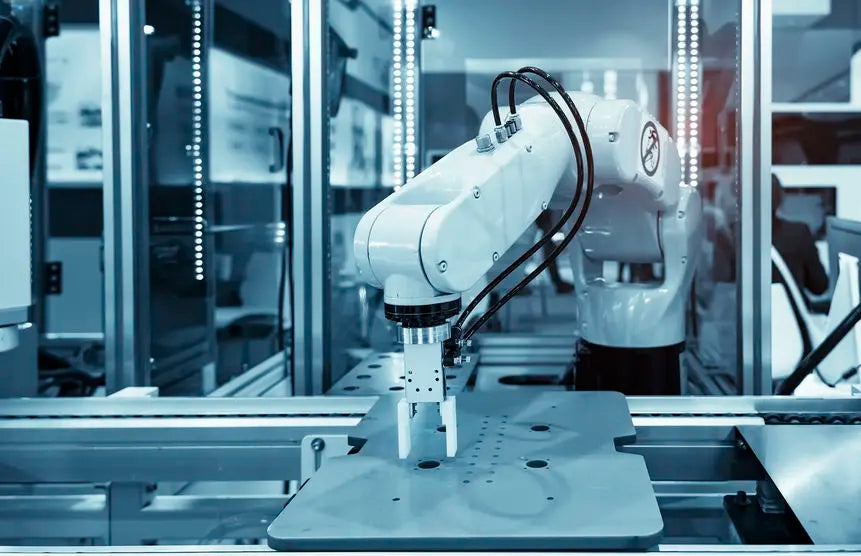
Comprehensive Guide to PLC Types in Modern Industrial Automation
Modern industrial automation relies on programmable logic controllers to govern critical factory operations. System integrators classify PLCs based on scale, hardware architecture, and power supply design. Understanding these core categories enables automation engineers to select the right control system architecture. Consequently, proper hardware selection optimizes performance while minimizing long-term operational costs.

Demystifying the DDE Protocol in Legacy Industrial Automation Systems
Modern control systems rely heavily on seamless interprocess communication to exchange operational data between software programs. Microsoft first introduced the Dynamic Data Exchange (DDE) protocol in 1987 to enable real-time data sharing. In factory automation, DDE served as an early bridge between control software and Windows desktop applications. Therefore, understanding DDE mechanics provides crucial insights into how legacy industrial networks established software-level connectivity.

Demystifying CPU Communication Ports in Siemens PLC Architectures
Industrial automation relies heavily on robust data exchange between devices. Without seamless connectivity, field instruments, network switches, human-machine interfaces, and programmable logic controllers cannot coordinate effectively. Therefore, understanding the various CPU communication ports available in Siemens hardware ensures efficient factory automation design and seamless system integration.