Mastering Modern Industrial Joystick Controls in Heavy Automation
- 〡
- 〡 by WUPAMBO
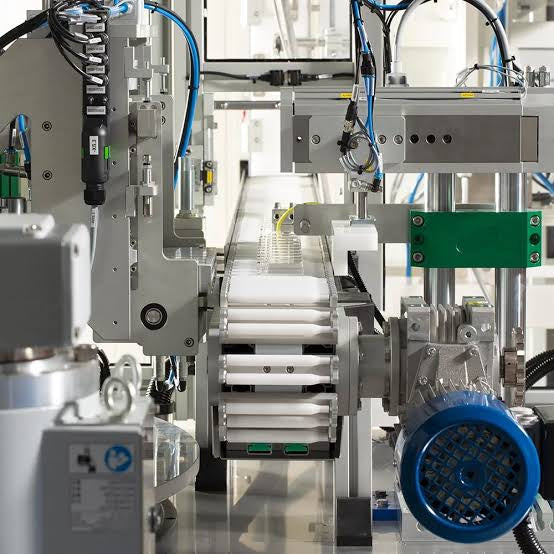
Industrial joysticks play a pivotal role in human-machine interaction across heavy material handling and mobile hydraulics. These tactile controllers translate complex operator movements into precise electrical signals for PLCs, motion controllers, and DCS networks. Consequently, selecting and installing the right joystick architecture ensures operator safety, reduces fatigue, and optimizes equipment performance.
Understanding the Role of Industrial Joysticks
Modern industrial joysticks bridge the gap between human operators and powerful electro-mechanical machinery. Unlike consumer gaming peripherals, industrial controllers feature heavy-duty mechanical stops and rugged environmental sealing. Operators utilize joysticks to maneuver overhead cranes, mining excavators, and automated guided vehicles (AGVs) safely.
Industrial joysticks output either discrete directional signals or continuous proportional values to the control system. Proportional joysticks allow machine operators to regulate travel speed dynamically by varying shaft deflection. Therefore, smooth joystick control prevents mechanical jerk during heavy payload maneuvers.
Key Sensing Technologies Behind Industrial Joysticks
Engineers categorize industrial joysticks by their underlying signal conversion technology and mechanical design. Digital joysticks employ rugged microswitches to register discrete directional inputs for basic motor starters. Conversely, analog variants deliver proportional voltage or current signals corresponding to shaft deflection angle.
Hall Effect joysticks dominate modern mobile hydraulics due to their non-contact magnetic sensing design. Because magnetic sensors eliminate mechanical contact friction, Hall Effect joysticks resist physical wear over millions of duty cycles. Furthermore, optical encoders provide high electromagnetic interference (EMI) immunity in high-voltage industrial environments.
Selecting the Optimal Ergonomics and Axis Configuration
Selecting appropriate joystick mechanics depends heavily on operator mounting constraints and control precision requirements. Handgrip joysticks allow full-palm operation and often house integrated pushbuttons, deadman switches, and thumbwheels. Smaller finger-operated or thumb-controlled joysticks fit neatly into compact HMI consoles and wireless belly-box transmitters.
System designers must determine whether the application requires single-axis or multi-axis directional control. Single-axis joysticks suit dedicated hoist lifting or monorail travel applications. Multi-axis joysticks enable simultaneous multi-directional movement, streamlining complex crane positioning tasks for operators.
Integrating Joysticks with Modern Industrial Networks
Traditional joysticks connect directly to PLC analog input cards using standard 0-10 V or 4-20 mA interfaces. However, modern factory automation architectures increasingly favor digital fieldbus integration. Advanced industrial joysticks incorporate direct CANopen, J1939, or Modbus RTU communication interfaces.
Fieldbus-enabled joysticks transmit diagnostic data, axis positions, and switch states over a single bus cable. Network integration drastically simplifies control panel wiring and reduces commissioning labor. Moreover, digital signal transmission eliminates analog signal degradation caused by long cable runs in large facilities.
Essential Design Factors for Harsh Working Environments
Industrial joysticks must withstand severe environmental degradation in outdoor material handling yards. Ingress Protection (IP) ratings, such as IP67 or IP69K, define boot resistance against moisture and dust ingress. In addition, robust mechanical enclosures protect internal electronics against physical shock and high industrial vibration.
Field experience shows that mechanical boot degradation remains the leading cause of joystick failure. Selecting UV-resistant silicone or neoprene boots extends operational life in bright outdoor environments. Engineers should verify operating temperature ranges prior to deploying joysticks in cold storage warehouses or hot steel mills.
Best Practices for Installation and Preventive Maintenance
Executing proper wiring and grounding protocols prevents premature joystick failure and ghost signal inputs. Integrators should separate low-voltage joystick signal cabling from high-voltage motor power wiring inside control panels. Furthermore, incorporating mechanical deadman switches prevents unintentional equipment movement if an operator bumps the handle accidentally.
Preventive maintenance routines should include periodic calibration checks and mechanical boot inspections. Diagnostic software routines in the PLC can monitor center-position voltage drift to detect sensor degradation early. Therefore, proactive maintenance prevents unexpected machine downtime during critical production shifts.
Industry Application Scenario: Automated Port Container Crane
A major port logistics facility illustrates the deployment of modern industrial joysticks:
- System Integration: Operators pilot overhead gantry cranes using dual-axis Hall Effect joysticks interfaced with a main DCS controller via CANopen protocol.
- Precision Handling: The hoist axis utilizes proportional magnetic sensing to achieve millimeter-level container alignment onto transport trucks.
- Safety Interlocks: Integrated capacitive deadman sensors on the joystick handle verify operator presence before enabling main drive contactors.
- Environmental Shielding: Silicone sealing boots rated to IP67 shield internal electronics from salt-spray corrosion and high humidity.
- Predictive Diagnostics: The central PLC monitors joystick signal symmetry continuously, flagging calibration drift before signal faults cause operational halts.
About the Author
Li Jun is a Senior Automation Engineer with over 15 years of technical experience in PLC programming, heavy machinery automation, and DCS network integration. He has designed and commissioned custom control architectures for container cranes, bulk material handling systems, and mobile hydraulics worldwide. Li Jun regularly publishes field application notes and technical guides focused on industrial HMI solutions and ruggedized control hardware.
- Posted in:
- Hall Effect Sensors
- HMI Controls
- Industrial Automation
- Industrial Joysticks
- Material Handling