










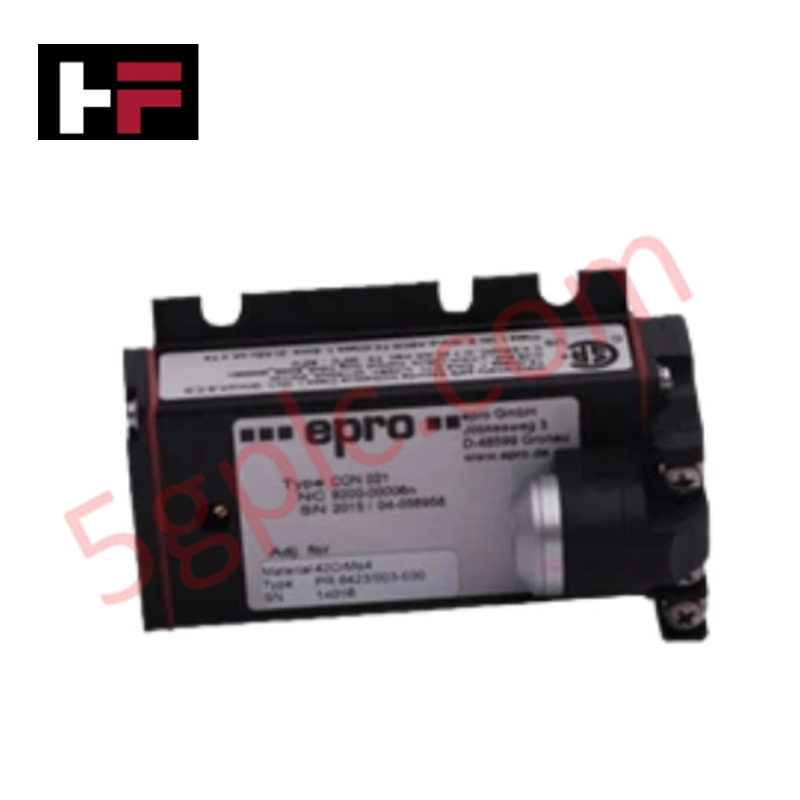
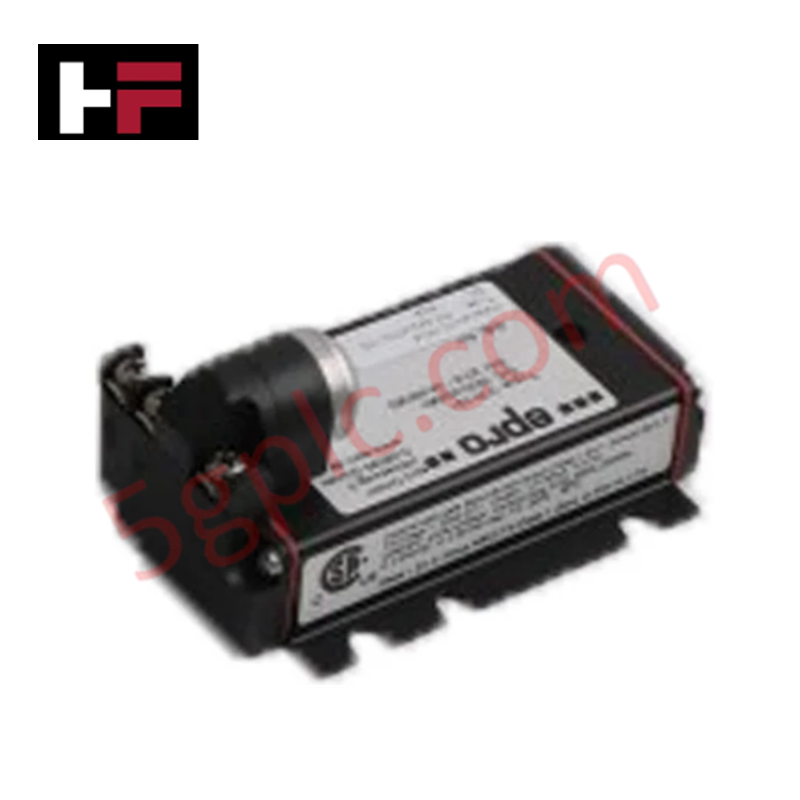
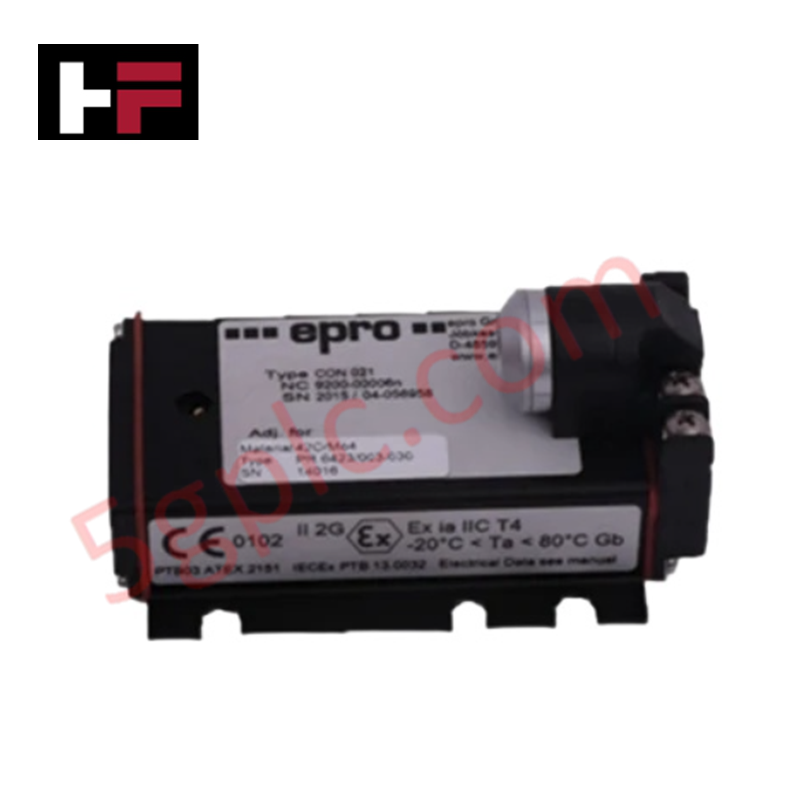
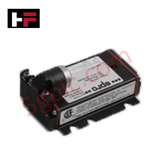
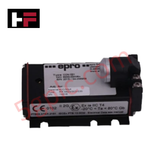
Product Details
Configured for signal conversion in rotating machinery monitoring networks, the Epro CON020/91 (CON020/91 Signal Conditioner Module Driver) provides direct physical electrical execution for processing transducer inputs into standardized analog signals. The module accepts raw probe inputs and delivers either analog voltage or 4-20 mA current outputs, interfacing directly with TSI monitoring platforms to support continuous data acquisition in machinery protection applications.
Hardware Specifications
| Parameter | Specification |
|---|---|
| Model | CON020/91 |
| Brand | Epro |
| Dimensions | 100 mm x 22 mm x 120 mm |
| Operating Temp | -35 to 85 deg C |
| Input Type | Transducer Signal |
| Output Type | Analog Voltage or 4-20 mA |
Mechanical Monitoring and TSI Characteristics
The CON020/91 module is engineered to manage critical signal parameters for eddy-current probe scaling within machinery protection systems. It supports the precise adjustment of gain and offset required for gap voltage validation against -10 VDC targets, ensuring that the sensor response remains linear across the transducer's measurement range. To preserve data integrity in high-density rack configurations, the module incorporates internal cross-talk suppression and EMI immunity filters, which are required for reliable rotor dynamics analysis under varying load and speed conditions.
Frequently Asked Questions (FAQ)
Q: Can the CON020/91 be hot-swapped while the machinery is operating?
A: Module removal or replacement during active operation depends on the backplane architecture and system configuration. Ensure the I/O channel is inhibited in the monitoring software to prevent a false trip or alarm signal before extracting the module.
Q: Is the 4-20 mA output isolated from the power supply ground?
A: The module is designed for industrial integration where loop isolation is required. Consult the system interconnection diagram to confirm if the output stage requires an external isolator to prevent ground loops between the module and the destination input card.
Field Installation Guidelines
- Mount the module on a standard DIN rail or designated rack chassis, ensuring the mechanical locking clip is fully engaged.
- Terminate signal input cabling using shielded, twisted-pair wire to minimize electromagnetic interference (EMI) ingress.
- Verify that the shield drain wire is bonded to the cabinet earth ground at the rack entry point only to avoid ground loops.
- Set the internal jumpers or configuration switches to match the desired output mode (voltage or current) before applying 24 VDC power.
- Confirm stable signal output at the terminal block using a calibrated multimeter prior to validating the sensor gap voltage at the probe tip.
Additional Information
- 100% Genuine Parts: All products are original and authentic, ensuring reliable industrial performance.
- 30-Day Refund Guarantee: Return any in-stock item within 30 days in original, unopened packaging for a full refund (excluding shipping and fees).
- 12-Month Warranty: Covers defects in materials or workmanship; excludes misuse, normal wear, or unauthorized modifications.
- Worldwide Shipping: We ship via USPS, UPS, FedEx, and DHL. Delivery times vary by country and may be subject to customs or import fees.
- Support & Contact: Technical and warranty assistance is available anytime. Contact us here: Contact.
- Purchase Guidance: Check product specifications and compatibility carefully before ordering to ensure proper application.




Tech & Buying Guide

Why Programmable Logic Controllers Drop into Stop Mode: An Expert Analysis
Industrial automation systems rely heavily on Programmable Logic Controllers (PLCs) to maintain uninterrupted production. When a PLC unexpectedly shifts from Run to Stop mode, whole manufacturing lines stall.
As control systems evolve across modern factory automation, understanding the root causes of these interruptions helps engineers minimize costly downtime. This technical guide breaks down why PLCs trip into Stop mode and provides practical strategies to mitigate system faults.

Understanding Root Causes of Unplanned PLC Stop Mode in Industrial Automation
Modern Programmable Logic Controllers manage execution through distinct operational states: Run, Stop, Start-Up, and Hold. During power-up, a controller initializes memory registers within Stop mode before briefly transitioning to Start-Up mode. During this phase, internal self-diagnostics evaluate system integrity across hardware and user programs. If the controller detects no critical faults, it enters Run mode to execute the control program continuously. However, any severe system anomaly forces the CPU back into Stop mode immediately to prevent erratic machine behavior across the plant floor.

Human-Machine Interface Design: Essential Guide to HMI Selection, Visualization, and Control System Integration
Human-Machine Interfaces (HMIs) serve as the primary operational window into complex industrial automation systems. Modern HMIs convert raw machine data into clear graphical displays, enabling operators to oversee entire manufacturing processes in real time. Instead of relying on physical control panels full of hardwired switches, engineers program interactive screens using intuitive graphics, dynamic color coding, and responsive touch interfaces. Over my 15 years in control systems engineering, I have observed HMIs transform from basic display screens into sophisticated command centers that drive operational efficiency across DCS and PLC environments.