The Rise of Industrial Automation in Non-Manufacturing Sectors
- 〡
- 〡 by WUPAMBO
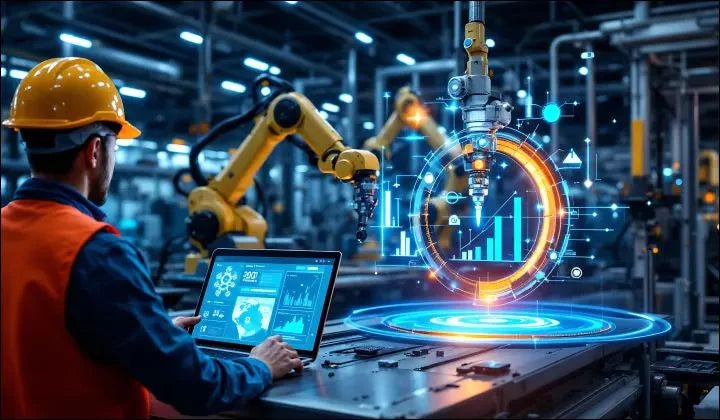
Industrial Automation Expands Beyond Factory Automation
Industrial automation is no longer limited to factory automation environments. Today, it plays a vital role in service-oriented industries. Sectors such as healthcare, finance, and retail actively adopt automation technologies to improve efficiency.
Moreover, organizations now focus on streamlining workflows instead of increasing physical production. As a result, industrial automation software becomes a key driver of operational improvement without requiring heavy infrastructure investment.
From PLC and DCS to AI-Driven Automation
Traditional automation depends on PLC, DCS, and control systems to manage industrial processes. These technologies remain essential in industries like oil and gas. However, non-manufacturing sectors increasingly rely on AI and software-based solutions.
For example, hospitals use AI-assisted diagnostics, while banks deploy automated fraud detection systems. In addition, cloud platforms enable rapid deployment across multiple locations. Therefore, automation becomes more scalable and adaptable compared to traditional factory automation.
Core Differences Between Manufacturing and Service Automation
Manufacturing automation focuses on repetitive physical tasks and standardized processes. In contrast, non-manufacturing automation targets data processing, decision-making, and customer interaction.
Factory automation operates in controlled environments with fixed workflows. However, service industries handle dynamic and unstructured data. As a result, AI-driven systems provide greater flexibility than conventional control systems.
Furthermore, implementation costs differ significantly. Manufacturing systems often require substantial capital investment. Meanwhile, software-based automation solutions offer faster deployment and lower upfront costs.
Key Drivers Behind Automation Growth
Several factors accelerate the adoption of industrial automation in non-manufacturing sectors.
First, workforce shortages create an urgent need for automation. Many industries face aging workforces and limited skilled labor. Therefore, automation helps maintain operational continuity.
Second, safety requirements push companies toward advanced monitoring technologies. Automated systems detect risks faster than human operators. This capability is critical in high-risk environments.
Third, cost efficiency drives investment decisions. Automation reduces downtime and improves accuracy. In addition, financial institutions leverage AI to lower fraud-related losses.
Oil and Gas: Integrating Control Systems with Digital Technologies
The oil and gas sector demonstrates how traditional and modern automation can work together. It combines PLC, DCS, and SCADA systems with advanced analytics and AI tools.
These integrated control systems monitor operations, analyze real-time data, and support decision-making. As a result, companies improve reliability and reduce operational risks.
Moreover, industrial automation software enables predictive maintenance. It identifies equipment issues before failures occur. Therefore, organizations can minimize unplanned downtime.
Industry Insight: Automation Strategies in Energy Companies
Leading companies such as ExxonMobil continue to invest in advanced automation frameworks. They adopt modular and open architectures that function like software ecosystems.
Automated drilling systems, for instance, use both historical and real-time data. These systems optimize performance and reduce technical issues. In addition, they improve safety by limiting manual intervention.
From practical experience, integrating new automation solutions with legacy control systems requires careful engineering. However, once deployed, these systems significantly enhance efficiency and consistency.
The Value of Industrial Automation Software
Industrial automation software delivers measurable operational benefits. It transforms large volumes of data into actionable insights. As a result, decision-making becomes faster and more accurate.
In addition, software solutions allow flexible scaling across multiple facilities. This advantage is particularly important for organizations with distributed operations.
Smaller companies also benefit from third-party platforms. They can implement advanced automation without developing in-house systems. Therefore, automation becomes accessible to a wider range of businesses.
Expert Perspective on Automation Strategy
Automation is now a strategic necessity rather than an optional investment. Companies that delay adoption risk falling behind competitors.
However, organizations should avoid implementing automation without clear objectives. A successful strategy aligns automation with business goals. Moreover, human oversight remains essential in critical operations.
In practice, the most effective approach combines human expertise with intelligent systems. This balance ensures both efficiency and operational reliability.
Application Scenarios in Non-Manufacturing Sectors
Industrial automation supports a wide range of real-world applications:
Healthcare uses AI for diagnostics and patient monitoring.
Finance relies on automation for fraud detection and risk management.
Retail adopts self-checkout systems and inventory optimization tools.
Oil and gas companies implement predictive maintenance and automated drilling.
Energy providers deploy smart systems for grid management and forecasting.
These applications highlight the versatility of automation across industries.
Conclusion: The Future of Industrial Automation
Industrial automation continues to expand beyond traditional factory automation. It now drives efficiency, safety, and innovation in service-based sectors.
As AI and digital technologies evolve, adoption will accelerate further. Therefore, companies must invest in scalable and integrated automation solutions.
Organizations that successfully combine PLC, DCS, and modern software platforms will gain a strong competitive advantage in the years ahead.
- Posted in:
- AI automation
- automation software
- DCS control systems
- factory automation
- oil and gas automation
- PLC systems
- SCADA systems