










Product Details
Product Overview
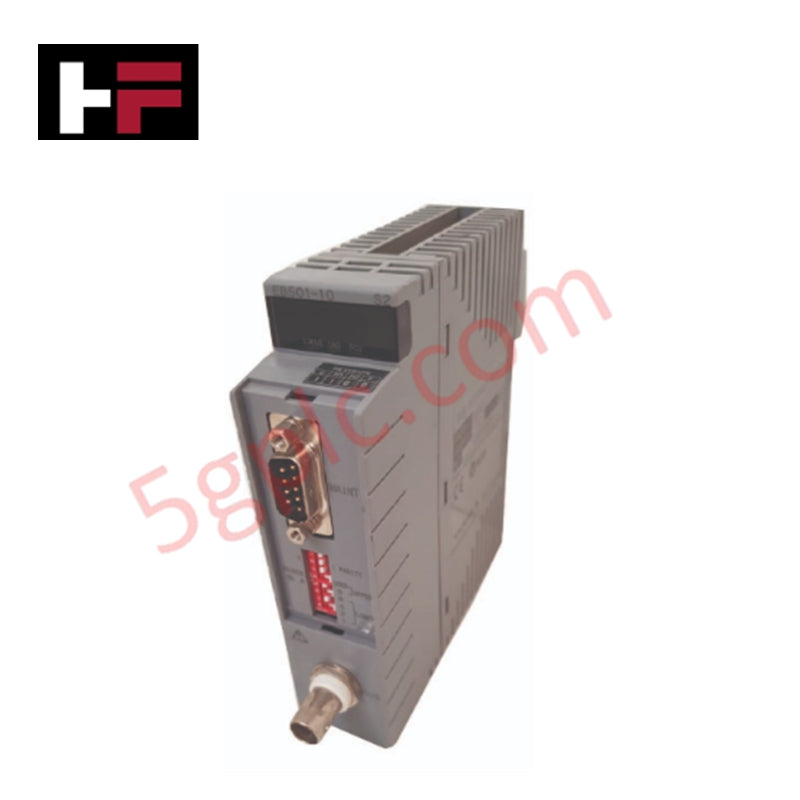
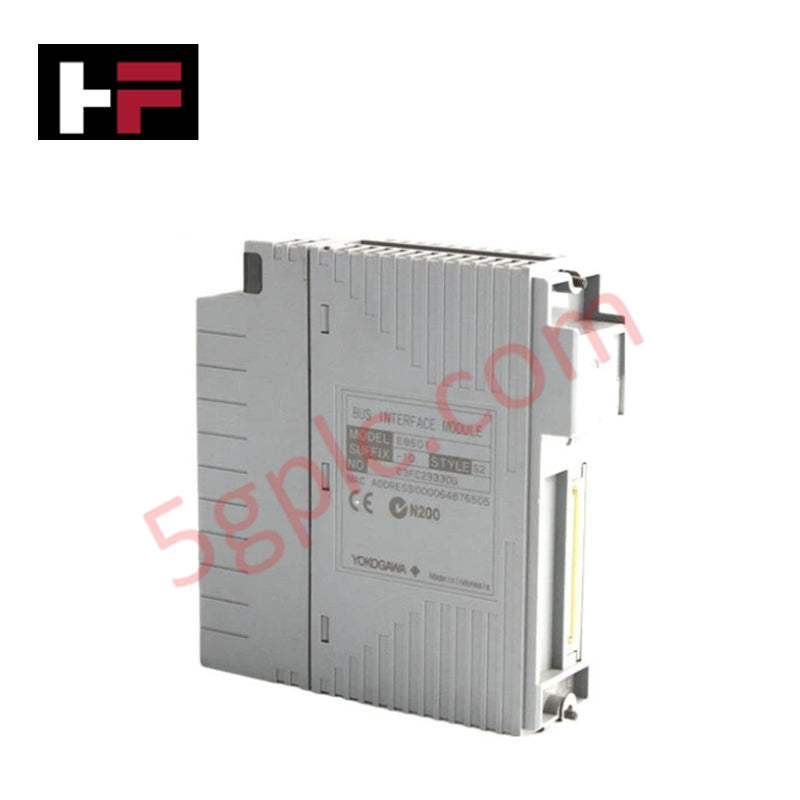
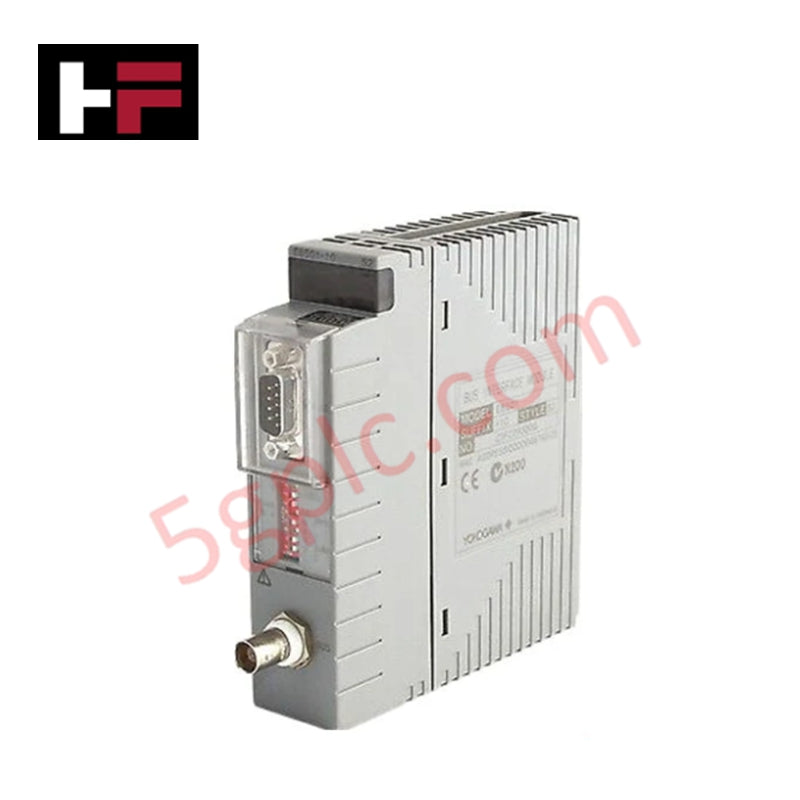
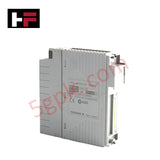
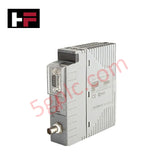
The Yokogawa EB501-10 serves as the primary ESB Bus Interface Module for the CENTUM CS 3000 Distributed Control System (DCS). This module installs directly into the Field Control Unit (FCU) to establish a high-speed communication link with remote I/O node units. By managing the Extended Serial Backplane (ESB) protocol, the EB501-10 ensures deterministic data transmission between the main processor and field instrumentation, maintaining the high-speed scan rates required for complex process control.
Part Number Breakdown
Yokogawa utilizes specific suffix codes to define the hardware's environmental and functional profile:
| Code | Type | Description |
| EB501 | Model | ESB Bus Interface Module (Master Side) |
| -1 | Basic | Standard functional communication type |
| 0 | Protection | Standard type with no explosion protection |
Technical Specifications
The EB501-10 provides a high-integrity bridge for DCS network traffic:
-
Manufacturer: Yokogawa
-
Module Type: ESB Bus Interface (Master/FCU Side)
-
System Compatibility: CENTUM CS 3000, CS 1000
-
Transmission Speed: 128 Mbps
-
Interface Port: Connects via specialized ESB Bus cables
-
Configuration: Standard Basic Type
-
Condition: 100% Brand New and Original
Engineering Advantages
-
High-Bandwidth Determinism: The EB501-10 delivers a constant 128 Mbps throughput. This dedicated bandwidth prevents the data latency common in shared networks, ensuring that every I/O point updates within the controller's exact scan interval for superior loop stability.
-
Redundant Architecture Support: To maximize plant uptime, engineers typically install the EB501-10 in redundant pairs within the FCU. If one module or cable path encounters a fault, the system switches to the secondary EB501-10 instantaneously without interrupting the control logic.
-
Extended I/O Reach: This module acts as the "Master" gateway, allowing the DCS to control remote I/O nodes located in separate cabinets. This centralized control over a distributed architecture reduces the need for multiple independent controllers and simplifies system engineering.
-
Robust Signal Driving: Optimized for industrial environments, the EB501-10 features enhanced signal driving capabilities. It maintains high-fidelity data transport across the ESB bus even in the presence of the electromagnetic interference (EMI) typically found in heavy industrial settings.
FAQs
-
Is this Yokogawa EB501-10 unit supplied as new or refurbished?
We supply this module exclusively as 100% Brand New and Original equipment. Every unit arrives in its original Yokogawa factory-sealed packaging, ensuring zero previous usage and the highest reliability for your mission-critical DCS.
-
What is the difference between the EB501 and the SB401?
The EB501-10 is the Master Interface located in the Field Control Unit (FCU), while the SB401 is the Slave Interface located in the remote I/O node. You must use an EB501 in the FCU to "talk" to the SB401 modules in the field racks.
-
Can I use the EB501-10 in an explosion-proof environment?
No. The "-10" suffix indicates a Standard Type without explosion protection. For hazardous areas, you must install the module within a suitably rated, purged, or explosion-proof enclosure according to local safety regulations.
-
Does the module require manual address configuration?
The EB501-10 primarily functions based on its slot position within the FCU. However, you must configure the corresponding ESB bus settings in the CENTUM Engineering Station software to ensure the system recognizes the connected remote I/O nodes correctly.
Additional Information
- 100% Genuine Parts: All products are original and authentic, ensuring reliable industrial performance.
- 30-Day Refund Guarantee: Return any in-stock item within 30 days in original, unopened packaging for a full refund (excluding shipping and fees).
- 12-Month Warranty: Covers defects in materials or workmanship; excludes misuse, normal wear, or unauthorized modifications.
- Worldwide Shipping: We ship via USPS, UPS, FedEx, and DHL. Delivery times vary by country and may be subject to customs or import fees.
- Support & Contact: Technical and warranty assistance is available anytime. Contact us here: Contact.
- Purchase Guidance: Check product specifications and compatibility carefully before ordering to ensure proper application.


Tech & Buying Guide

Essential Best Practices for PLC Wiring and Installation in Industrial Automation
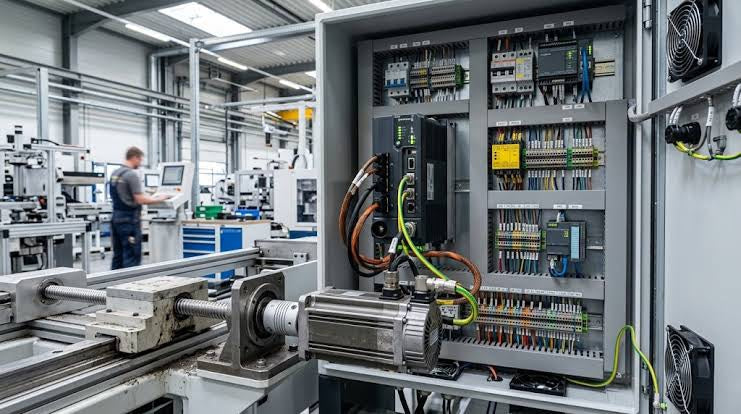
Successful control system deployment begins with thoroughly reviewing manufacturer technical documentation. Controllers from major brands like Allen-Bradley, Siemens, and Schneider Electric feature unique terminal layouts. Engineers must verify voltage requirements before connecting power cables to prevent catastrophic equipment damage. Standard line connections require strict adherence to regional electrical codes and proper wire color coding. Furthermore, panel builders should always establish a robust low-impedance ground connection using at least 16-AWG copper conductor tied directly to the main plant grounding grid.
Demystifying Programmable Logic Controllers: Comprehensive Guide to PLC Classification and Selection in Industrial Automation
Modern industrial automation heavily relies on Programmable Logic Controllers (PLCs) to drive factory floor efficiency. Over my 15 years as an industrial automation expert working with DCS, TSI, and control systems, I have seen PLCs evolve into the central nervous system of modern manufacturing. Selecting the right controller requires a deep understanding of PLC types based on physical size, hardware architecture, and power supply configurations.

Comprehensive Guide to PLC Types in Modern Industrial Automation
Modern industrial automation relies on programmable logic controllers to govern critical factory operations. System integrators classify PLCs based on scale, hardware architecture, and power supply design. Understanding these core categories enables automation engineers to select the right control system architecture. Consequently, proper hardware selection optimizes performance while minimizing long-term operational costs.