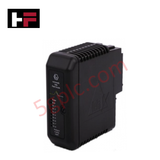
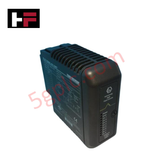
Product Details
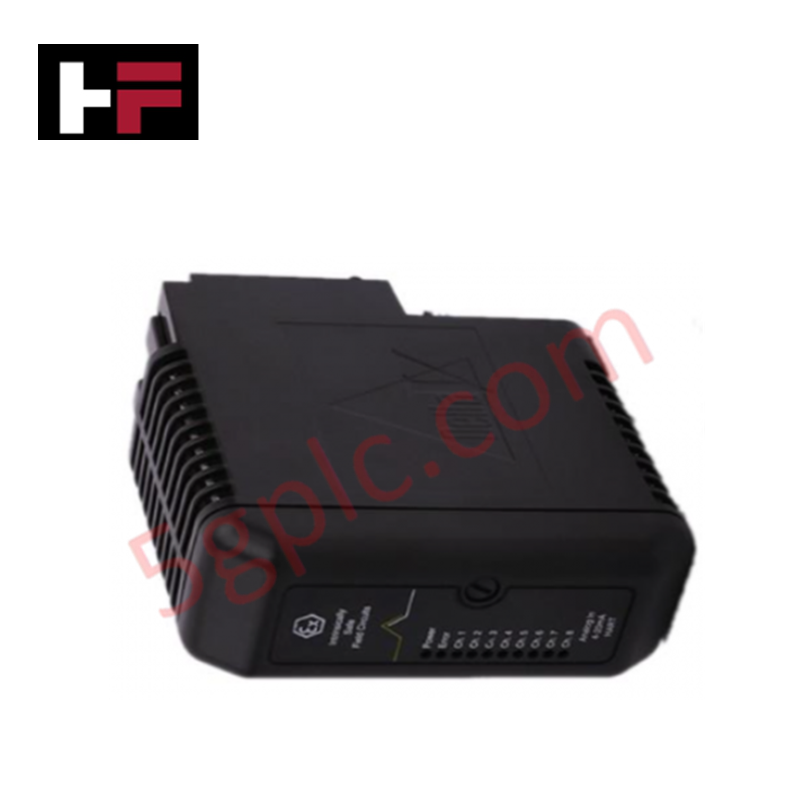
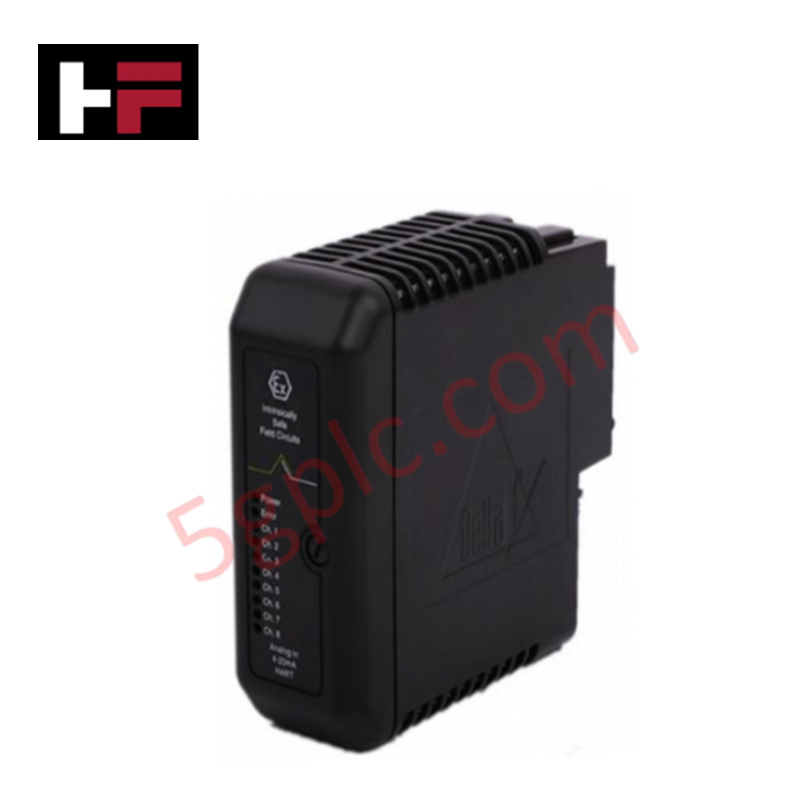
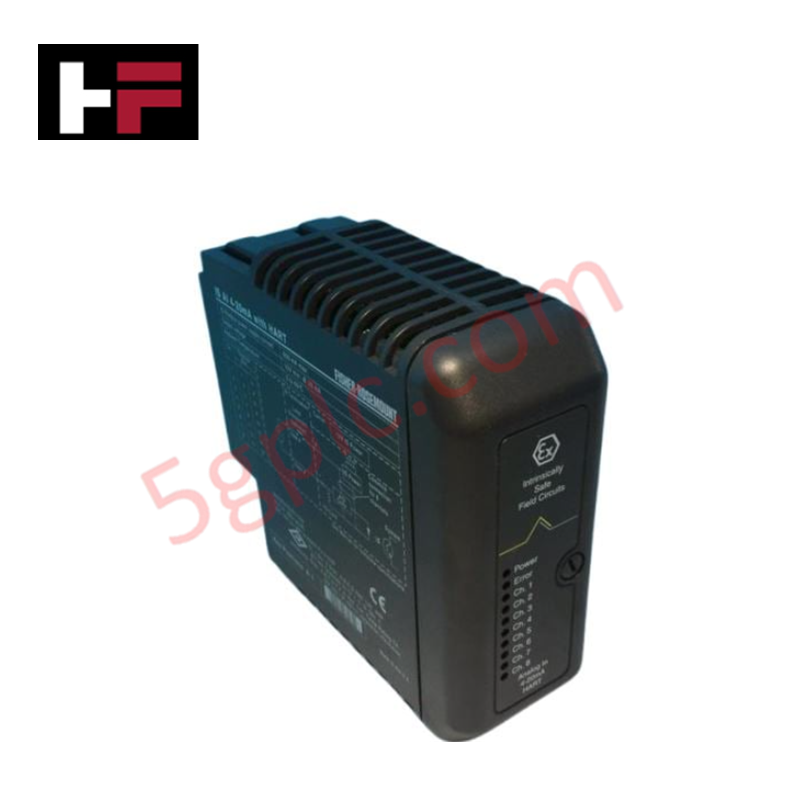
Configured for precision temperature measurement in DCS platforms, the Emerson VE4003S6B1 (VE4003S6B1 Analog Input Module) provides direct physical execution of 8-channel RTD signal acquisition.
Hardware Specifications
| Parameter | Specification |
|---|---|
| Model | VE4003S6B1 |
| Brand | Emerson |
| Origin | Subject to factory shipping documentation |
| Weight | 0.5 kg (1.10 lbs) |
| Dimensions | Standard DeltaV I/O form factor |
| Operating Temp | -40 deg C to 70 deg C |
| Power Consumption | 1.5 W (nominal) |
| Channel Count | 8 Channels |
| Input Type | RTD (Resistance Temperature Detector) |
4-20 mA HART Loop Protocol and Channel Isolation
The VE4003S6B1 is engineered to maintain high signal integrity within the DeltaV I/O subsystem. It supports galvanically isolated channel-to-channel architectures, which prevent common-mode noise propagation across multi-sensor inputs. While primarily utilized for RTD sensing, the input stages incorporate high-impedance circuitry to maintain accuracy when interfaced with long-run field cabling. For process loops utilizing shared reference signals, the module's isolation design ensures that ground loops do not corrupt the digitized thermal data transmitted to the controller backplane.
Frequently Asked Questions
Q: Does the VE4003S6B1 support hot-swapping while the DeltaV controller is active?
A: Yes. The module is designed for hot-swap operations in a powered chassis. Ensure that the corresponding terminal block is properly secured before performing the insertion to avoid intermittent connection errors.
Q: Are there specific wiring requirements for RTD configurations?
A: Yes. For 3-wire or 4-wire RTD configurations, ensure that field wiring uses shielded twisted-pair cables to minimize electromagnetic interference (EMI). The shield should be grounded at the terminal block or the entry point as per the site grounding plan.
Field Installation Guidelines
- Chassis Seating: Align the module with the DeltaV I/O carrier rails. Push the module firmly until the backplane connectors fully engage. Verify the latch is locked to prevent vibration-induced disconnection.
- Terminal Block Attachment: Connect the field-side terminal block to the front of the module. Ensure all screws are tightened to the torque specification provided in the system installation manual to maintain low-resistance signal paths.
- Shielding: Terminate cable shields to the carrier-provided ground bar. Avoid leaving pigtails long, as they act as antennas for high-frequency noise.
- Configuration: Utilize the DeltaV Explorer to define the channel type (e.g., Pt100, Cu10) and the lead-wire compensation mode. Ensure the software configuration matches the physical wiring topology to prevent measurement offset errors.
- Validation: Perform a loop check by injecting a calibrated resistance at the field end and verifying the digital value reported in the DCS control module.
Additional Information
- 100% Genuine Parts: All products are original and authentic, ensuring reliable industrial performance.
- 30-Day Refund Guarantee: Return any in-stock item within 30 days in original, unopened packaging for a full refund (excluding shipping and fees).
- 12-Month Warranty: Covers defects in materials or workmanship; excludes misuse, normal wear, or unauthorized modifications.
- Worldwide Shipping: We ship via USPS, UPS, FedEx, and DHL. Delivery times vary by country and may be subject to customs or import fees.
- Support & Contact: Technical and warranty assistance is available anytime. Contact us here: Contact.
- Purchase Guidance: Check product specifications and compatibility carefully before ordering to ensure proper application.




Tech & Buying Guide

Voice-Activated Industrial Automation: Integrating Speech Control into PLC and DCS Architectures
Industrial automation integrates speech recognition, IIoT protocols, and NLP with PLCs and DCS to streamline operations. By leveraging advanced edge computing, engineers enable real-time, hands-free control—allowing personnel to manage smart factory processes safely away from hazardous equipment.
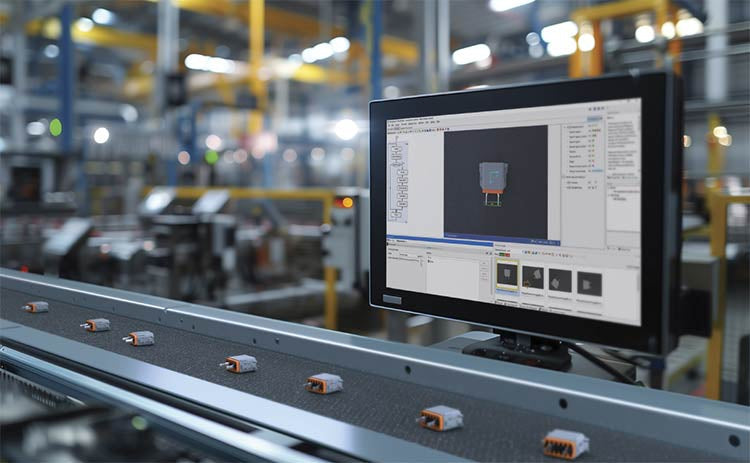
Modern Industrial Automation: Transforming Safety and Efficiency in Mining Operations
Industrial automation has evolved from a simple manufacturing tool into the operational backbone of high-risk sectors. Modern mining operations increasingly rely on advanced control systems, programmable logic controllers (PLCs), distributed control systems (DCS), and artificial intelligence to address deep-underground hazards. By replacing manual labor in high-risk zones, factory automation technologies protect personnel while significantly boosting operational throughput.