














Product Details
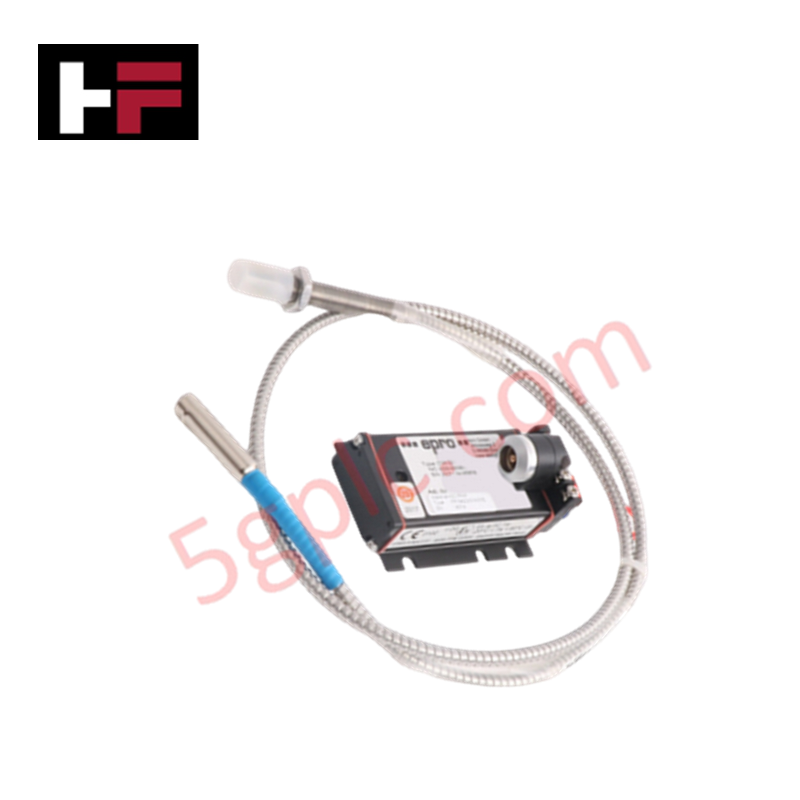
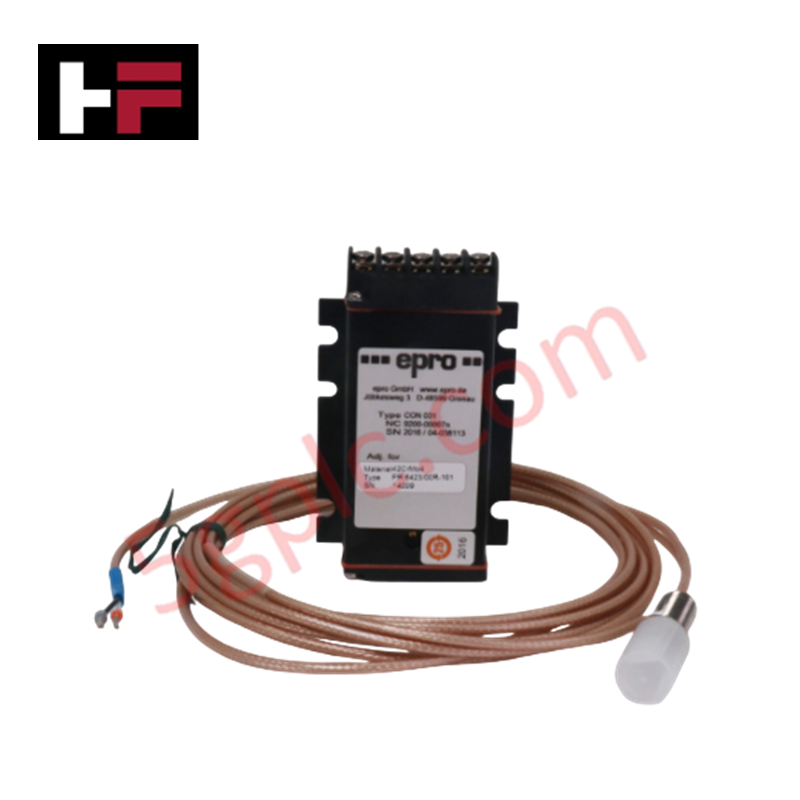
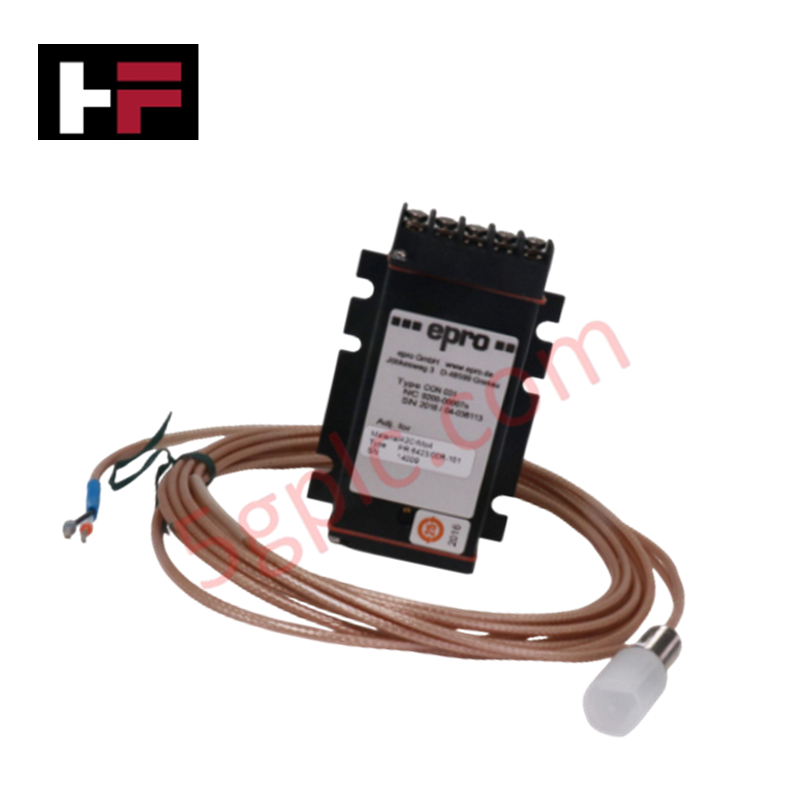
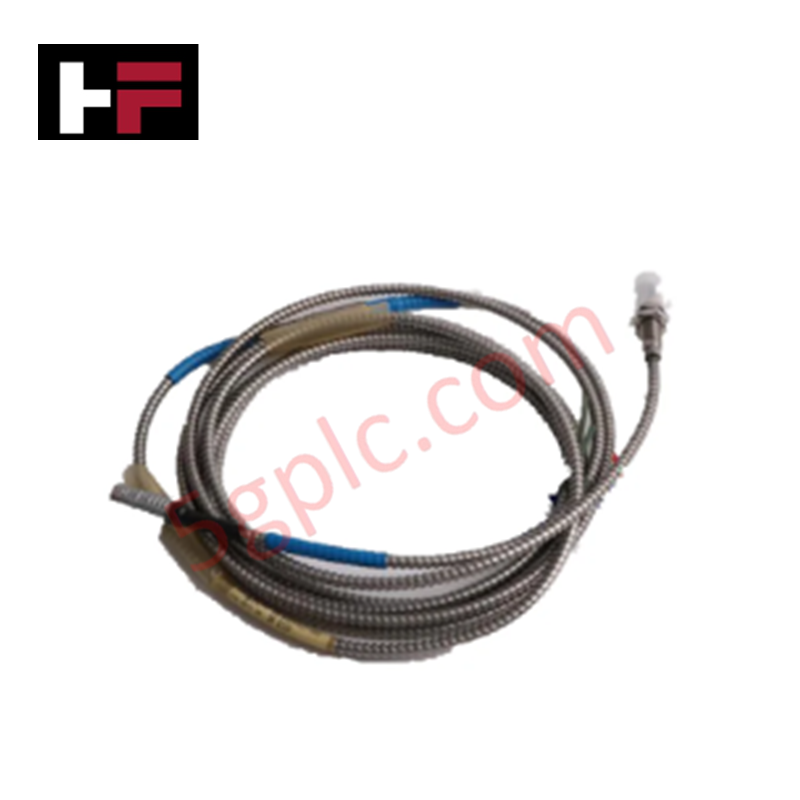
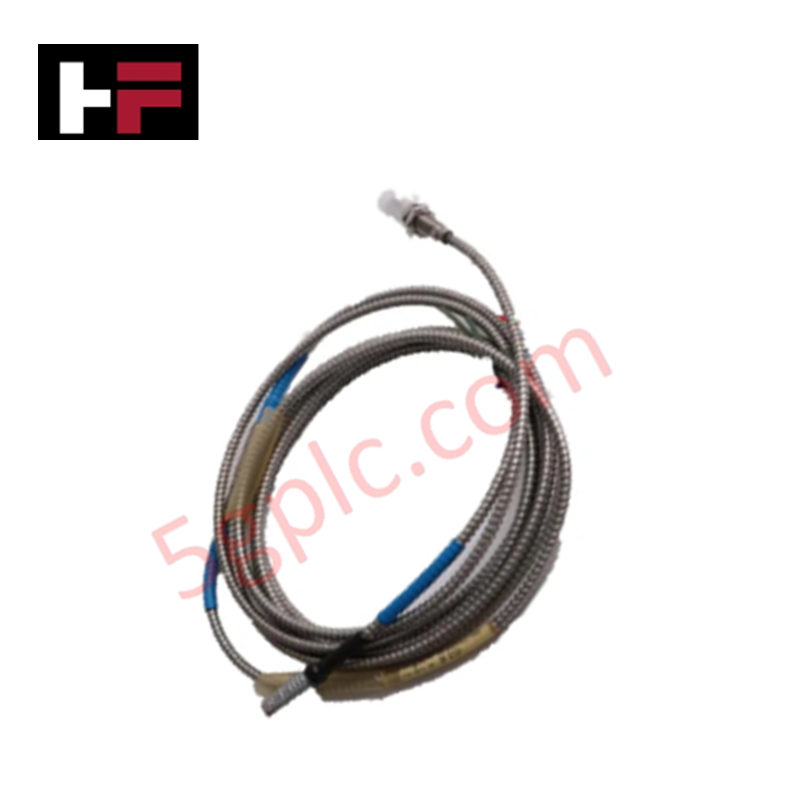
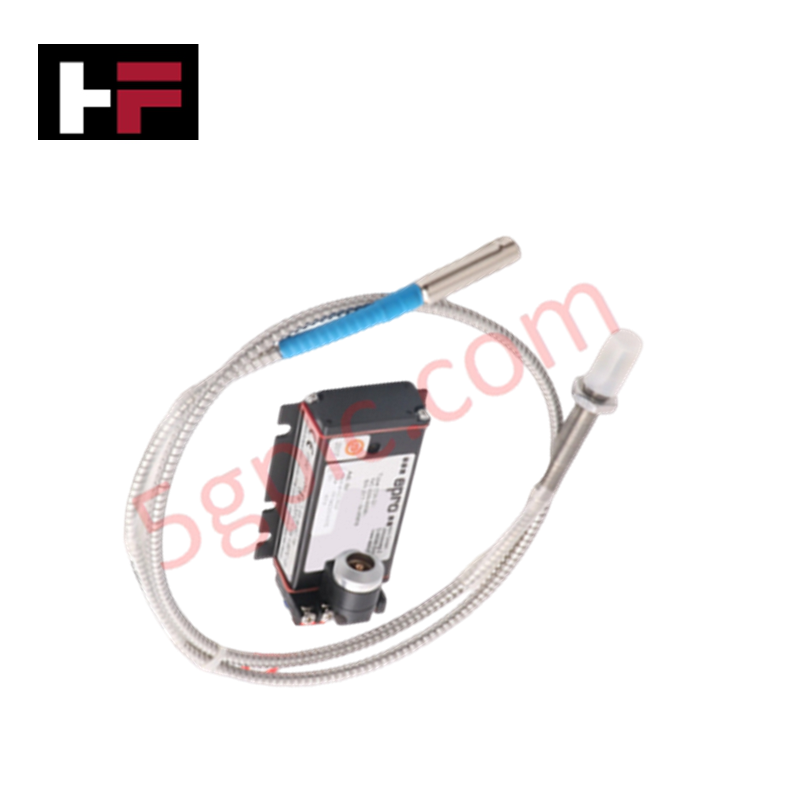
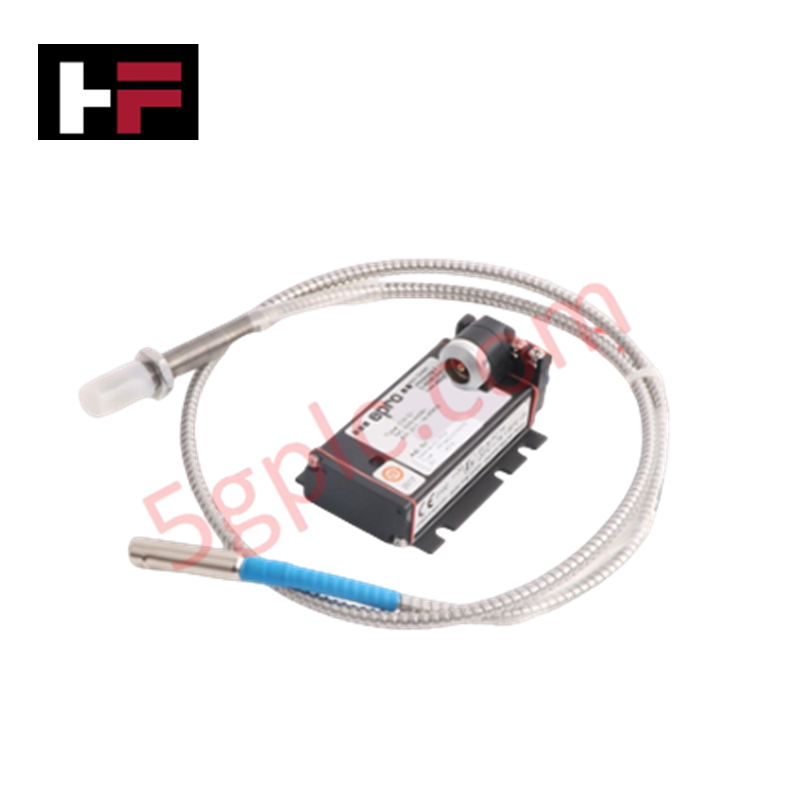
Configured for high-frequency dynamic displacement and position execution in machinery monitoring networks, the Emerson CON021+PR6423/010-100 (CON021+PR6423/010-100 Eddy Current Signal Converter and Sensor Systems) provides direct physical signal conditioning. The converter and probe assembly converts proximity variations across rotating shafts into linear output voltages for machinery protection loops.
Hardware Specifications
| Parameter | Specification |
|---|---|
| Model | CON021+PR6423/010-100 |
| Brand | Emerson |
| Origin | USA / Germany |
| Weight | ~120 grams (Converter module mass) |
| Dimensions | Housing material LMgSi 0.5 F22 (Converter); 100 mm case thread length (Probe) |
| Operating Temp | Sensor: -35 to +180 deg C; Cable: -35 to +150 deg C; Converter: -30 to +100 deg C |
| Power Consumption | Powered via -21 VDC to -32 VDC supply rail |
| Supply Voltage Range | -23 V to -32 V (Output Range -4 V to -20 V); -21 V to -32 V (Output Range -2 V to -18 V) |
| Linear Range | 2 mm (80 mils) baseline standard span |
| Frequency Range (-3 dB) | 0 to 20000 Hz |
| Rise Time | Less than 15 us |
| Protection Class | Sensor: IP66 (IEC 60529); Converter: IP20 |
| Signal Connections | Screw terminal type (max 1.5 mm2 wire) |
| Product Type | Eddy Current Signal Converter and Sensor Systems |
4-20 mA HART Loop Protocol and Channel Isolation
The CON021 converter processing path uses channel-to-channel isolation architecture to isolate primary probe measurement circuits from backplane supply rails. When integrated alongside plant control systems operating 4-20 mA HART loop protocol instruments or FOUNDATION Fieldbus signal splitters, the system maintains linear voltage accuracy across dynamic frequencies up to 20000 Hz. Built-in thermal compensation circuits continuously mitigate gain shifts, providing cold junction compensation stability and drift suppression over wide operating temperatures.
Frequently Asked Questions
Q: What power supply rail range must be supplied to the CON021 converter for a standard -4 V to -20 V output signal span?
A: The CON021 signal converter requires an incoming DC supply voltage between -23 VDC and -32 VDC to produce a full -4 V to -20 V linear output range.
Q: Can the PR6423 probe head be exposed to high-temperature machinery environments?
A: Yes, the PR6423 probe head and initial 1 m integral cable section are rated for operation in ambient temperatures ranging from -35 to +180 deg C.
Q: What is the maximum wire size allowed for signal and power wiring on the CON021 terminal block?
A: The supply and signal output screw terminals support stranded or solid copper conductors up to a maximum cross-sectional area of 1.5 mm2.
Field Installation Guidelines
- Mount the CON021 converter module in a clean enclosure rated for at least IP20, secured via four M5 mounting screws.
- Thread the 100 mm case length PR6423 probe into the machine casing bracket perpendicular to the target shaft.
- Establish the target air gap by adjusting probe insertion depth to match baseline static DC gap voltage specifications before locking the jam nut.
- Route probe cabling through dedicated grounded metallic conduit away from high-voltage motor feeds and variable frequency drives.
- Connect input signal wires from the probe extension cable to the CON021 input connector block.
- Connect supply and output field wiring to the CON021 screw terminals, ensuring wire size does not exceed 1.5 mm2 and the cable shield is tied to single-point cabinet ground.
Additional Information
- 100% Genuine Parts: All products are original and authentic, ensuring reliable industrial performance.
- 30-Day Refund Guarantee: Return any in-stock item within 30 days in original, unopened packaging for a full refund (excluding shipping and fees).
- 12-Month Warranty: Covers defects in materials or workmanship; excludes misuse, normal wear, or unauthorized modifications.
- Worldwide Shipping: We ship via USPS, UPS, FedEx, and DHL. Delivery times vary by country and may be subject to customs or import fees.
- Support & Contact: Technical and warranty assistance is available anytime. Contact us here: Contact.
- Purchase Guidance: Check product specifications and compatibility carefully before ordering to ensure proper application.




Tech & Buying Guide

Demystifying the DDE Protocol in Legacy Industrial Automation Systems
Modern control systems rely heavily on seamless interprocess communication to exchange operational data between software programs. Microsoft first introduced the Dynamic Data Exchange (DDE) protocol in 1987 to enable real-time data sharing. In factory automation, DDE served as an early bridge between control software and Windows desktop applications. Therefore, understanding DDE mechanics provides crucial insights into how legacy industrial networks established software-level connectivity.

Demystifying CPU Communication Ports in Siemens PLC Architectures
Industrial automation relies heavily on robust data exchange between devices. Without seamless connectivity, field instruments, network switches, human-machine interfaces, and programmable logic controllers cannot coordinate effectively. Therefore, understanding the various CPU communication ports available in Siemens hardware ensures efficient factory automation design and seamless system integration.

Mastering the Siemens PLC Scan Cycle: How the CPU Executes Automation Programs
Industrial automation relies heavily on programmable logic controllers (PLCs) to manage complex manufacturing processes. Many engineers dive straight into programming without mastering the underlying architecture. However, understanding how a PLC CPU executes a program ensures reliable system design. Therefore, mastering the scan cycle optimizes both performance and troubleshooting in modern control systems.