










Product Details
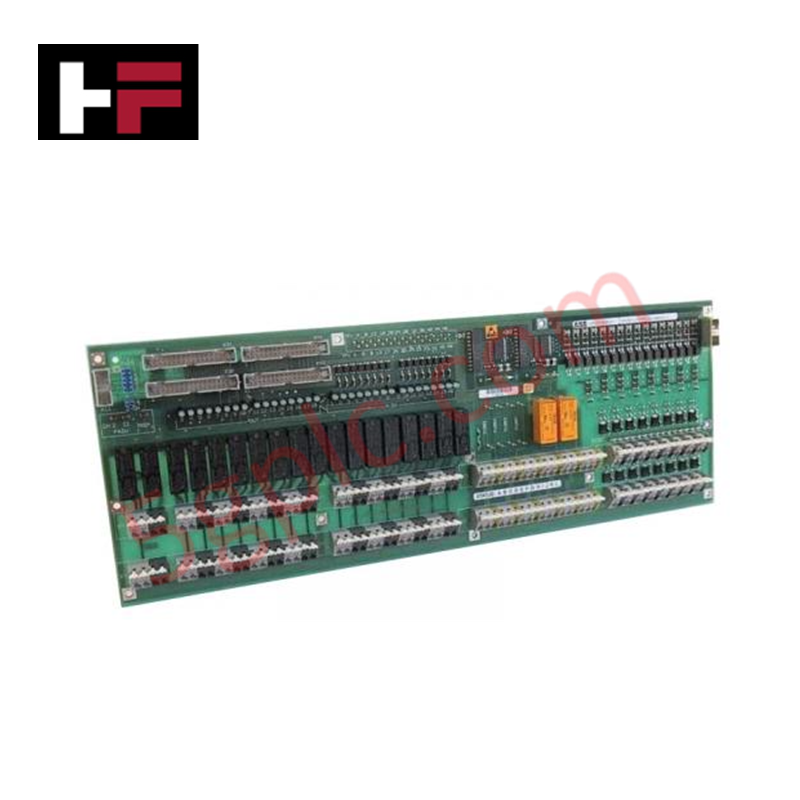
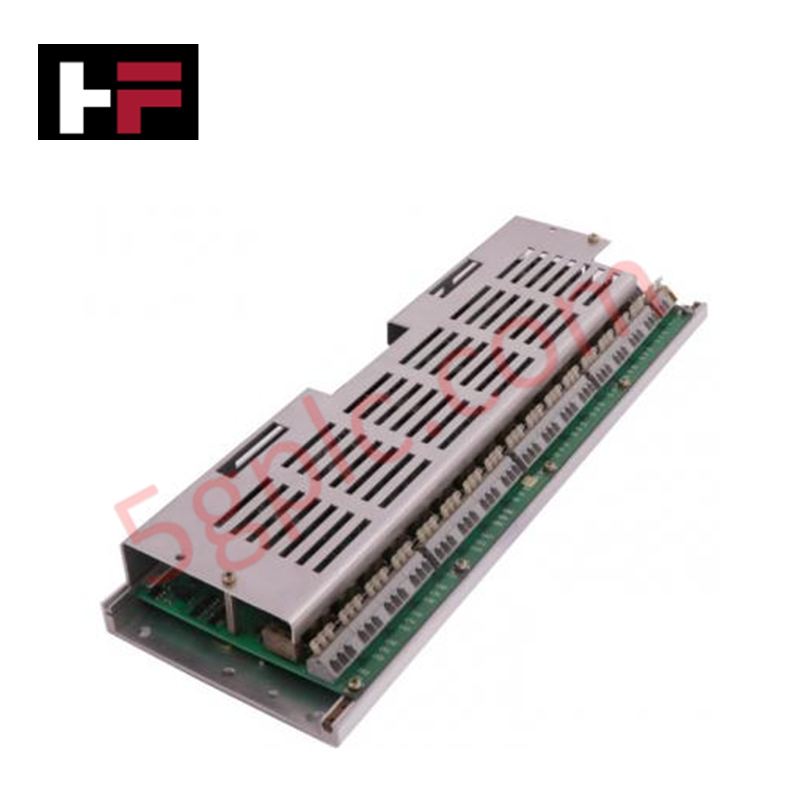
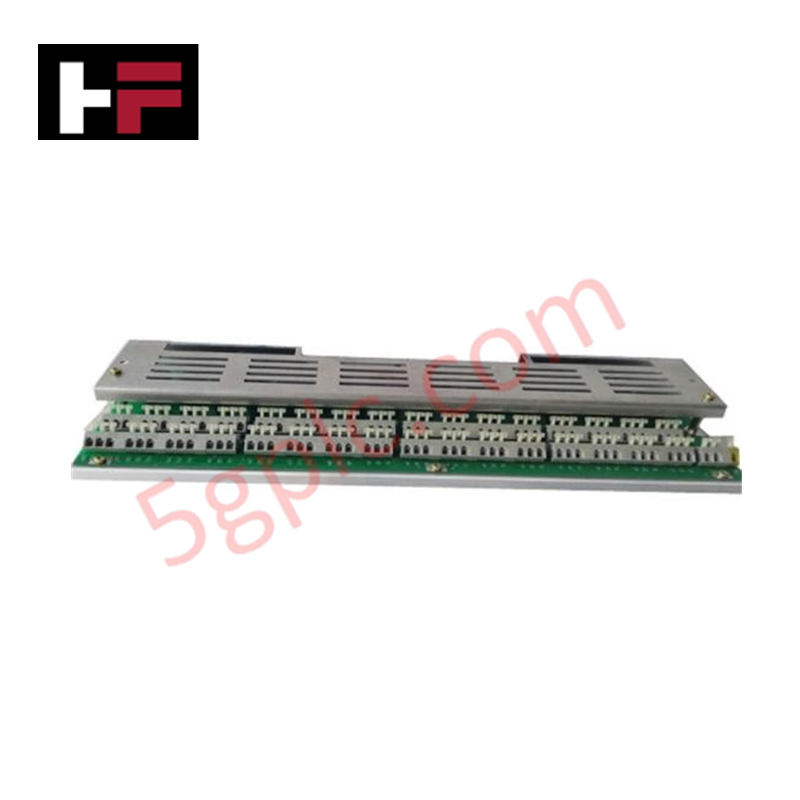
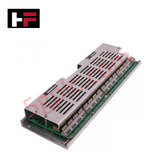
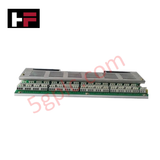
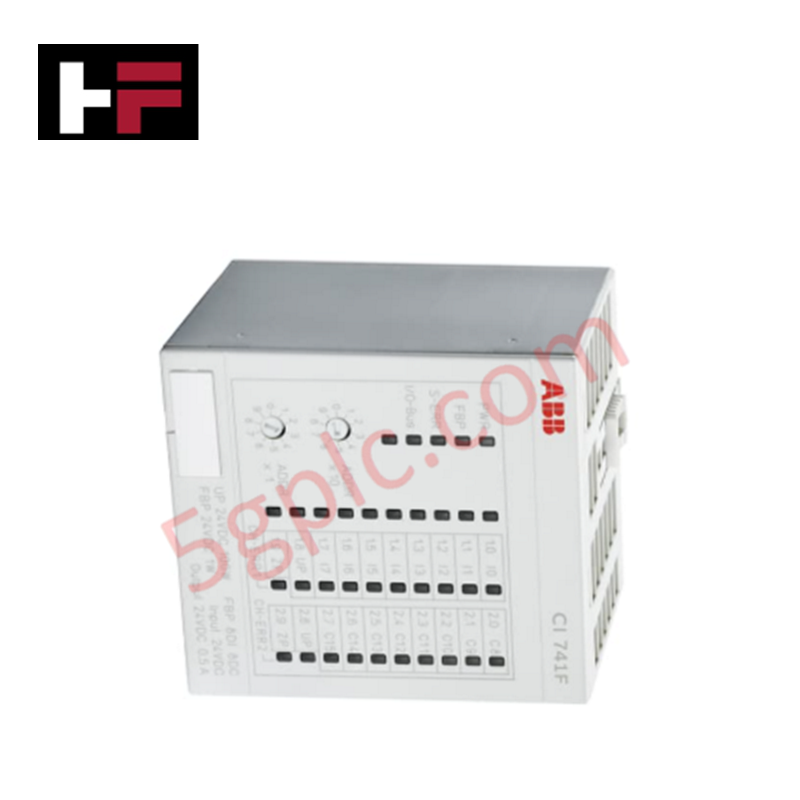
The ABB UNS 1860B-P V1 3BHB001336R0001, also cataloged as the UNS 1860B-P V1 Measuring Interface, operates as a dedicated hardware component for analog and digital channel processing within ABB control system platforms. The hardware accepts mixed field configurations, acquiring multi-range voltage, current, RTD, or thermocouple inputs alongside discrete 24 VDC signal tracking. It converts localized electrical potentials and microvolt thermal variances into digitized registers, isolating electrical noise paths across the active internal logic circuitry.
Hardware Specifications
| Parameter | Specification |
|---|---|
| Model | UNS 1860B-P V1 3BHB001336R0001 |
| Brand | ABB |
| Origin | Switzerland |
| Weight | 0.40 kg |
| Dimensions | 130 mm x 115 mm x 30 mm |
| Operating Temp | 0 to +60 deg C |
| Power Consumption | < 5 W |
| Power Supply | 24 VDC |
| Analog Inputs | 8 channels (Voltage, Current, RTD, TC) |
| Digital Channels | 8 channels (24 VDC sink/source) |
| Analog Input Accuracy | +/-0.1% of full scale |
| Digital Channel Rating | 2 A continuous, 10 kHz max frequency |
Profinet / EtherNet/IP Deterministic Networks and I/O Density Scaling
The internal data converters route the processed data arrays over backplane bus lines to interface with modern communication controllers. When integrating the module within Profinet / EtherNet/IP deterministic networks, system engineers must adjust transmission scheduling parameters to account for the high density of mixed analog and high-speed 10 kHz digital registers. Proper configuration eliminates synchronization dropouts on the bus, allowing stable I/O density scaling during real-time hardware execution scans.
Frequently Asked Questions
Q: What are the explicit hot-swap boundaries for the UNS 1860B-P V1 module?
A: This measuring interface is restricted from hot-swapping while the 24 VDC system power rail or active external analog loops are energized. Inserting or extracting the card during operation can introduce electrical transients that degrade calibration coefficients or disrupt adjacent modules.
Q: How is the channel architecture configured when mixing thermocouple and current loops on the same board?
A: Selection of signal type (voltage, current, RTD, TC) is performed via internal software registers and matching connection schemas on the terminal assembly. Shield paths must remain separated to maintain the +/-0.1% full scale input accuracy.
Field Installation Guidelines
Mount the unit vertically within an enclosure that minimizes particulate exposure and thermal accumulation. Bond the structural rail assembly to the central station earth reference using low-impedance conductors to maximize the efficiency of the built-in galvanic isolation components. Route low-voltage thermocouple and 4-20 mA current paths through dedicated, shielded channels, keeping them segregated from high-power alternating current switching wires to prevent inductive noise injection. Maintain specified clearance areas around the chassis profile to allow adequate passive thermal dissipation across the full operating range.
Additional Information
- 100% Genuine Parts: All products are original and authentic, ensuring reliable industrial performance.
- 30-Day Refund Guarantee: Return any in-stock item within 30 days in original, unopened packaging for a full refund (excluding shipping and fees).
- 12-Month Warranty: Covers defects in materials or workmanship; excludes misuse, normal wear, or unauthorized modifications.
- Worldwide Shipping: We ship via USPS, UPS, FedEx, and DHL. Delivery times vary by country and may be subject to customs or import fees.
- Support & Contact: Technical and warranty assistance is available anytime. Contact us here: Contact.
- Purchase Guidance: Check product specifications and compatibility carefully before ordering to ensure proper application.






Tech & Buying Guide

Demystifying the DDE Protocol in Legacy Industrial Automation Systems
Modern control systems rely heavily on seamless interprocess communication to exchange operational data between software programs. Microsoft first introduced the Dynamic Data Exchange (DDE) protocol in 1987 to enable real-time data sharing. In factory automation, DDE served as an early bridge between control software and Windows desktop applications. Therefore, understanding DDE mechanics provides crucial insights into how legacy industrial networks established software-level connectivity.

Demystifying CPU Communication Ports in Siemens PLC Architectures
Industrial automation relies heavily on robust data exchange between devices. Without seamless connectivity, field instruments, network switches, human-machine interfaces, and programmable logic controllers cannot coordinate effectively. Therefore, understanding the various CPU communication ports available in Siemens hardware ensures efficient factory automation design and seamless system integration.

Mastering the Siemens PLC Scan Cycle: How the CPU Executes Automation Programs
Industrial automation relies heavily on programmable logic controllers (PLCs) to manage complex manufacturing processes. Many engineers dive straight into programming without mastering the underlying architecture. However, understanding how a PLC CPU executes a program ensures reliable system design. Therefore, mastering the scan cycle optimizes both performance and troubleshooting in modern control systems.