










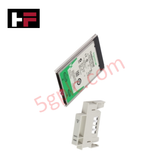
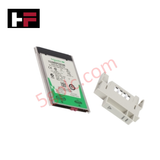
Product Details
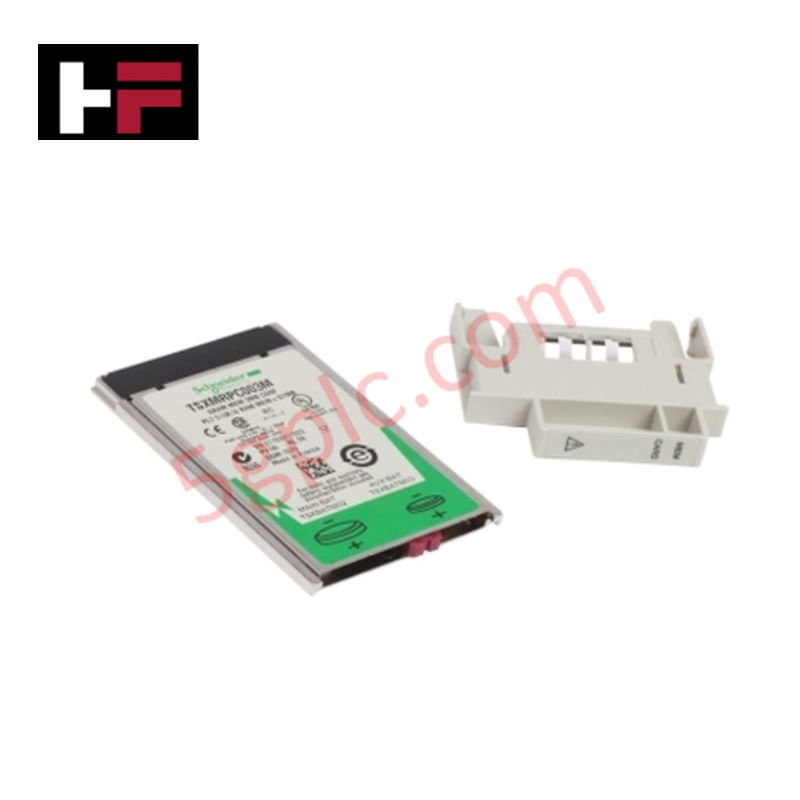
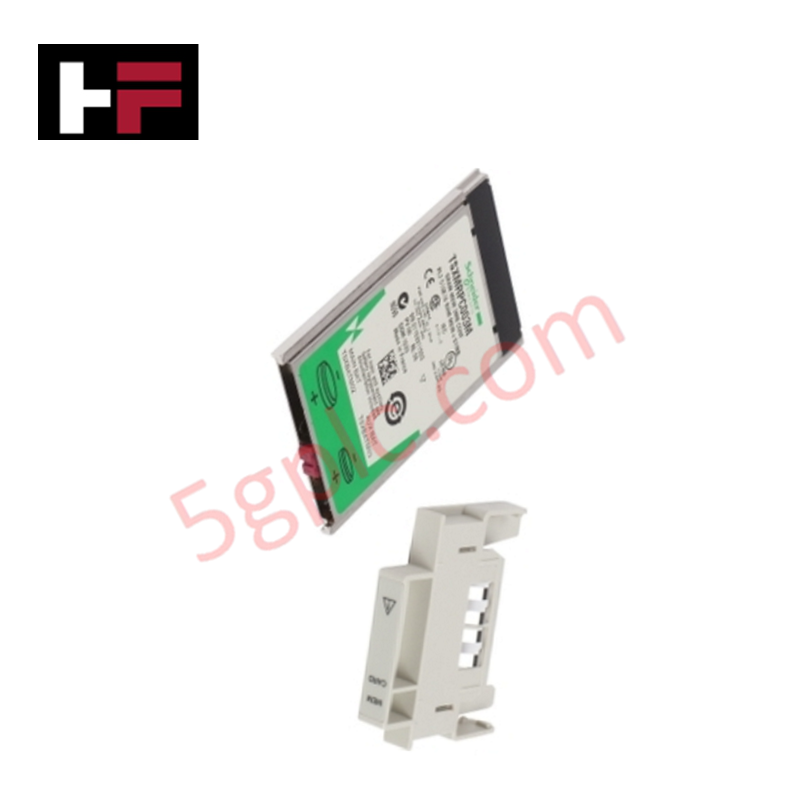
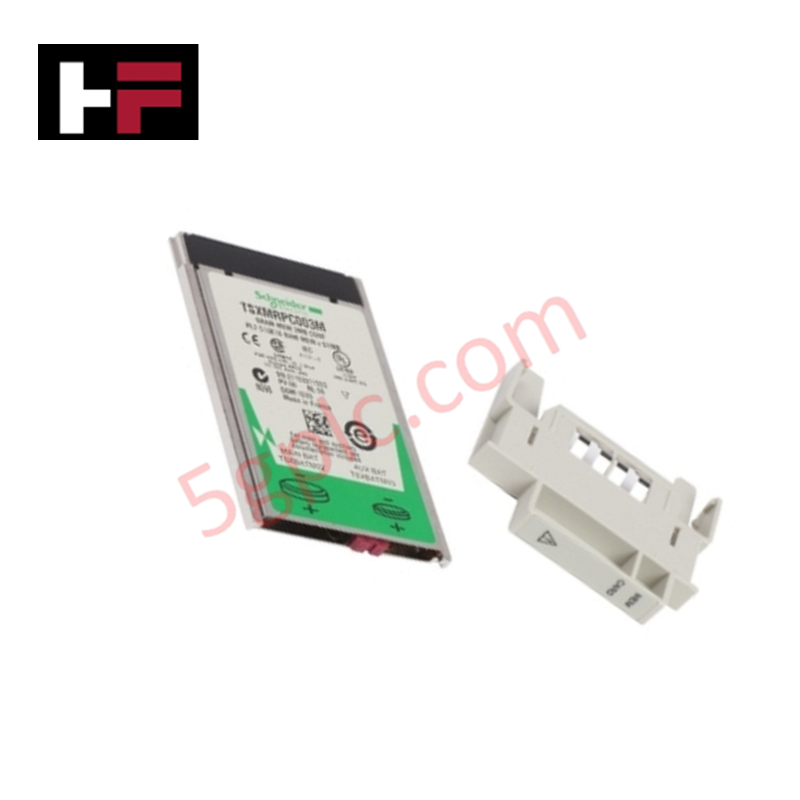
The Schneider Electric TSXMRPC003M, also cataloged as the TSXMRPC003M SRAM Memory Extension, operates as a dedicated hardware component for volatile application execution and data storage retention within Modicon Premium automation processors. Inserted directly into processor Slot 0, it expands memory capacity across TSX57 series CPU architectures to support real-time execution of PL7 Pro/Unity logic programs and user data tables.
Hardware Specifications
| Parameter | Specification |
|---|---|
| Model | TSXMRPC003M |
| Brand | Schneider Electric |
| Origin | France |
| Weight | 0.076 kg (0.168 lb) |
| Dimensions | 13.0 cm x 9.0 cm x 3.0 cm |
| Operating Temp | 0 to 60 deg C standard industrial limits |
| Power Consumption | Base internal bus operational load |
| Product Type | SRAM Memory Extensions |
| Series | Modicon Premium Automation Platform |
| Memory Type | SRAM |
| Application Capacity | 192 to 3072 kB |
| Data Storage Capacity | 0 to 2880 kB configurable |
| Destination Slot | Slot 0 of compatible processors |
| Processor Compatibility | TSX570 to TSX576, TSXPCI572/3, TSX57C |
Backplane Bus Communication Velocity and Firmware Compatibility
The Modicon Premium SRAM memory card communicates directly over the internal high-speed processor bus interface. Access latencies are minimized to prevent execution stalls during cyclic and event-driven task scanning. Firmware flash compatibility between the host TSX57 processor core and the memory module ensures deterministic memory mapping, allowing dynamic re-allocation of application logic and file storage segments without corrupting backplane synchronization protocols.
Frequently Asked Questions
Q: Can the TSXMRPC003M memory card be inserted or removed while the CPU is powered?
A: No. Hot-swapping memory cards in Slot 0 during active operation can corrupt the processor memory bus and trip host CPU fault latches. Control power to the rack must be switched off prior to card insertion or removal.
Q: How is data retained in the SRAM module during a main supply outage?
A: Non-volatile retention relies on the internal battery backup circuit provided by the host TSX57 processor assembly. Maintaining valid battery voltage is necessary to preserve configured data blocks when power is removed from the rack.
Q: How is memory partitioned between program application space and data storage?
A: The total SRAM capacity is user-configurable within programming software, allowing allocation up to 3072 kB for application logic or shifting up to 2880 kB toward file and variable data storage.
Field Installation Guidelines
- Remove main AC/DC power from the Modicon Premium rack housing the target TSX57 processor.
- Locate the designated PCMCIA Slot 0 connector on the front panel of the processor unit.
- Align the TSXMRPC003M card with the card guide tracks of Slot 0, ensuring correct orientation of the rear multipin bus interface.
- Press the card firmly into the slot until the mechanical locking latch engages and the card seats flush against the processor bezel.
- Apply power to the rack and verify via status diagnostics in the programming software that the expanded SRAM card is recognized.
- Store unused memory cards in anti-static protective packaging to prevent electrostatic discharge damage to internal CMOS RAM cells.
Additional Information
- 100% Genuine Parts: All products are original and authentic, ensuring reliable industrial performance.
- 30-Day Refund Guarantee: Return any in-stock item within 30 days in original, unopened packaging for a full refund (excluding shipping and fees).
- 12-Month Warranty: Covers defects in materials or workmanship; excludes misuse, normal wear, or unauthorized modifications.
- Worldwide Shipping: We ship via USPS, UPS, FedEx, and DHL. Delivery times vary by country and may be subject to customs or import fees.
- Support & Contact: Technical and warranty assistance is available anytime. Contact us here: Contact.
- Purchase Guidance: Check product specifications and compatibility carefully before ordering to ensure proper application.


Tech & Buying Guide

Demystifying the DDE Protocol in Legacy Industrial Automation Systems
Modern control systems rely heavily on seamless interprocess communication to exchange operational data between software programs. Microsoft first introduced the Dynamic Data Exchange (DDE) protocol in 1987 to enable real-time data sharing. In factory automation, DDE served as an early bridge between control software and Windows desktop applications. Therefore, understanding DDE mechanics provides crucial insights into how legacy industrial networks established software-level connectivity.

Demystifying CPU Communication Ports in Siemens PLC Architectures
Industrial automation relies heavily on robust data exchange between devices. Without seamless connectivity, field instruments, network switches, human-machine interfaces, and programmable logic controllers cannot coordinate effectively. Therefore, understanding the various CPU communication ports available in Siemens hardware ensures efficient factory automation design and seamless system integration.

Mastering the Siemens PLC Scan Cycle: How the CPU Executes Automation Programs
Industrial automation relies heavily on programmable logic controllers (PLCs) to manage complex manufacturing processes. Many engineers dive straight into programming without mastering the underlying architecture. However, understanding how a PLC CPU executes a program ensures reliable system design. Therefore, mastering the scan cycle optimizes both performance and troubleshooting in modern control systems.