












Product Details
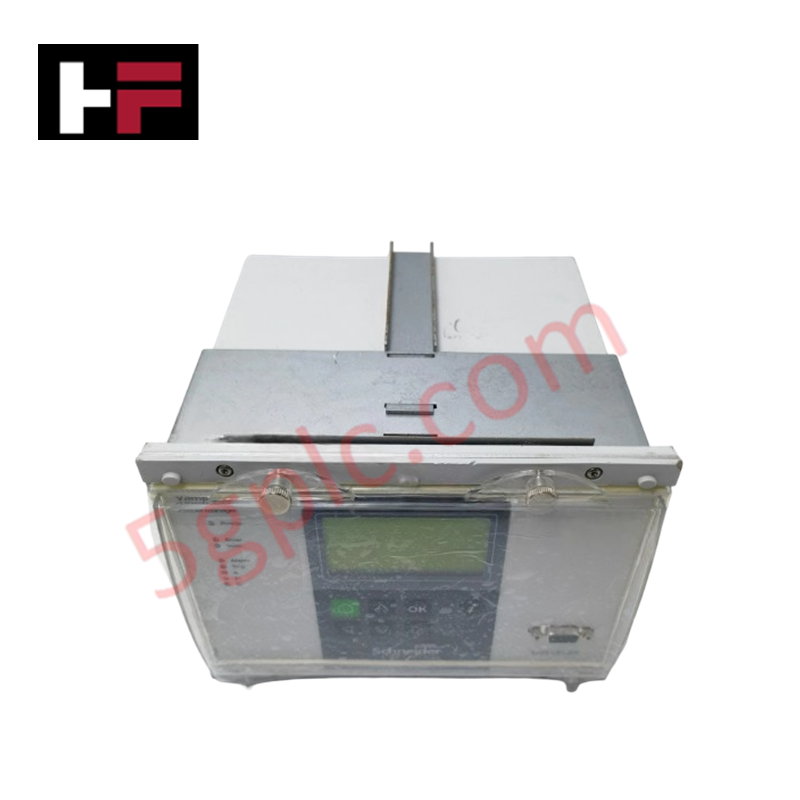
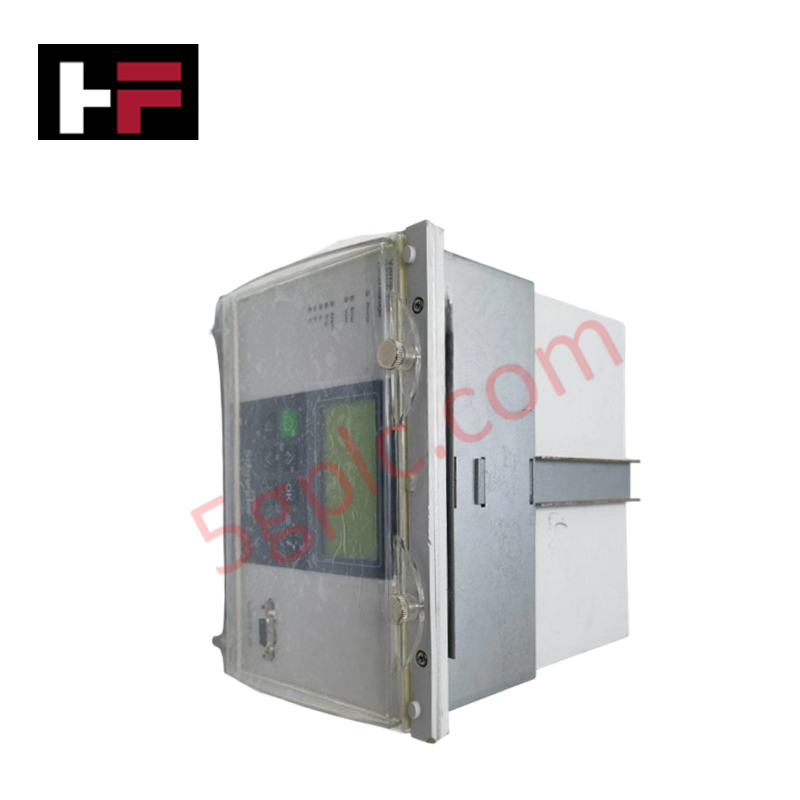
The Schneider Electric LUCB05BL, also cataloged as the LUCB Advanced Control Unit, operates as a dedicated hardware component for 3-phase motor protection and thermal overload execution within TeSys Ultra power bases.
Hardware Specifications
| Parameter | Specification |
|---|---|
| Model | LUCB05BL |
| Brand | Schneider Electric |
| Origin | France |
| Weight | 113 g (0.113 kg) |
| Dimensions | 45 mm x 66 mm x 60 mm (W x H x D) |
| Operating Temp | -25 to +70 deg C |
| Power Consumption | Heat dissipation: 2 W (with LUB12), 3 W (with LUB32/LUB38) |
| Rated Operational Voltage [Ue] | 690 V AC (40 to 60 Hz) |
| Control Circuit Voltage [Uc] | 24 V DC (Limits: 20 to 27 V DC operational, 14.5 V DC drop-out) |
| Motor Current Adjustment Range | 1.25 to 5 A |
| Thermal Overload Class | Class 10 (40 to 60 Hz, -25 to 70 deg C) |
| Tripping Threshold | 14.2 x Ir +/- 20 % |
| Motor Power Rating | 1.5 kW at 400-440 V AC, 2.2 kW at 500 V AC, 3 kW at 690 V AC |
| Control Current Consumption | Closing: 130 mA (LUB12), 220 mA (LUB32/38); Sealed: 60 mA (LUB12), 80 mA (LUB32/38) |
| Insulation Voltage [Ui] | 690 V (IEC 60947-6-2), 600 V (UL 60947-4-1 / CSA C22.2 No 60947-4-1) |
| Ingress Protection | IP20 (front panel and wired terminals), IP40 (front panel outside connection zone) |
Industrial Control & Bus Communication Characteristics
The LUCB05BL advanced control unit attaches directly via front-face plug-in mounting to LUB power bases and LU2B reversing contactor breakers. Internal current-sensing transformers provide phase failure sensitivity, phase imbalance protection, earth fault detection, and manual reset functions. Communication interface capabilities support real-time motor diagnostic transmission across Profinet and EtherNet/IP deterministic networks, maintaining backplane bus communication velocity and firmware flash compatibility across integrated starter configurations.
Frequently Asked Questions
Q: What are the control coil voltage operational thresholds for the LUCB05BL unit?
A: The rated control circuit voltage is 24 V DC, operating within strict limits of 20 to 27 V DC during active state execution and dropping out at 14.5 V DC.
Q: Which power bases and contactors are physically compatible with this control module?
A: The LUCB05BL plug-in module interfaces directly with LUB12, LUB32, LUB38, LUB120, LUB320, and LUB380 power bases, as well as LU2B12BL, LU2B32BL, and LU2B38BL reversing contactor breakers.
Q: What opening and closing times occur when the control unit acts on a power base?
A: Operating response times are rated at 35 ms for circuit opening and 70 ms for circuit closing across LUB12, LUB32, and LUB38 assemblies.
Field Installation Guidelines
- Plug-In Mounting: Align the LUCB05BL unit with the front-face connector slot of the unpowered LUB or LU2B base unit and push firmly until the locking mechanism fully seats.
- Control Circuit Wiring: Connect 24 V DC control supply leads to the designated control terminals. Ensure control circuit voltage remains between 20 V DC and 27 V DC during peak inrush (up to 220 mA) to prevent contact chatter.
- Thermal Current Setting: Adjust the front dial to match the exact full-load current (FLA) of the connected 3-phase motor within the 1.25 A to 5 A scaling range before applying main line voltage up to 690 V AC.
Additional Information
- 100% Genuine Parts: All products are original and authentic, ensuring reliable industrial performance.
- 30-Day Refund Guarantee: Return any in-stock item within 30 days in original, unopened packaging for a full refund (excluding shipping and fees).
- 12-Month Warranty: Covers defects in materials or workmanship; excludes misuse, normal wear, or unauthorized modifications.
- Worldwide Shipping: We ship via USPS, UPS, FedEx, and DHL. Delivery times vary by country and may be subject to customs or import fees.
- Support & Contact: Technical and warranty assistance is available anytime. Contact us here: Contact.
- Purchase Guidance: Check product specifications and compatibility carefully before ordering to ensure proper application.
Tech & Buying Guide

Comprehensive Guide to PLC Types in Modern Industrial Automation
Modern industrial automation relies on programmable logic controllers to govern critical factory operations. System integrators classify PLCs based on scale, hardware architecture, and power supply design. Understanding these core categories enables automation engineers to select the right control system architecture. Consequently, proper hardware selection optimizes performance while minimizing long-term operational costs.

Demystifying the DDE Protocol in Legacy Industrial Automation Systems
Modern control systems rely heavily on seamless interprocess communication to exchange operational data between software programs. Microsoft first introduced the Dynamic Data Exchange (DDE) protocol in 1987 to enable real-time data sharing. In factory automation, DDE served as an early bridge between control software and Windows desktop applications. Therefore, understanding DDE mechanics provides crucial insights into how legacy industrial networks established software-level connectivity.

Demystifying CPU Communication Ports in Siemens PLC Architectures
Industrial automation relies heavily on robust data exchange between devices. Without seamless connectivity, field instruments, network switches, human-machine interfaces, and programmable logic controllers cannot coordinate effectively. Therefore, understanding the various CPU communication ports available in Siemens hardware ensures efficient factory automation design and seamless system integration.