










Product Details
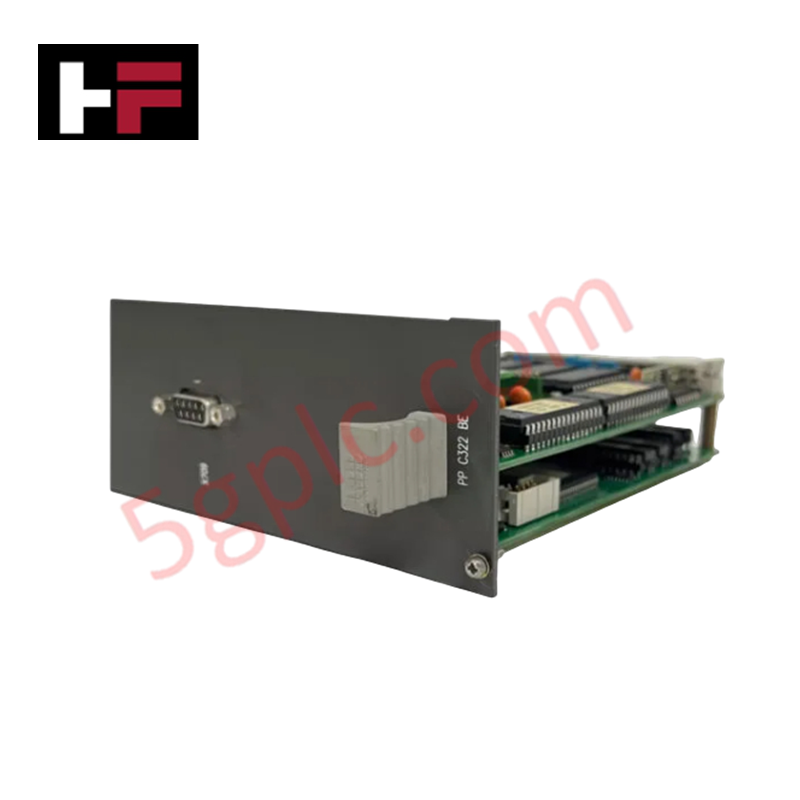
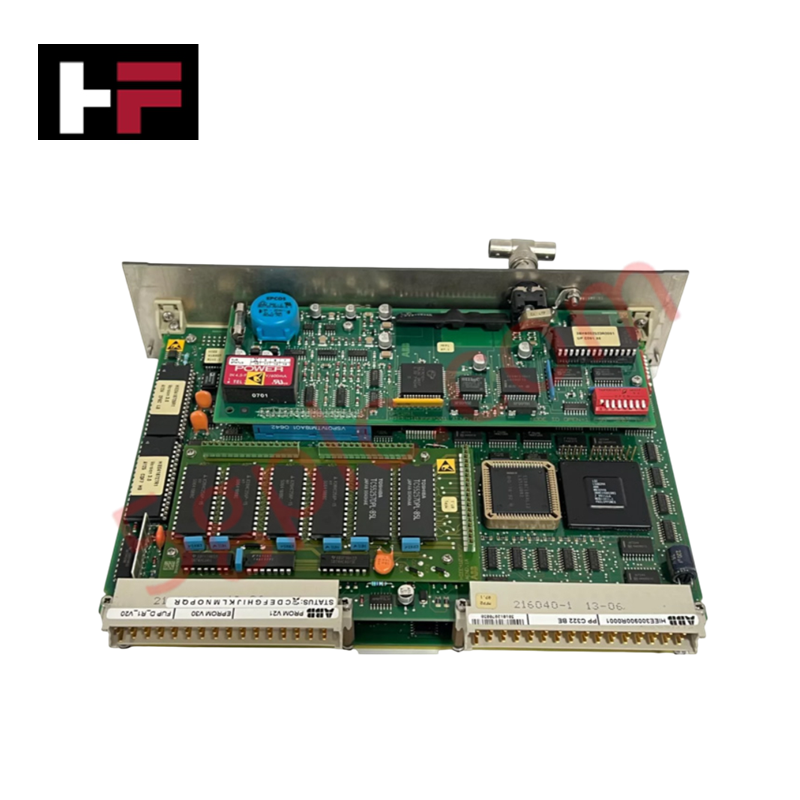
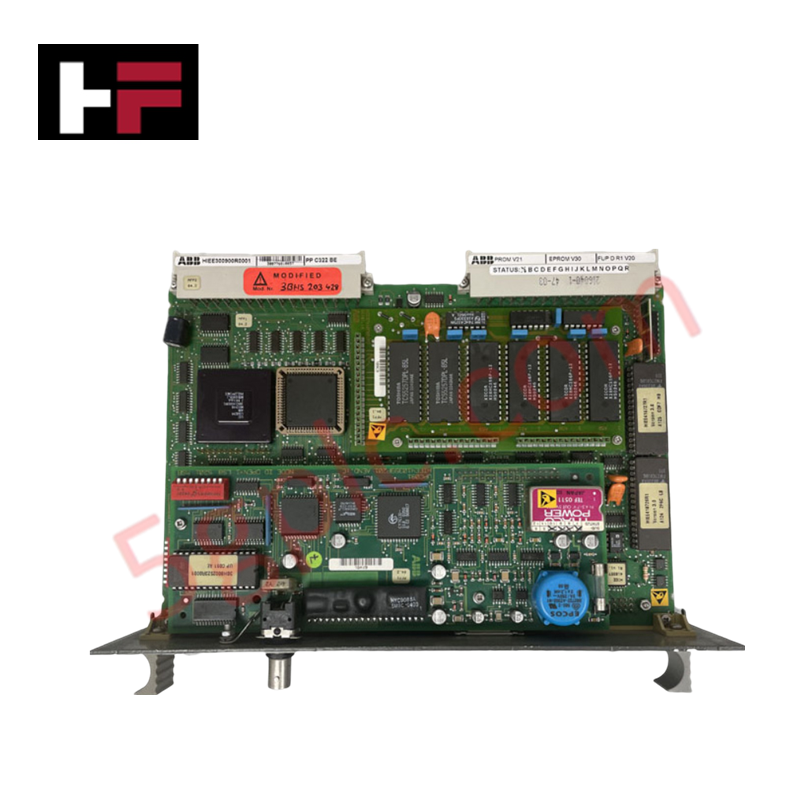
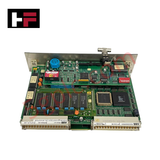
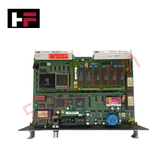
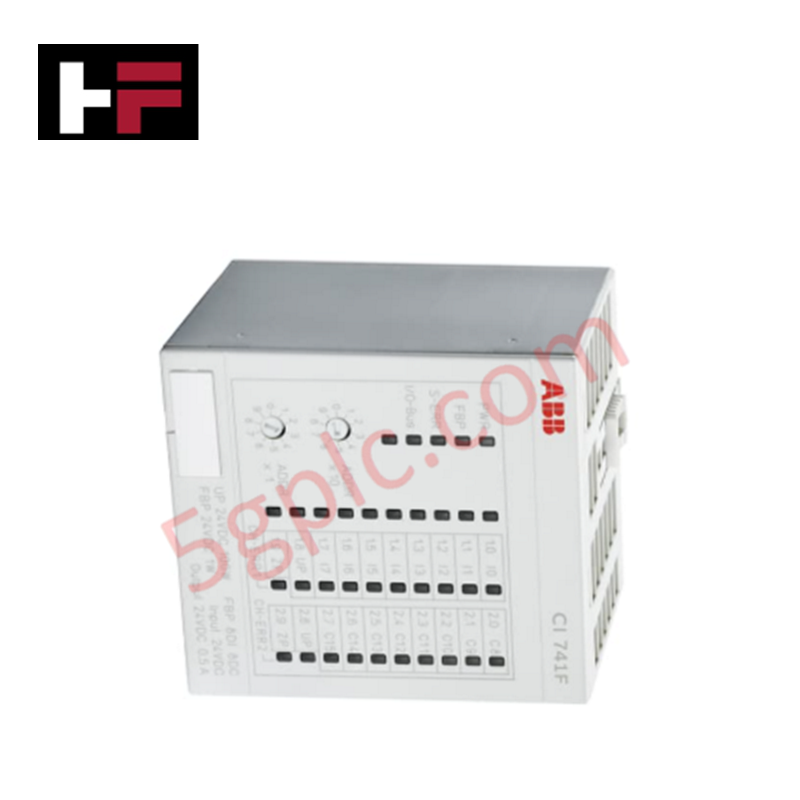
The ABB PP C322 BE HIEE300900R0001 serves as the primary PP C322 BE Processing Unit utilized to execute industrial control logic and fieldbus communication tasks across ABB DCS platforms. Configured with an internal PSR-2 processor operating at a main frequency of 100 MHz, the hardware processes data sequences through integrated volatile memory segments while maintaining communication protocols across dedicated physical links. It routes real-time digital states and cyclic process data between network topologies and the localized execution stack under a fixed nominal power supply.
Hardware Specifications
| Parameter | Specification |
|---|---|
| Model | PP C322 BE HIEE300900R0001 |
| Brand | ABB |
| Origin | Switzerland |
| Weight | 0.65 kg |
| Dimensions | 150 mm x 120 mm x 45 mm |
| Operating Temp | -20 to +60 deg C |
| Power Consumption | 15 W |
| Processor Type | PSR-2 (100 MHz) |
| Memory Capacity | 128 MB RAM |
| Power Supply Voltage | 24 VDC |
| Communication Interface | PROFIBUS DP, Modbus RTU, Modbus TCP |
| Protection Level | IP20 |
| Installation Method | DIN rail installation |
Profinet / EtherNet/IP Deterministic Networks and Firmware Flash Compatibility
The hardware architecture interfaces with industrial backplanes to manage multi-drop instrumentation paths. For automation rings relying on Profinet / EtherNet/IP deterministic networks, systemic configuration must ensure structural firmware flash compatibility between the PSR-2 execution core and external network bridging couplers. Any unaligned firmware compilation block disrupts synchronous backplane cycles, introducing data packet latency or dropping active Modbus TCP and PROFIBUS DP processing frames during live runtime automation routines.
Frequently Asked Questions
Q: What are the explicit hot-swap boundaries for the PPC322BE module under a 24 VDC load?
A: This processing unit cannot be hot-swapped or extracted while the 24 VDC backplane bus is energized. Power isolation is required prior to mechanical dismounting from the DIN rail to avoid volatile memory corruption or electrical arcing across internal processor logic lines.
Q: How is the 128 MB RAM retained during a total loss of the main 24 VDC power supply?
A: Volatile runtime logic maps are preserved through system-level backup battery lines embedded in the mounting chassis layout; a primary voltage drop below specified tolerance thresholds initiates an ordered shutdown to freeze current process registers.
Q: What are the network limits when running Modbus RTU and Modbus TCP concurrently?
A: Concurrent protocol execution is bounded by the processing clock velocity of the 100 MHz PSR-2 chip. Application engineering must budget communication tasks within distinct logic time-slices to prevent task execution timeouts.
Field Installation Guidelines
Mount the IP20-rated enclosure vertically onto a standard grounding-verified DIN rail inside an industrial cabinet. Ensure the structural metallic chassis bonds directly to the master station reference earth bar to suppress external high-frequency electrical noise. All serial communication links and Ethernet lines must be routed inside separate, shielded wire channels away from three-phase high-voltage AC lines to mitigate electromagnetic cross-talk. Maintain a minimum 50 mm clearance gap at the ventilation apertures to ensure unobstructed convective airflow within the -20 to +60 deg C operating temperature spectrum.
Additional Information
- 100% Genuine Parts: All products are original and authentic, ensuring reliable industrial performance.
- 30-Day Refund Guarantee: Return any in-stock item within 30 days in original, unopened packaging for a full refund (excluding shipping and fees).
- 12-Month Warranty: Covers defects in materials or workmanship; excludes misuse, normal wear, or unauthorized modifications.
- Worldwide Shipping: We ship via USPS, UPS, FedEx, and DHL. Delivery times vary by country and may be subject to customs or import fees.
- Support & Contact: Technical and warranty assistance is available anytime. Contact us here: Contact.
- Purchase Guidance: Check product specifications and compatibility carefully before ordering to ensure proper application.






Tech & Buying Guide

Demystifying the DDE Protocol in Legacy Industrial Automation Systems
Modern control systems rely heavily on seamless interprocess communication to exchange operational data between software programs. Microsoft first introduced the Dynamic Data Exchange (DDE) protocol in 1987 to enable real-time data sharing. In factory automation, DDE served as an early bridge between control software and Windows desktop applications. Therefore, understanding DDE mechanics provides crucial insights into how legacy industrial networks established software-level connectivity.

Demystifying CPU Communication Ports in Siemens PLC Architectures
Industrial automation relies heavily on robust data exchange between devices. Without seamless connectivity, field instruments, network switches, human-machine interfaces, and programmable logic controllers cannot coordinate effectively. Therefore, understanding the various CPU communication ports available in Siemens hardware ensures efficient factory automation design and seamless system integration.

Mastering the Siemens PLC Scan Cycle: How the CPU Executes Automation Programs
Industrial automation relies heavily on programmable logic controllers (PLCs) to manage complex manufacturing processes. Many engineers dive straight into programming without mastering the underlying architecture. However, understanding how a PLC CPU executes a program ensures reliable system design. Therefore, mastering the scan cycle optimizes both performance and troubleshooting in modern control systems.