










Product Details
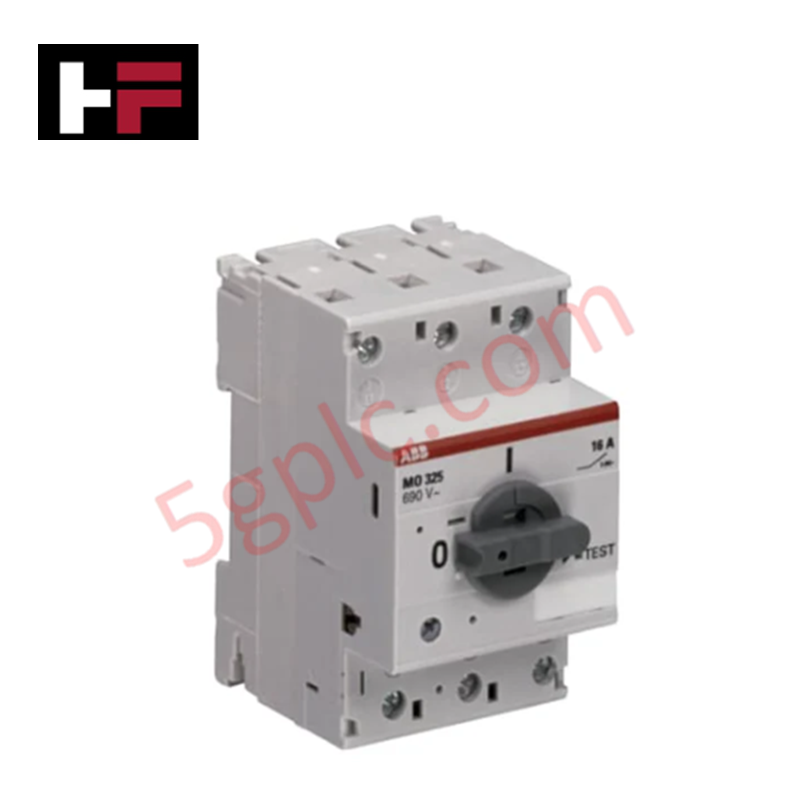
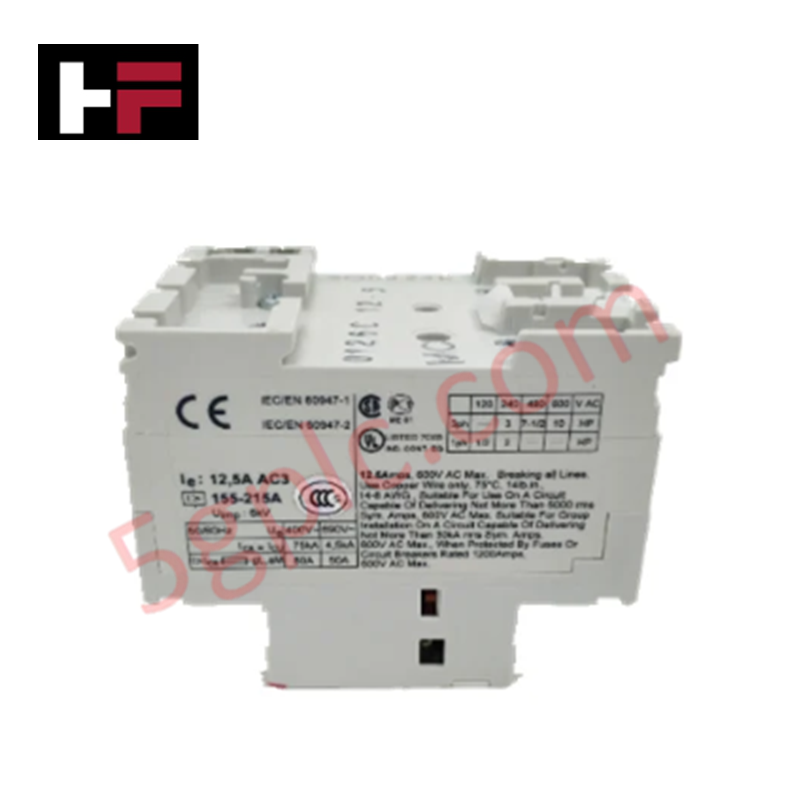
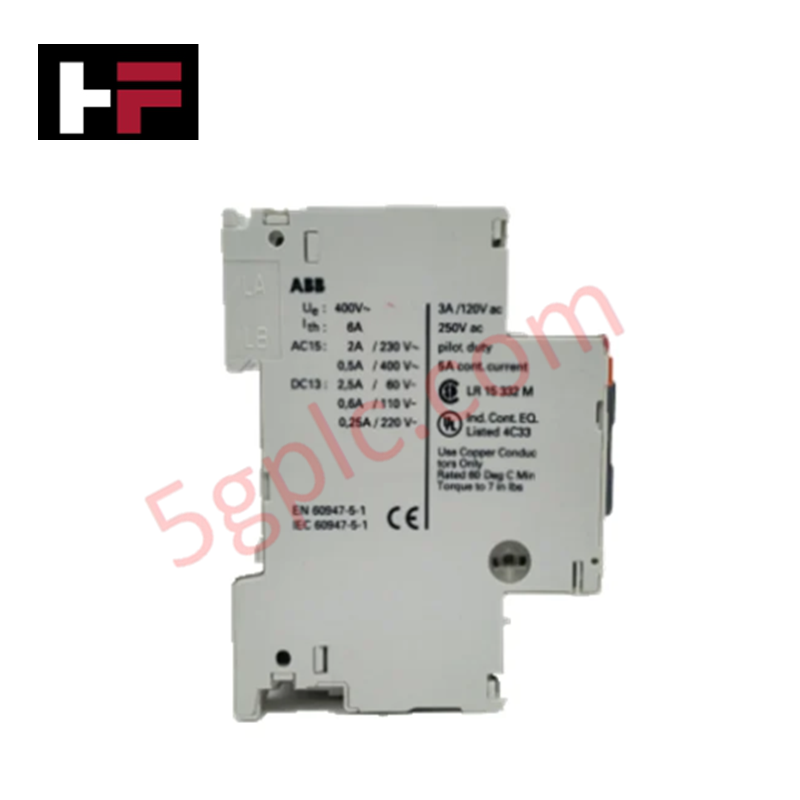
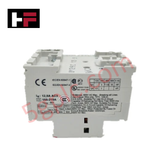
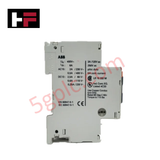
Configured for physical/mechanical switching and magnetic short-circuit protection in motor loop layouts, the ABB MO325-9.0 1SAM160000R1010 (MO325-9 Manual Motor Starter) provides direct physical/electrical execution.
Hardware Specifications
| Parameter | Specification |
|---|---|
| Model | MO325-9.0 1SAM160000R1010 |
| Brand | ABB |
| Origin | Germany / Europe standard sourcing |
| Weight | 0.34 kg |
| Dimensions | 54 mm x 87.5 mm x 75.5 mm |
| Operating Temp | -25 to +50 deg C (Operation), 0 to +40 deg C (Around Enclosure) |
| Power Consumption | Passive magnetic trip element current distribution |
| Current Rating | 9 A continuous |
| Protection Type | Magnetic short-circuit trip execution only (fuse-less) |
| Max Operating Altitude | 2000 m |
| Resistance to Shock | 15 g for 11 ms pulse |
| Resistance to Vibrations | 5 g at 10 to 150 Hz |
| RoHS Status | Compliant with EU Directive 2011/65/EU |
I/O Density Scaling and Backplane Bus Protection
The ABB MO325-9.0 1SAM160000R1010 serves as a standalone electromagnetic protection element positioned at the physical boundary of a drive drop or terminal cluster. Its localized short-circuit clearing capability safeguards adjacent system logic blocks, halting destructive surge currents before they can induce component failure across the internal network backplane. This structural containment supports uninhibited I/O density scaling routines within the marshalling panel, maintaining steady line stability and preserving target backplane bus communication velocity metrics by decoupling physical load faults from delicate firmware flash compatibility parameters.
Frequently Asked Questions
Q: Does this specific version include integrated thermal overload elements for comprehensive motor branch-circuit protection?
A: No. The unit utilizes a magnetic-only configuration designed solely for instantaneous short-circuit fault interruption. Overload protection must be added via an external thermal relay or equivalent electronic controller.
Q: Can auxiliary electrical contact states be derived from this manual starter for remote PLC status tracking?
A: Yes. Lateral or front-mounting auxiliary contact blocks can be physically attached to the 54 mm housing framework to echo the manual switch handle position back to a digital input module.
Field Installation Guidelines
- Snap the base housing firmly onto standard 35 mm symmetrical DIN-rail infrastructure inside the electrical enclosure track.
- Route line and load cables directly into the compression terminals, securing all connections to rated torque specifications.
- Keep the surrounding air boundaries clear to stay within the 0 to +40 deg C enclosed ambient design ceiling.
- Verify mechanical toggle operation by switching the actuator handle between the On and Off index points prior to application of full line power.
Additional Information
- 100% Genuine Parts: All products are original and authentic, ensuring reliable industrial performance.
- 30-Day Refund Guarantee: Return any in-stock item within 30 days in original, unopened packaging for a full refund (excluding shipping and fees).
- 12-Month Warranty: Covers defects in materials or workmanship; excludes misuse, normal wear, or unauthorized modifications.
- Worldwide Shipping: We ship via USPS, UPS, FedEx, and DHL. Delivery times vary by country and may be subject to customs or import fees.
- Support & Contact: Technical and warranty assistance is available anytime. Contact us here: Contact.
- Purchase Guidance: Check product specifications and compatibility carefully before ordering to ensure proper application.






Tech & Buying Guide

Demystifying the DDE Protocol in Legacy Industrial Automation Systems
Modern control systems rely heavily on seamless interprocess communication to exchange operational data between software programs. Microsoft first introduced the Dynamic Data Exchange (DDE) protocol in 1987 to enable real-time data sharing. In factory automation, DDE served as an early bridge between control software and Windows desktop applications. Therefore, understanding DDE mechanics provides crucial insights into how legacy industrial networks established software-level connectivity.

Demystifying CPU Communication Ports in Siemens PLC Architectures
Industrial automation relies heavily on robust data exchange between devices. Without seamless connectivity, field instruments, network switches, human-machine interfaces, and programmable logic controllers cannot coordinate effectively. Therefore, understanding the various CPU communication ports available in Siemens hardware ensures efficient factory automation design and seamless system integration.

Mastering the Siemens PLC Scan Cycle: How the CPU Executes Automation Programs
Industrial automation relies heavily on programmable logic controllers (PLCs) to manage complex manufacturing processes. Many engineers dive straight into programming without mastering the underlying architecture. However, understanding how a PLC CPU executes a program ensures reliable system design. Therefore, mastering the scan cycle optimizes both performance and troubleshooting in modern control systems.