












Product Details
Configured for signal termination and distribution in Mark VIe control architectures, the GE IS200TCASH1ACB (IS200TCASH1ACB Terminal Board) provides direct physical and electrical execution of analog signal routing and sensor excitation.
Hardware Specifications
| Parameter | Specification |
|---|---|
| Model | IS200TCASH1ACB |
| Brand | General Electric |
| Origin | USA |
| Weight | 2 lbs |
| Dimensions | 33.02 cm x 17.8 cm |
| Operating Temp | 30 deg C to 50 deg C |
| Power Consumption | 24 VDC (Excitation) |
| Analog Inputs | 25 |
| Analog Outputs | 4-20 mA / 0-20 mA |
| Lead Resistance | 15 Ohm (Maximum) |
Profinet / EtherNet/IP Deterministic Networks
The IS200TCASH1ACB serves as an interface node within the Mark VIe ecosystem, facilitating standardized signal conditioning between field-mounted instrumentation and system I/O packs. The board architecture supports deterministic backplane bus communication velocity, ensuring that analog data acquisition remains synchronized with controller scan cycles. Firmware flash compatibility is managed via the host I/O pack configuration, which defines the scaling and filtering parameters for the 25 input channels. The module supports I/O density scaling through its robust termination layout, allowing for high-integrity signal transmission while minimizing signal degradation over field cabling. The surface-mount technology utilized in the PCB construction maintains consistent electrical impedance, supporting precision analog output regulation from 0 to 20 mA.
Frequently Asked Questions
Q: Does the IS200TCASH1ACB support hot-swapping under load?
A: No. Replacement of the terminal board requires the associated I/O loop to be de-energized to prevent transient currents from damaging the analog output circuitry or the connected field devices.
Q: Is the 24 VDC excitation voltage configurable on a per-channel basis?
A: No. The 24 VDC excitation is common across the designated input channels on the board. Ensure all field instruments connected to these inputs are compatible with the shared excitation voltage.
Field Installation Guidelines
- Mounting: Secure the board within the cabinet using the provided mounting holes. Maintain adequate clearance from high-voltage AC lines to prevent induced noise on the analog signal paths.
- Wiring: Terminate field wiring using the designated terminal blocks. Maintain consistent polarity for all analog loops and ensure that cable shields are grounded at a single, low-impedance point to minimize common-mode noise.
- Loop Resistance: Ensure that the total lead resistance of the field cabling does not exceed 15 Ohm to maintain the accuracy of the 4-20 mA signal transmission.
- Environment: Verify that the cabinet internal temperature remains within the specified range of 30 deg C to 50 deg C. Provide sufficient airflow to prevent heat accumulation around the board's passive and active components.
- Verification: Prior to energization, conduct a point-to-point electrical check to verify wiring integrity and polarity. Use the Mark VIe diagnostic tool to confirm that all 25 analog inputs are correctly registered by the system.
Additional Information
- 100% Genuine Parts: All products are original and authentic, ensuring reliable industrial performance.
- 30-Day Refund Guarantee: Return any in-stock item within 30 days in original, unopened packaging for a full refund (excluding shipping and fees).
- 12-Month Warranty: Covers defects in materials or workmanship; excludes misuse, normal wear, or unauthorized modifications.
- Worldwide Shipping: We ship via USPS, UPS, FedEx, and DHL. Delivery times vary by country and may be subject to customs or import fees.
- Support & Contact: Technical and warranty assistance is available anytime. Contact us here: Contact.
- Purchase Guidance: Check product specifications and compatibility carefully before ordering to ensure proper application.


Tech & Buying Guide
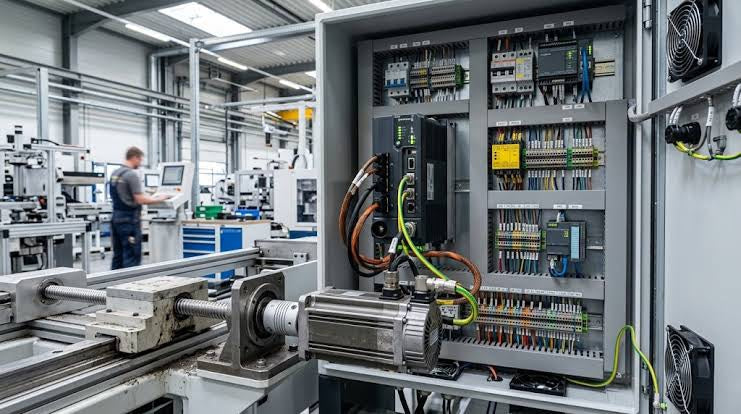
Demystifying Programmable Logic Controllers: Comprehensive Guide to PLC Classification and Selection in Industrial Automation
Modern industrial automation heavily relies on Programmable Logic Controllers (PLCs) to drive factory floor efficiency. Over my 15 years as an industrial automation expert working with DCS, TSI, and control systems, I have seen PLCs evolve into the central nervous system of modern manufacturing. Selecting the right controller requires a deep understanding of PLC types based on physical size, hardware architecture, and power supply configurations.

Comprehensive Guide to PLC Types in Modern Industrial Automation
Modern industrial automation relies on programmable logic controllers to govern critical factory operations. System integrators classify PLCs based on scale, hardware architecture, and power supply design. Understanding these core categories enables automation engineers to select the right control system architecture. Consequently, proper hardware selection optimizes performance while minimizing long-term operational costs.

Demystifying the DDE Protocol in Legacy Industrial Automation Systems
Modern control systems rely heavily on seamless interprocess communication to exchange operational data between software programs. Microsoft first introduced the Dynamic Data Exchange (DDE) protocol in 1987 to enable real-time data sharing. In factory automation, DDE served as an early bridge between control software and Windows desktop applications. Therefore, understanding DDE mechanics provides crucial insights into how legacy industrial networks established software-level connectivity.