
Product Details
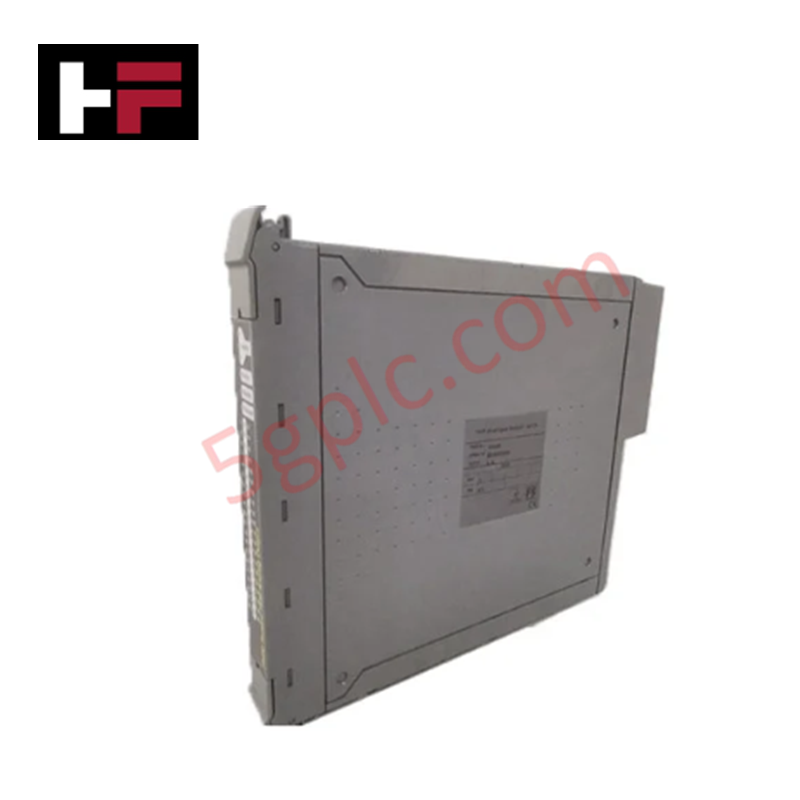
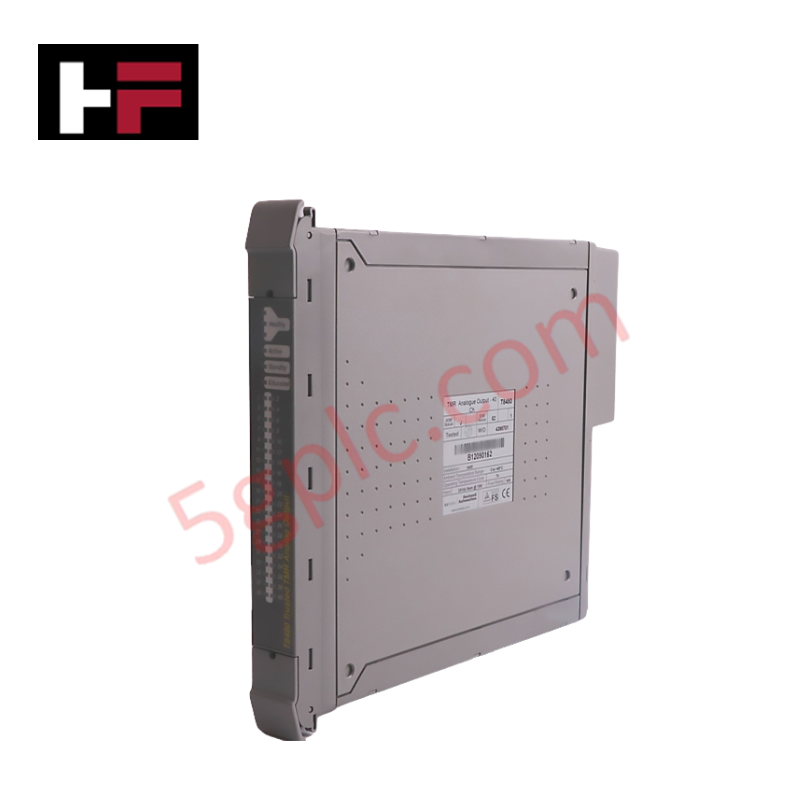
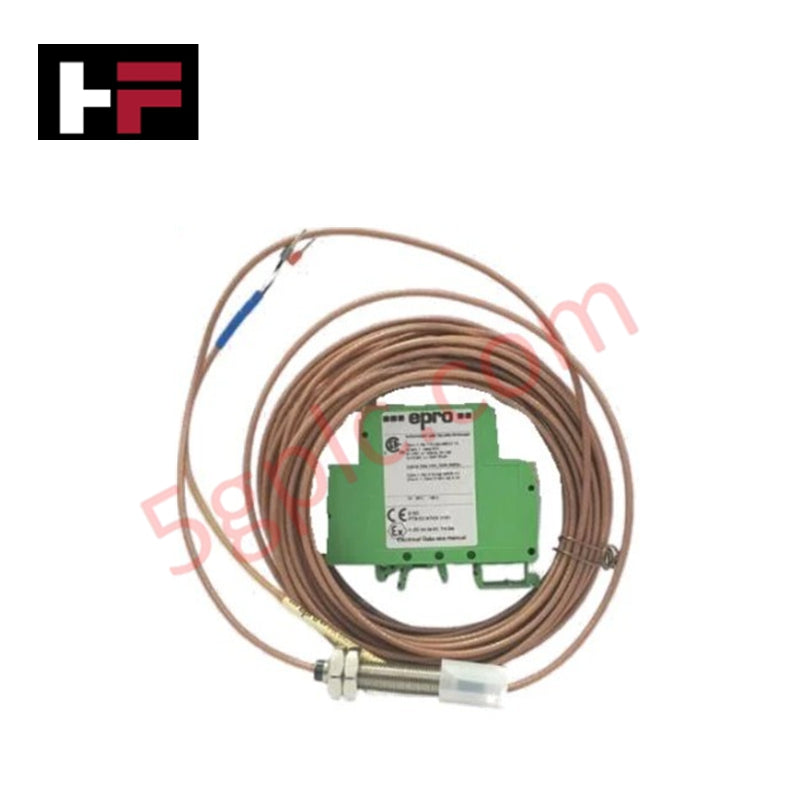
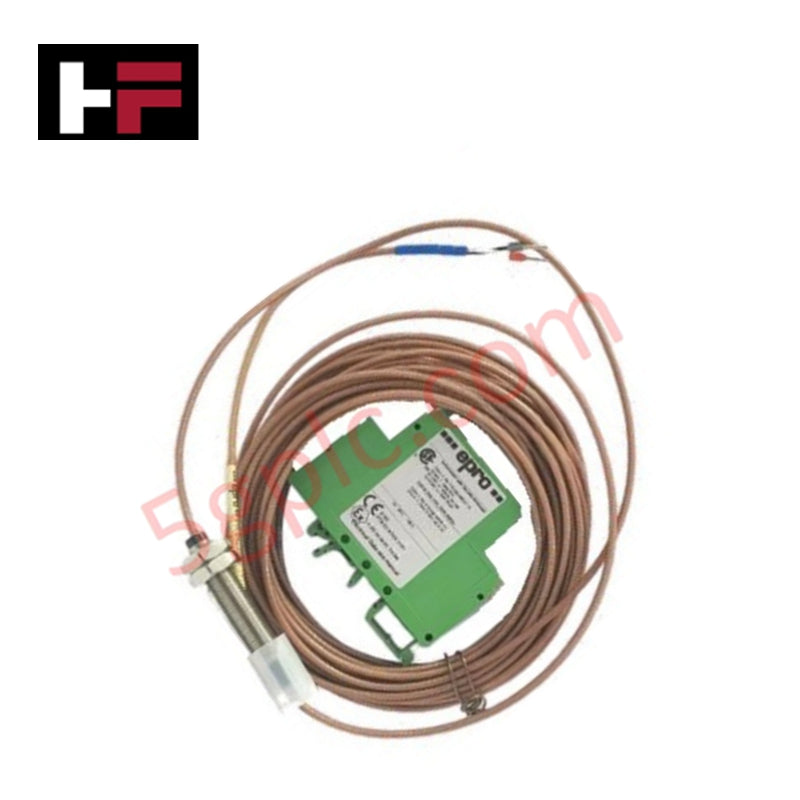
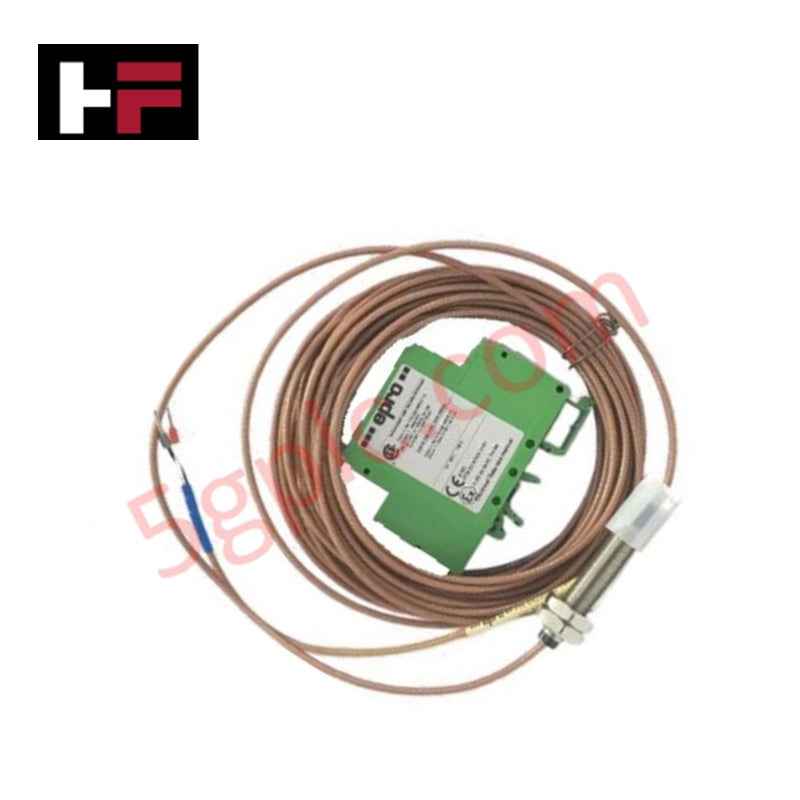
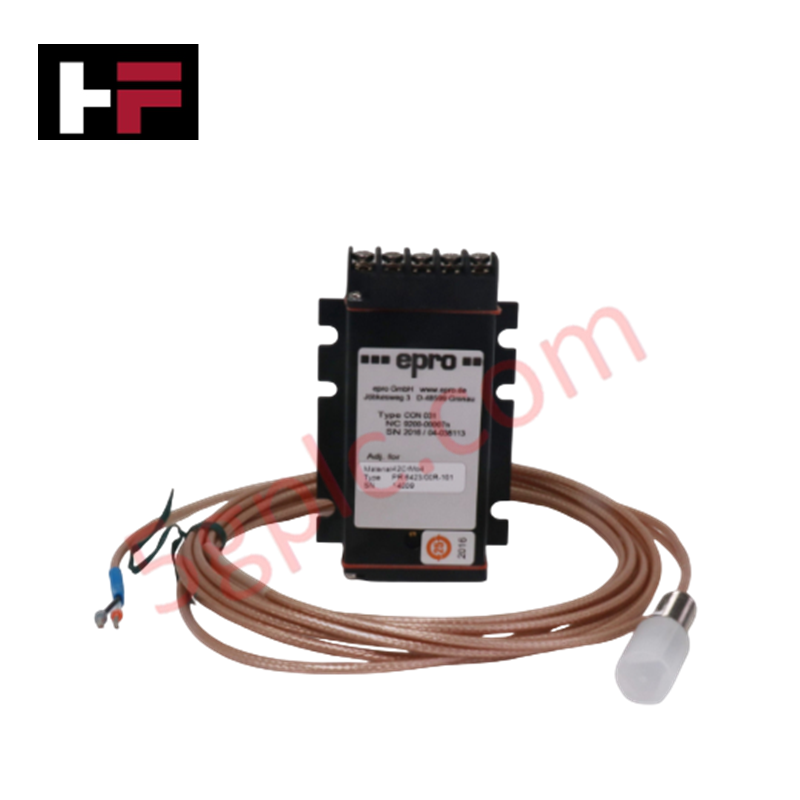
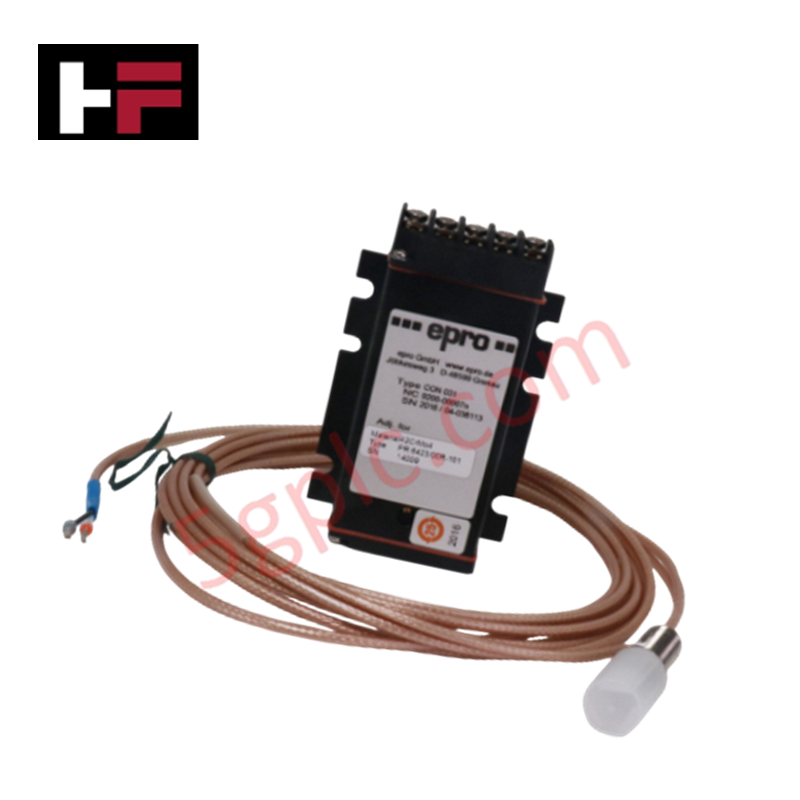
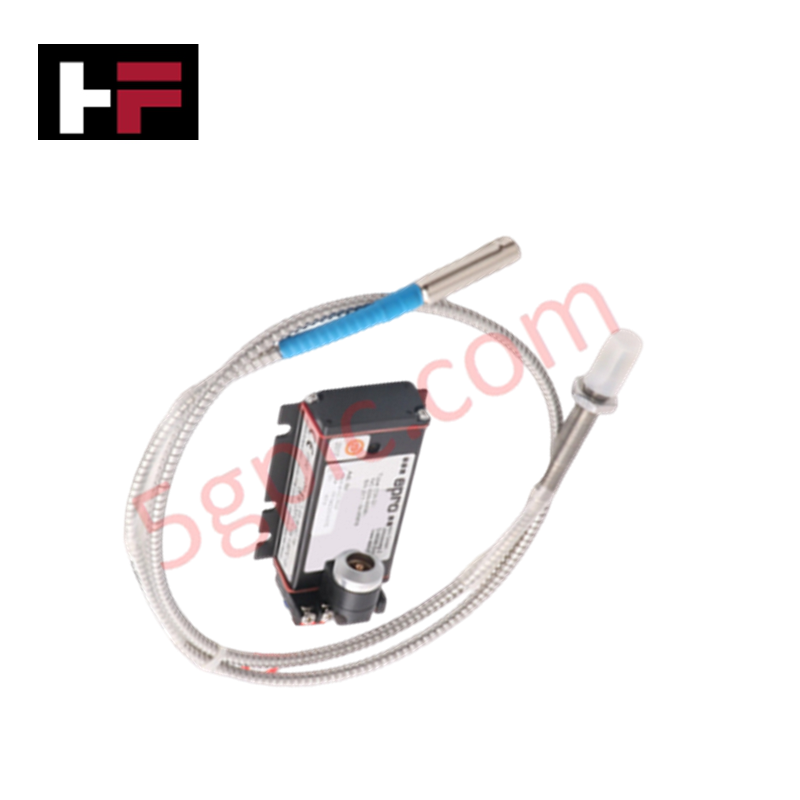
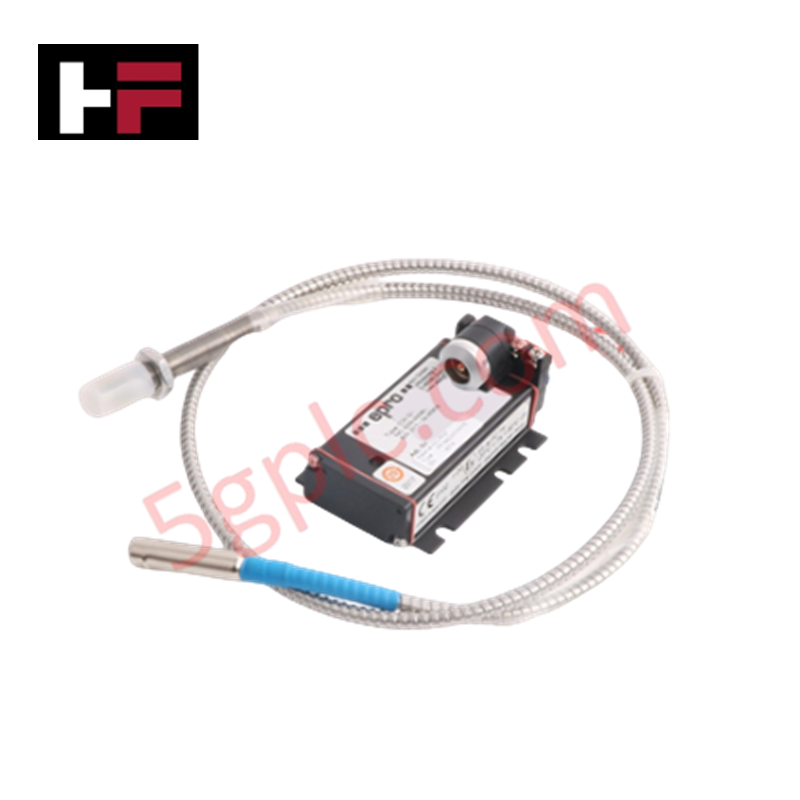
The Emerson CON041+PR6423/002-030, also cataloged as the CON041 / PR6423 Proximity Sensors, operates as a dedicated hardware component for shaft displacement and vibration measurement within Emerson machinery monitoring platforms. The hardware configuration pairs an 8 mm inductive proximity transducer with a 3 m integral cable and a CON041 signal converter module. By generating a high-frequency excitation field across the conductive steel surface, the assembly converts microscopic target gap distance changes directly into conditioned continuous voltage outputs without physical contact.
Hardware Specifications
| Parameter | Specification |
|---|---|
| Model | CON041+PR6423/002-030 |
| Brand | Emerson |
| Origin | United States |
| Operating Temp | -35 to +180 deg C (Sensor Head) |
| Power Consumption | Standard loop power dissipation |
| Probe Head Diameter | 8 mm |
| Cable Length | 3 m |
| Measurement Range | +/-2.0 mm dynamic, 0 to 1000 um static |
| Sensitivity | 7.87 V/mm (200 mV/mil) |
| Frequency Response | DC to 10 kHz |
| Target Material | Ferromagnetic steel (42CrMo4 standard) |
| Storage Temperature | -40 to +200 deg C |
| Pressure Resistance | Up to 10000 hPa (145 psi) |
| Probe Tip Material | PPS (Polyphenylene sulfide) |
| Housing Material | Stainless steel (SST) |
4-20 mA HART Loop Protocol & Channel Isolation
The CON041 converter circuitry incorporates a 4-20 mA HART loop protocol layer alongside raw gap signal conditioning, providing simultaneously mapped dynamic vibration data and digital diagnostic telemetry over standard field wiring. Galvanic channel-to-channel isolation decouples field sensor potentials from rack monitoring power planes, suppressing common-mode ground loop current interference. Integrated temperature compensation balances thermal drifts across the probe head between -35 to +180 deg C, holding scale factor stability to maintain uniform output sensitivity.
Frequently Asked Questions
Q: What is the calibrated scale sensitivity for this probe and converter combination?
A: The calibrated sensitivity is 7.87 V/mm (200 mV/mil), aligned for measurement against standard 42CrMo4 ferromagnetic steel targets.
Q: How does pressure exposure affect the sensing head tip assembly?
A: The PPS probe tip and stainless steel housing are rated for pressure resistance up to 10000 hPa (145 psi), preventing fluid ingress at sealing points during high-pressure machine casing operation.
Field Installation Guidelines
Maintain an un-obscured metallic clearance zone equal to at least 1.5 times the 8 mm probe tip diameter to prevent surrounding wall geometry from causing false inductance loading. Connect cable shielding to the monitoring rack technical ground bus at a single point only to eliminate earth loop currents. Route the 3 m sensor cable inside grounded metal conduits away from high-voltage motor feeds or variable frequency drives. Torque thread mounting locknuts to standard torque figures and seal external connectors with self-amalgamating tape to protect against fluid ingress.
Additional Information
- 100% Genuine Parts: All products are original and authentic, ensuring reliable industrial performance.
- 30-Day Refund Guarantee: Return any in-stock item within 30 days in original, unopened packaging for a full refund (excluding shipping and fees).
- 12-Month Warranty: Covers defects in materials or workmanship; excludes misuse, normal wear, or unauthorized modifications.
- Worldwide Shipping: We ship via USPS, UPS, FedEx, and DHL. Delivery times vary by country and may be subject to customs or import fees.
- Support & Contact: Technical and warranty assistance is available anytime. Contact us here: Contact.
- Purchase Guidance: Check product specifications and compatibility carefully before ordering to ensure proper application.




Tech & Buying Guide

Understanding Instrumentation Control Systems in Modern Industrial Automation
An instrumentation control system (ICS) serves as the central nervous system of modern manufacturing plants and processing facilities. Engineers classify these setups as Electrical, Electronic, or Programmable Electronic Systems (E/E/PES). In practice, an ICS bridges the physical world of industrial machinery with digital decision-making tools. Therefore, understanding its architecture is essential for anyone working in factory automation, process control, or plant safety.

Mastering Electrical Grounding Fundamentals in Industrial Automation and Control Systems
Electrical grounding is a complex engineering discipline. It requires deep knowledge of soil composition and conductor materials. National Electrical Code (NEC) Article 250 outlines these requirements clearly. Many engineers confuse grounding, earthing, and bonding. Grounding connects circuits to a common reference point. Earthing specifically links equipment directly to the planet. Bonding permanently joins metallic parts to ensure electrical continuity.

Architectural Blueprint of Industrial Automation and Control Systems (IACS): Standards, Safety, and Remote Operations
According to IEC 62443, Industrial Automation and Control Systems (IACS) integrate personnel, hardware, and software. These components collectively influence the safety and reliability of any industrial process. Modern control systems allow extensive remote monitoring and operation. However, enabling remote capabilities introduces complex cybersecurity challenges. Therefore, facility operators must evaluate system functions carefully before expanding connectivity.