













Product Details
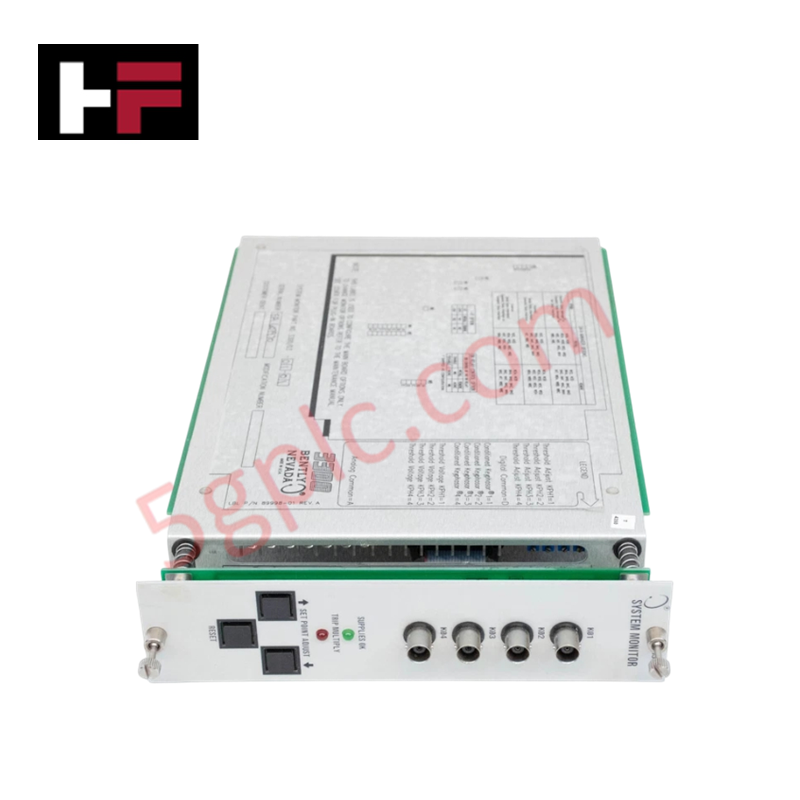
Configured for rack supervision and diagnostic signal routing in 3300 Machinery Protection Systems, the Bently Nevada 3300/03-01-01 (3300/03 System Monitor Module) provides direct physical/electrical execution.
Suffix Breakdown & Model Matrix
| Option Field | Code | Configuration Detail |
|---|---|---|
| Firmware / Interface Option | 01 | System Monitor with Serial Port / SDI Interface |
| Dynamic Data Interface Option | 01 | DDI / Dynamic Data Interface Enabled |
Hardware Specifications
| Parameter | Specification |
|---|---|
| Model | 3300/03-01-01 |
| Brand | Bently Nevada |
| Origin | USA |
| Weight | 0.85 kg |
| Dimensions | Single-slot 3300 series rack module |
| Operating Temp | -30 deg C to +65 deg C (-22 deg F to +149 deg F) |
| Power Consumption | 7.5 W maximum |
| Slot Location | Requires dedicated Position 1 (far left) in 3300 rack |
| Communication Ports | RS-232 / RS-422 serial interface, DDI port |
| Signal Connectors | Front panel BNC dynamic signal buffering |
Machinery Protection Rack Monitoring and Signal Integrity
The 3300/03-01-01 serves as the central administrative controller for the 3300 rack assembly, supervising DC power rails (+15 VDC, -15 VDC, +5 VDC) and validating internal rack communication buses. By managing system-wide OK relay states and bypass keylock functions, it prevents false machinery trip alarms. Integrated front-panel BNC jacks pass unbuffered raw dynamic signals directly from individual vibration monitor channels, maintaining precise eddy-current probe scaling and preventing cross-talk suppression or grounding degradation during online FFT spectrum analysis.
Frequently Asked Questions
Q: Can a 3300 monitoring rack operate safely without the 3300/03 System Monitor installed?
A: No, the 3300/03 module is mandatory for rack operation as it controls the master system OK relay, manages internal rack power bus diagnostics, and handles global alarm reset logic.
Q: What is the primary function of the front-panel BNC connectors on the 3300/03 module?
A: The BNC connectors provide buffered dynamic signal outputs for external portable vibration analyzers or diagnostic software without disturbing the continuous protection loop.
Field Installation Guidelines
- Power down the 3300 rack or verify that slot power controls permit safe module insertion into the dedicated leftmost slot (Position 1).
- Align the circuit card with the upper and lower rack guide rails, sliding the module inward until the rear edge connector seats fully into the backplane.
- Tighten the top and bottom front panel captive thumbscrews to secure mechanical grounding and prevent vibration-induced loosening.
- Connect the serial communication cable to the rear terminal block or RS-232/RS-422 port, ensuring shield drain wires tie directly to single-point chassis ground.
- Apply rack power, observing the front-panel OK LED to confirm self-test completion and normal system power bus voltage status.
Additional Information
- 100% Genuine Parts: All products are original and authentic, ensuring reliable industrial performance.
- 30-Day Refund Guarantee: Return any in-stock item within 30 days in original, unopened packaging for a full refund (excluding shipping and fees).
- 12-Month Warranty: Covers defects in materials or workmanship; excludes misuse, normal wear, or unauthorized modifications.
- Worldwide Shipping: We ship via USPS, UPS, FedEx, and DHL. Delivery times vary by country and may be subject to customs or import fees.
- Support & Contact: Technical and warranty assistance is available anytime. Contact us here: Contact.
- Purchase Guidance: Check product specifications and compatibility carefully before ordering to ensure proper application.











Tech & Buying Guide

Step-by-Step System Cabinet Health Check Guide for PLC and DCS Infrastructure

Top 5 Operational Advantages of HMIs in Modern Factory Automation
