














Product Details
Product Description
The 1788-CN2FFR is a specialized industrial network bridge designed to integrate FOUNDATION Fieldbus (FF) H1 segments directly into a ControlNet architecture. This linking device functions as a high-speed gateway, allowing controllers on a ControlNet network to communicate seamlessly with field-level instrumentation. By acting as the primary interface between these two distinct protocols, the 1788-CN2FFR (Part Number: 1788-CN2FFR) enables centralized configuration and asset management of fieldbus devices within a Process Automation System.
Engineered for mission-critical reliability, the module features dual BNC connectors to support redundant ControlNet media, ensuring continuous operation even in the event of a single cable failure. The device is housed in an open-style enclosure optimized for 35mm DIN rail mounting and is specifically designed for process control environments where high-speed data exchange and robust physical layer isolation are mandatory.
Technical Specifications
-
Brand: Allen-Bradley (Rockwell Automation)
-
Model Number: 1788-CN2FFR
-
Device Function: ControlNet-to-FOUNDATION Fieldbus H1 Linking
-
ControlNet Interface: 2 x BNC Coaxial Ports (Redundant Support)
-
Fieldbus Interface: H1 FOUNDATION Fieldbus (High-speed linking)
-
Operational Voltage: 24V to 32V DC
-
Current Consumption: 260 mA @ 24V DC
-
Power Dissipation: 12.4 Watts @ 24V DC
-
Fieldbus Current Output: 0.5 Amps @ 24V DC
-
Isolation Rating: 30V (Continuous)
-
Network Topology: Star, Tree, or Daisy Chain (Fieldbus side)
-
Enclosure Rating: Open-Style / IP20
-
Environmental Temperature: Industrial grade operating range
-
Physical Weight: 0.57 kg (1.25 lbs)
Integration and Application
This linking device is typically utilized in large-scale process plants where legacy ControlNet backbones must interface with modern smart instrumentation. The 1788-CN2FFR simplifies the network layer by allowing engineers to map Fieldbus device data directly into the ControlNet I/O image, effectively bridging the gap between plant floor control and field-level sensing.
Engineering FAQ
Does the 1788-CN2FFR support redundant media on both networks?The module is designed with redundant ControlNet BNC ports for high-availability communication. On the FOUNDATION Fieldbus side, it manages H1 segments; redundancy at that level is typically handled by the network architecture and segment design rather than the linking device itself.
What cabling is required for the ControlNet connection?Standard ControlNet RG-6 coaxial cable with BNC connectors is required for the primary ports. For any Ethernet-based configuration or diagnostic bridging, CAT5 Shielded Twisted Pair (STP) is recommended to maintain signal integrity in high-noise environments.
Additional Information
- 100% Genuine Parts: All products are original and authentic, ensuring reliable industrial performance.
- 30-Day Refund Guarantee: Return any in-stock item within 30 days in original, unopened packaging for a full refund (excluding shipping and fees).
- 12-Month Warranty: Covers defects in materials or workmanship; excludes misuse, normal wear, or unauthorized modifications.
- Worldwide Shipping: We ship via USPS, UPS, FedEx, and DHL. Delivery times vary by country and may be subject to customs or import fees.
- Support & Contact: Technical and warranty assistance is available anytime. Contact us here: Contact.
- Purchase Guidance: Check product specifications and compatibility carefully before ordering to ensure proper application.
Tech & Buying Guide
Modern Industrial Automation: Transforming Safety and Efficiency in Mining Operations
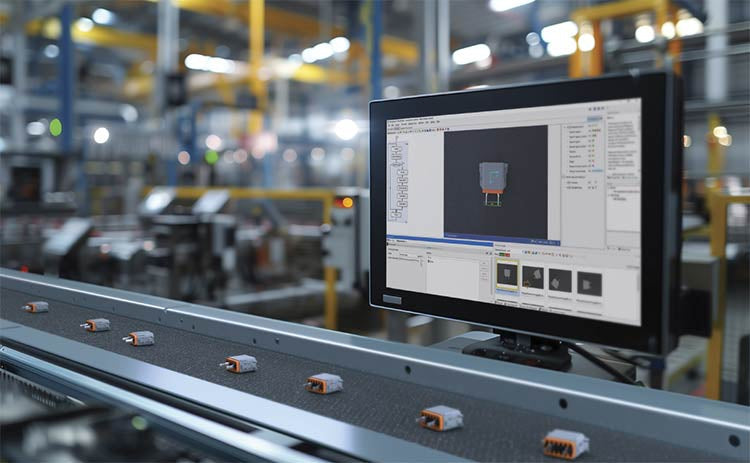
Industrial automation has evolved from a simple manufacturing tool into the operational backbone of high-risk sectors. Modern mining operations increasingly rely on advanced control systems, programmable logic controllers (PLCs), distributed control systems (DCS), and artificial intelligence to address deep-underground hazards. By replacing manual labor in high-risk zones, factory automation technologies protect personnel while significantly boosting operational throughput.

Step-by-Step System Cabinet Health Check Guide for PLC and DCS Infrastructure
