










Product Details
Product Overview
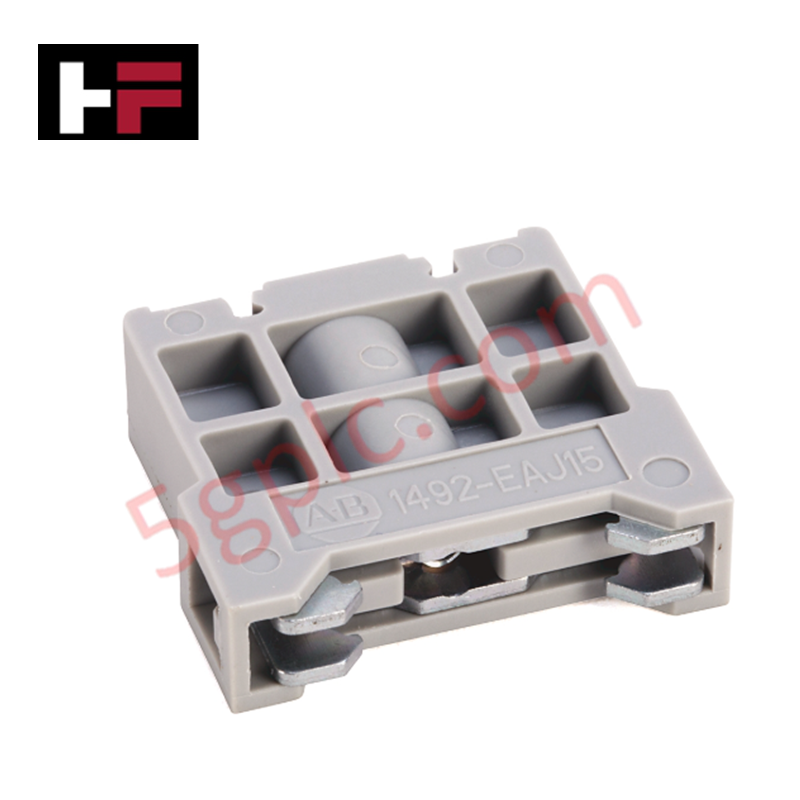
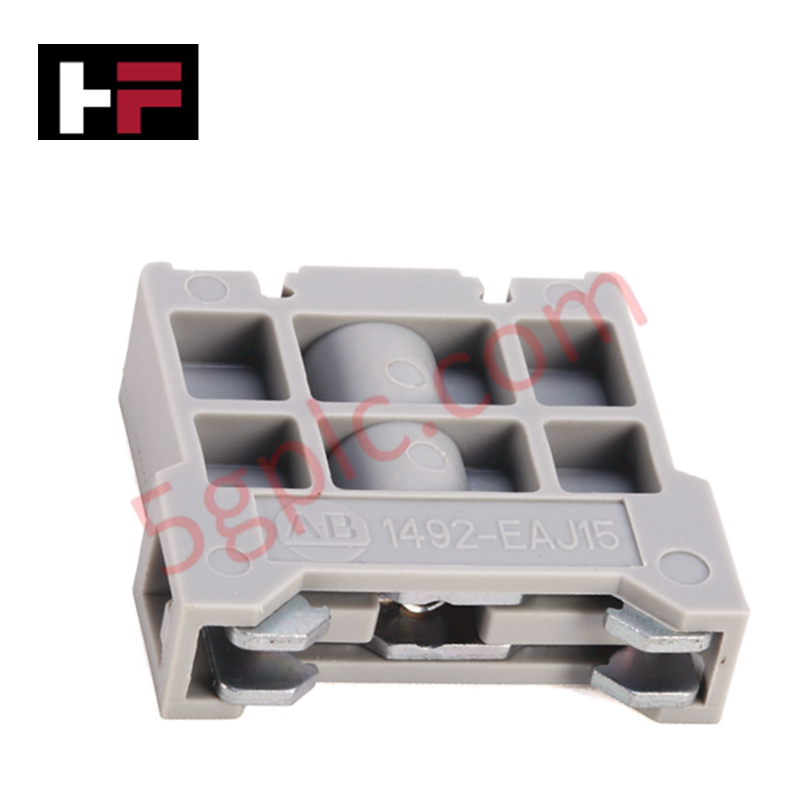
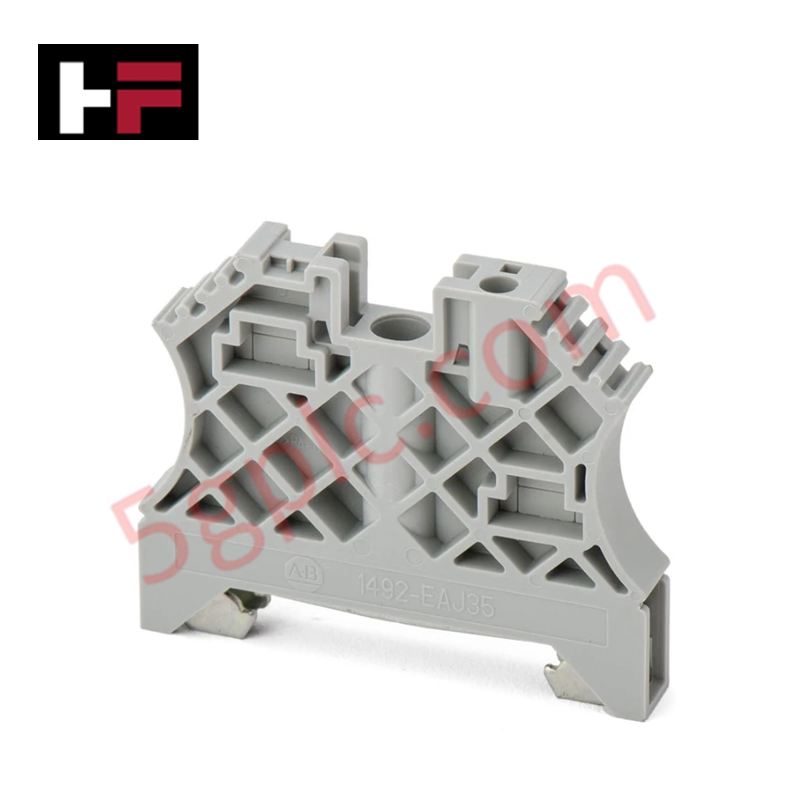
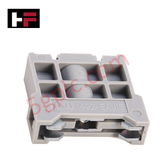
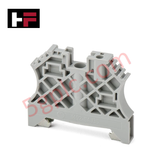
The Allen Bradley 1492-EAJ35 serves as a vital mechanical restraint for terminal block assemblies. It prevents lateral movement along the DIN rail, ensuring that terminal strips and internal components remain securely seated during machine operation or shipping. We provide this component as a 100% Brand New original part, designed to maintain the structural integrity of high-density control panels.
Technical Specifications
The 1492-EAJ35 features a robust, gray industrial housing tailored for standard mounting profiles.
| Parameter | Specification |
| Manufacturer | Allen Bradley (Rockwell Automation) |
| Part Number | 1492-EAJ35 |
| Product Type | End Anchor / End Stop |
| Mounting Style | Standard DIN Rail |
| Duty Rating | Normal Duty |
| Dimensions (Metric) | 8 x 56 x 47 mm |
| Dimensions (Imperial) | 0.31 x 2.20 x 1.85 in |
| Case Color | Industrial Gray |
| Weight | 0.04 lbs (0.018 kg) |
Engineering Advantages
-
Optimized Vibration Resistance: The 1492-EAJ35 exerts high clamping force on the DIN rail edges. This mechanical grip prevents terminal blocks from sliding or disconnecting when subjected to the constant harmonic vibrations found in motor control centers and heavy machinery.
-
Compact Footprint: With a narrow width of only 8mm, this anchor maximizes usable rail space. It allows engineers to pack more functional I/O or terminal points into cramped electrical enclosures without sacrificing assembly stability.
-
Simplified Alignment: The 47mm height profile aligns perfectly with standard 1492 series terminal blocks. This ensures a clean, professional aesthetic and provides a flush surface for end-plate support, preventing the "fanning" of wire terminations.
-
Rapid Installation: The tool-accessible tightening screw allows for instant locking. Technicians can slide the anchor into position and secure the entire rail assembly in seconds, reducing labor time during panel builds.
FAQs
-
What is the primary function of the 1492-EAJ35?
It acts as a physical stop at both ends of a terminal block row. Without it, terminal blocks can shift during wiring or machine movement, potentially leading to loose connections or short circuits.
-
Can I use this anchor with any DIN rail?
The 1492-EAJ35 fits standard 35mm DIN rails. While designed specifically for the Allen Bradley 1492 terminal block family, its universal mounting foot allows it to secure various components on standard rail profiles.
-
Does the "Normal Duty" rating affect its performance in industrial cabinets?
"Normal Duty" refers to standard indoor industrial environments. For most control panels, PLC racks, and junction boxes, the 1492-EAJ35 provides more than enough mechanical strength to hold terminal assemblies in place.
-
Is the 1492-EAJ35 sold individually?
While often used in pairs to "sandwich" a group of terminal blocks, we supply these as individual units to allow for precise inventory management based on your specific panel layout needs.
Additional Information
- 100% Genuine Parts: All products are original and authentic, ensuring reliable industrial performance.
- 30-Day Refund Guarantee: Return any in-stock item within 30 days in original, unopened packaging for a full refund (excluding shipping and fees).
- 12-Month Warranty: Covers defects in materials or workmanship; excludes misuse, normal wear, or unauthorized modifications.
- Worldwide Shipping: We ship via USPS, UPS, FedEx, and DHL. Delivery times vary by country and may be subject to customs or import fees.
- Support & Contact: Technical and warranty assistance is available anytime. Contact us here: Contact.
- Purchase Guidance: Check product specifications and compatibility carefully before ordering to ensure proper application.
Tech & Buying Guide

Mastering the Siemens PLC Scan Cycle: How the CPU Executes Automation Programs
Industrial automation relies heavily on programmable logic controllers (PLCs) to manage complex manufacturing processes. Many engineers dive straight into programming without mastering the underlying architecture. However, understanding how a PLC CPU executes a program ensures reliable system design. Therefore, mastering the scan cycle optimizes both performance and troubleshooting in modern control systems.

How to Connect to Siemens S7 PLCs: 5 Essential Communication Methods
Establishing a reliable hardware link between a programming terminal and a Siemens SIMATIC controller is essential for engineering workflows. Field engineers rely on distinct physical layers, ranging from legacy serial connections to high-speed Industrial Ethernet protocols. Modern factory automation environments prioritize fast data transfer and seamless driver integration. Selecting the correct connection method simplifies program downloads, online monitoring, and system troubleshooting in complex control systems.

Will PLCs Become Obsolete? The Future of Control Systems in Industry 4.0
Modern manufacturing is undergoing a rapid technological transformation driven by Industry 4.0 innovations. Technologies like Artificial Intelligence (AI), Machine Learning (ML), and the Industrial Internet of Things (IIoT) are dominating discussions across the factory automation sector. Consequently, many engineers wonder if these advanced digital tools will eventually replace traditional Programmable Logic Controllers (PLCs). However, evaluating the core physics of industrial operations reveals a very different reality for control systems.