










Product Details
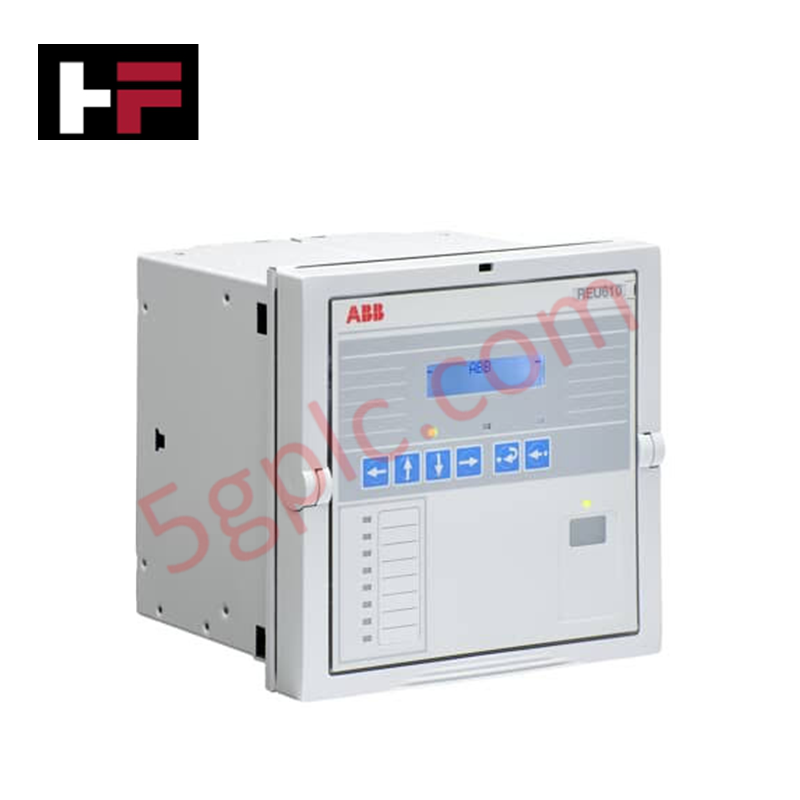
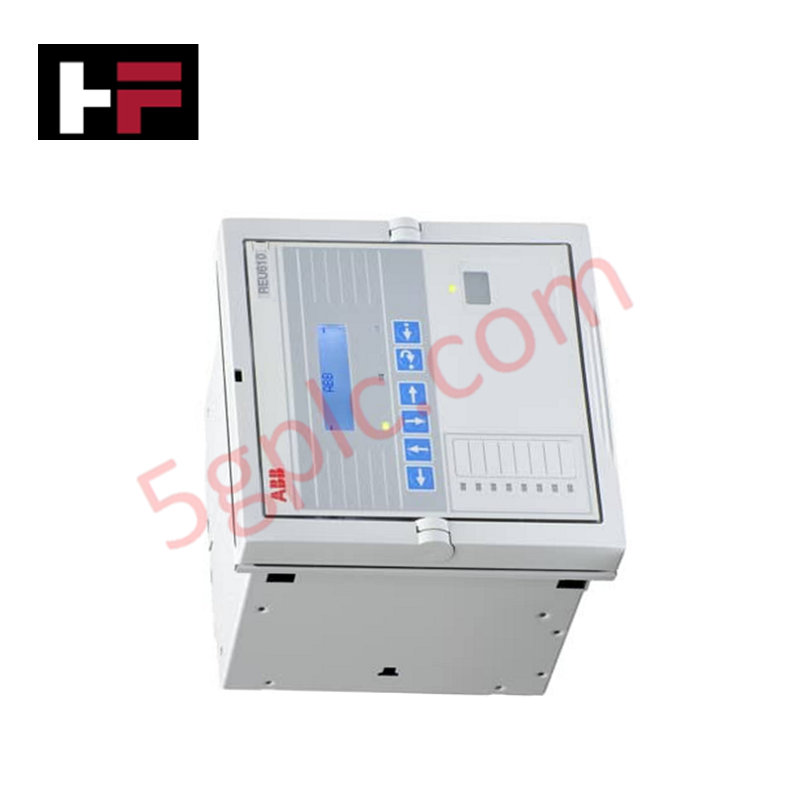
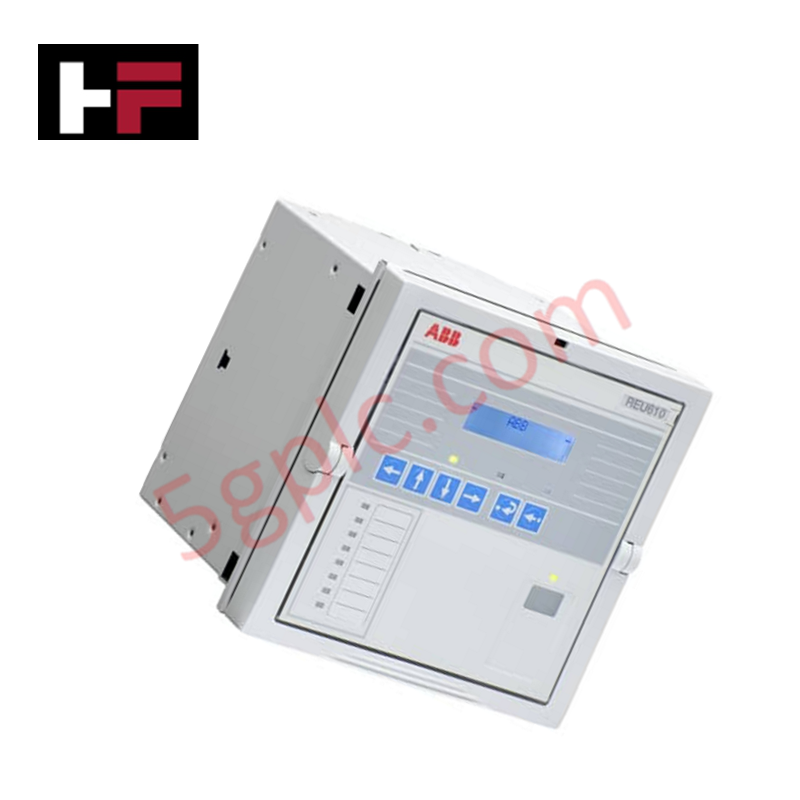
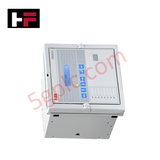
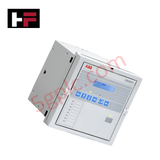
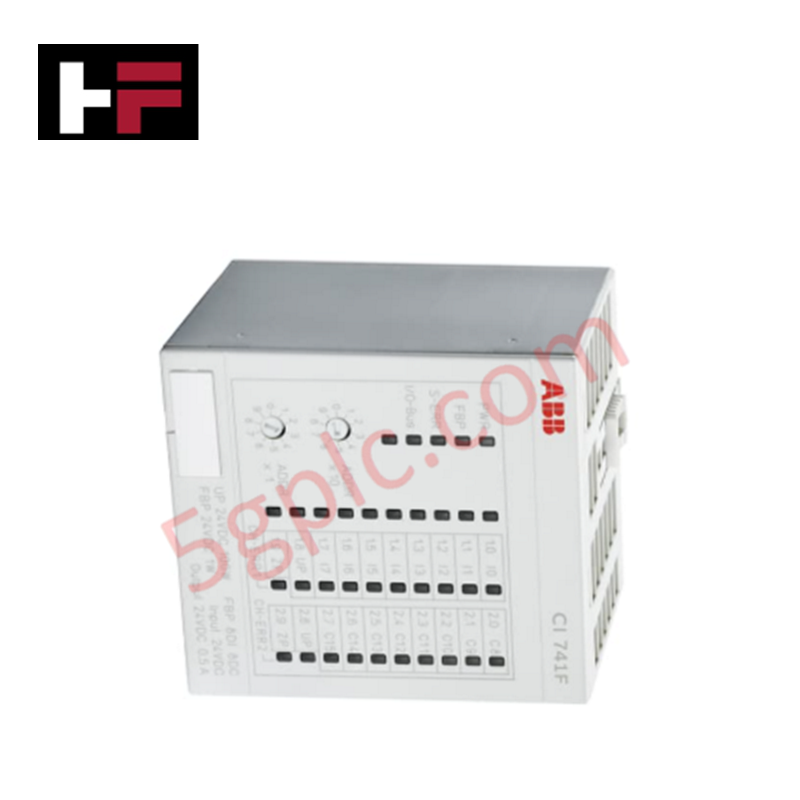
The ABB REU610CVVHCNR serves as the primary REU610 Voltage Relay Module utilized to execute voltage tracking and fault isolation across Relion platform distributed networks. The component monitors secondary voltage inputs, mapping anomalies to its integrated binary processing core to actuate field switchgear via dedicated physical output matrices.
Hardware Specifications
| Parameter | Specification |
|---|---|
| Model | REU610CVVHCNR |
| Brand | ABB |
| Origin | Finland |
| Product Type | Voltage relay module |
| Input Voltage | 24 VDC |
| Digital Inputs | 16 channels |
| Digital Outputs | 16 channels |
| Memory Capacity | 256 KB |
| Communication Interfaces | Ethernet, RS485 |
| Mounting | Panel or rack mount |
| Operating Temp | -40 to +70 deg C |
| Weight | 4 - 5 kg |
| Power Consumption | Dependent on active communication links and relay coil excitation states |
| Dimensions | Standard Relion series chassis footprint |
Firmware Flash Compatibility and I/O Performance
Operational profiles inside the device rely on strict firmware flash compatibility across memory allocation registers to prevent processing lag between input threshold detection and relay contact actuation. The module contains specified register offsets that manage data transmission intervals irrespective of varying backplane bus communication velocity metrics across old or new chassis revisions. High-speed vector conversions require strict adherence to standard I/O density scaling matrices to suppress signal jitter during instantaneous multi-channel phase drop events.
Frequently Asked Questions
Q: Does the REU610CVVHCNR support hot-swap extraction while the 24 VDC auxiliary loop is live?
A: No. Auxiliary power must be completely isolated and voltage transformer measuring terminals safely separated before physical extraction from the rack housing to protect internal logic registers against voltage spikes.
Q: How are the 16 digital input channels configured to interface with field status indicators?
A: Binary input settings are mapped into the internal 256 KB registers using standard software logic assignment tools or fixed configuration parameters via the communication port.
Q: What failure states occur if the firmware flash version deviates from the backplane controller?
A: Firmware version mismatches prevent the execution of scheduled safety parameters, disabling the 16 digital output channels and triggering an internal bus communication error state.
Field Installation Guidelines
- Chassis Earth Connection: Attach a low-impedance copper braid directly from the rear grounding screw of the module to the master rack ground bar to manage electrostatic noise.
- Low-Voltage Signal Separation: Route the RS485 and Ethernet communication wires through dedicated wireways isolated from inductive high-voltage AC control loops inside the cabinet panel.
- Mounting Latch Integrity: Secure all retention mechanisms during rack or panel installation to ensure even force distribution across the front faceplate and prevent loose connections under vibration.
Additional Information
- 100% Genuine Parts: All products are original and authentic, ensuring reliable industrial performance.
- 30-Day Refund Guarantee: Return any in-stock item within 30 days in original, unopened packaging for a full refund (excluding shipping and fees).
- 12-Month Warranty: Covers defects in materials or workmanship; excludes misuse, normal wear, or unauthorized modifications.
- Worldwide Shipping: We ship via USPS, UPS, FedEx, and DHL. Delivery times vary by country and may be subject to customs or import fees.
- Support & Contact: Technical and warranty assistance is available anytime. Contact us here: Contact.
- Purchase Guidance: Check product specifications and compatibility carefully before ordering to ensure proper application.






Tech & Buying Guide

Demystifying CPU Communication Ports in Siemens PLC Architectures
Industrial automation relies heavily on robust data exchange between devices. Without seamless connectivity, field instruments, network switches, human-machine interfaces, and programmable logic controllers cannot coordinate effectively. Therefore, understanding the various CPU communication ports available in Siemens hardware ensures efficient factory automation design and seamless system integration.

Mastering the Siemens PLC Scan Cycle: How the CPU Executes Automation Programs
Industrial automation relies heavily on programmable logic controllers (PLCs) to manage complex manufacturing processes. Many engineers dive straight into programming without mastering the underlying architecture. However, understanding how a PLC CPU executes a program ensures reliable system design. Therefore, mastering the scan cycle optimizes both performance and troubleshooting in modern control systems.

How to Connect to Siemens S7 PLCs: 5 Essential Communication Methods
Establishing a reliable hardware link between a programming terminal and a Siemens SIMATIC controller is essential for engineering workflows. Field engineers rely on distinct physical layers, ranging from legacy serial connections to high-speed Industrial Ethernet protocols. Modern factory automation environments prioritize fast data transfer and seamless driver integration. Selecting the correct connection method simplifies program downloads, online monitoring, and system troubleshooting in complex control systems.