










Product Details
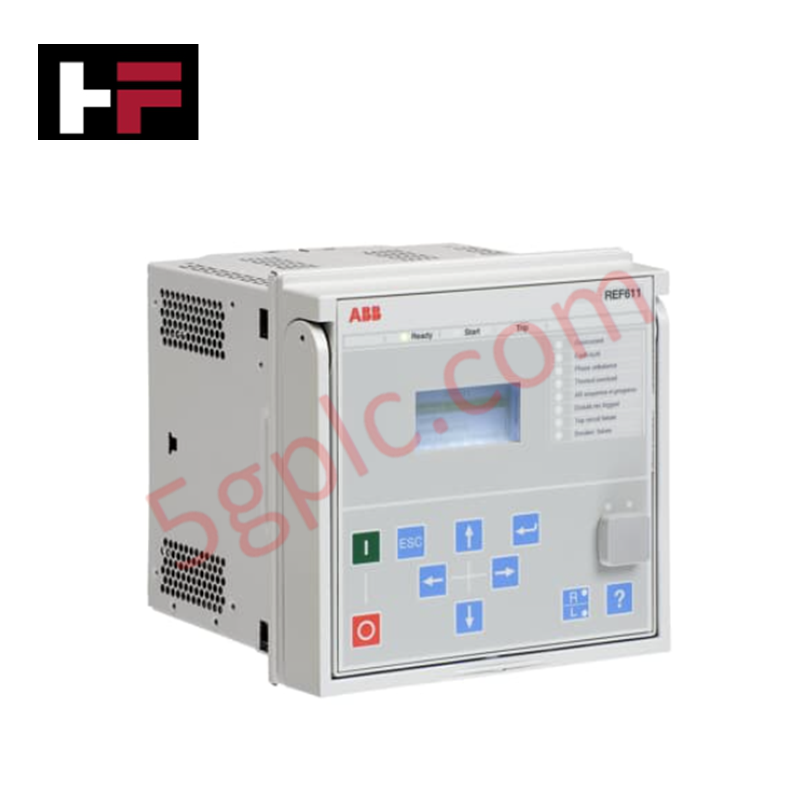
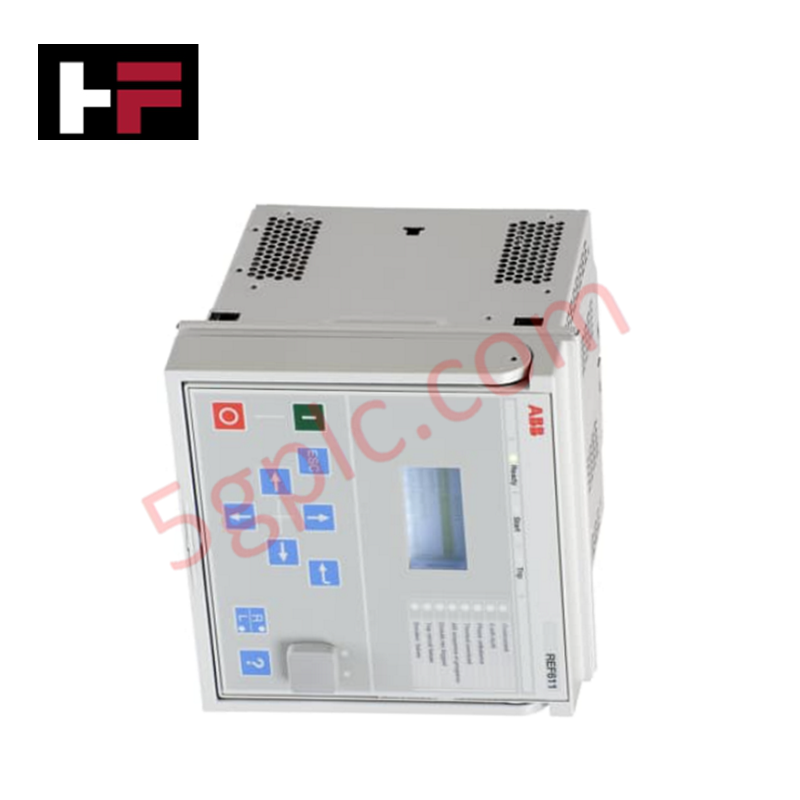
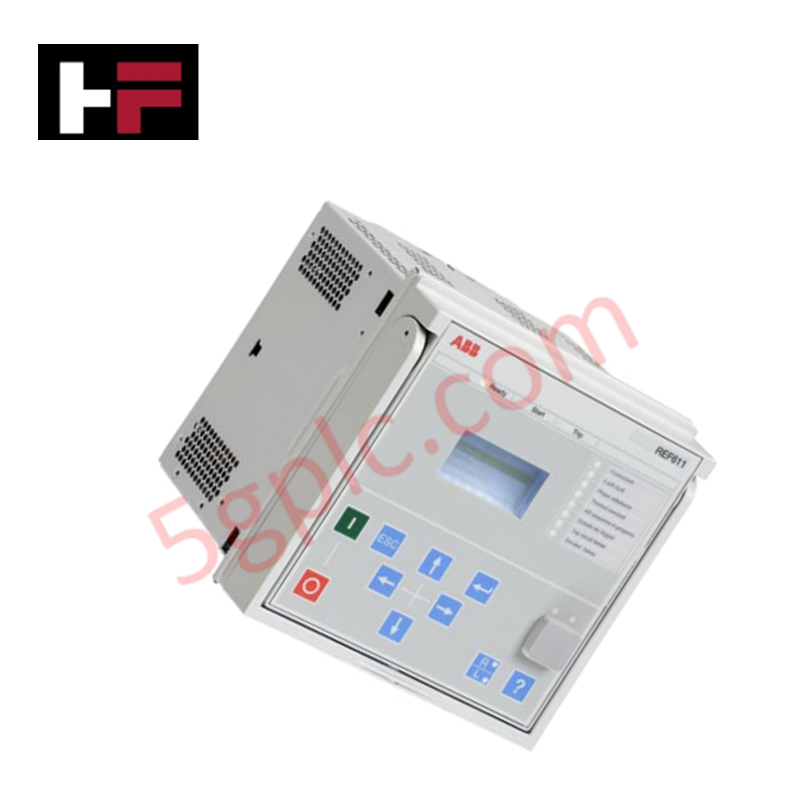
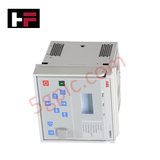
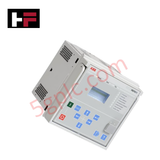
Configured for directional or non-directional overcurrent and earth-fault protection in medium-voltage sub-stations, the ABB REF611 (REF611 Feeder Protection Relay) provides direct physical/electrical execution. The device digitizes analog phase currents and ground loop signals to manage switchgear breaker trip coils and transmit automated binary GOOSE telemetry data packets across high-speed localized network links.
Hardware Specifications
| Parameter | Specification |
|---|---|
| Model | REF611 |
| Brand | ABB |
| Series | Relion 611 Series |
| Origin | Finland |
| Input Channels | Directional or non-directional current and earth-fault instrumentation lines |
| Structural Design | Withdrawable plug-in unit housing |
| Communication Protocols | IEC 61850 Edition 1 and Edition 2, HSR/PRP redundancy options |
| Configuration Baseline | Factory pre-configured solutions |
| Operating Temp | Standard industrial operating range |
| Power Consumption | Dependent on active internal module loading and communications load |
| Dimensions | Compact series footprint (Refer to technical manual dimension sheets) |
| Weight | Standard protection enclosure weight |
Profinet / EtherNet/IP Deterministic Networks Performance
Data distribution over the physical communication layers of the REF611 uses specialized frame handling to align with high backplane bus communication velocity metrics. The internal processing core supports I/O density scaling options handled through a web-browser-based interface matrix, allowing instant mapping of field signals to binary logic paths. To implement self-healing network structures utilizing parallel redundancy protocol (PRP) or high-availability seamless redundancy (HSR) buses, absolute firmware flash compatibility must be enforced across all installed communication cards to eradicate transit latencies or packet collapse during high-current phase disruptions.
Frequently Asked Questions
Q: Does the withdrawable plug-in chassis configuration permit hot-swapping or extraction while the line is energized?
A: No. live removal of the inner chassis under current transformer load is restricted. External CT terminal links must be short-circuited prior to unlatching and slide-out removal to eliminate destructive high-voltage inductive loops.
Q: How is the secondary communication path configured for self-healing redundancy?
A: Redundant data links require an optional secondary Ethernet bus hardware interface card installed into the communication slot, enabling concurrent dual-path streaming over HSR/PRP topologies.
Q: What mechanisms are utilized to map the discrete binary inputs to specified outputs?
A: Signal mapping is executed via the integrated web-browser human-machine interface (HMI), which includes a dedicated visual I/O matrix for setting localized configuration states.
Field Installation Guidelines
- Plug-in Case Seating Verification: When sliding the withdrawable core assembly into the outer casing unit, ensure the mechanical lever locks down fully to seat the internal spring-loaded bypass terminal contacts.
- Redundant Network Path Separations: Route the independent primary and secondary Ethernet network cables through separated wireways to safeguard parallel data links from concurrent localized physical damage.
- Instrumentation Terminal Shielding: Ground all multi-conductor twisted pair signal shields at a single, centralized earthing bar inside the enclosure panel layout to suppress surrounding electromagnetic induction.
Additional Information
- 100% Genuine Parts: All products are original and authentic, ensuring reliable industrial performance.
- 30-Day Refund Guarantee: Return any in-stock item within 30 days in original, unopened packaging for a full refund (excluding shipping and fees).
- 12-Month Warranty: Covers defects in materials or workmanship; excludes misuse, normal wear, or unauthorized modifications.
- Worldwide Shipping: We ship via USPS, UPS, FedEx, and DHL. Delivery times vary by country and may be subject to customs or import fees.
- Support & Contact: Technical and warranty assistance is available anytime. Contact us here: Contact.
- Purchase Guidance: Check product specifications and compatibility carefully before ordering to ensure proper application.






Tech & Buying Guide

Mastering the Siemens PLC Scan Cycle: How the CPU Executes Automation Programs
Industrial automation relies heavily on programmable logic controllers (PLCs) to manage complex manufacturing processes. Many engineers dive straight into programming without mastering the underlying architecture. However, understanding how a PLC CPU executes a program ensures reliable system design. Therefore, mastering the scan cycle optimizes both performance and troubleshooting in modern control systems.

How to Connect to Siemens S7 PLCs: 5 Essential Communication Methods
Establishing a reliable hardware link between a programming terminal and a Siemens SIMATIC controller is essential for engineering workflows. Field engineers rely on distinct physical layers, ranging from legacy serial connections to high-speed Industrial Ethernet protocols. Modern factory automation environments prioritize fast data transfer and seamless driver integration. Selecting the correct connection method simplifies program downloads, online monitoring, and system troubleshooting in complex control systems.

Will PLCs Become Obsolete? The Future of Control Systems in Industry 4.0
Modern manufacturing is undergoing a rapid technological transformation driven by Industry 4.0 innovations. Technologies like Artificial Intelligence (AI), Machine Learning (ML), and the Industrial Internet of Things (IIoT) are dominating discussions across the factory automation sector. Consequently, many engineers wonder if these advanced digital tools will eventually replace traditional Programmable Logic Controllers (PLCs). However, evaluating the core physics of industrial operations reveals a very different reality for control systems.