










Product Details
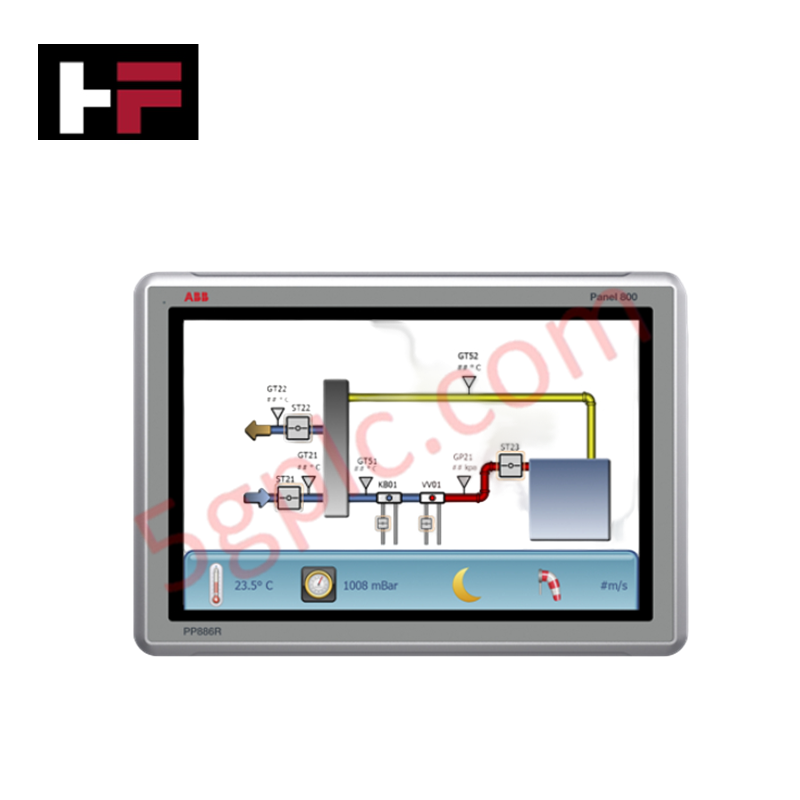
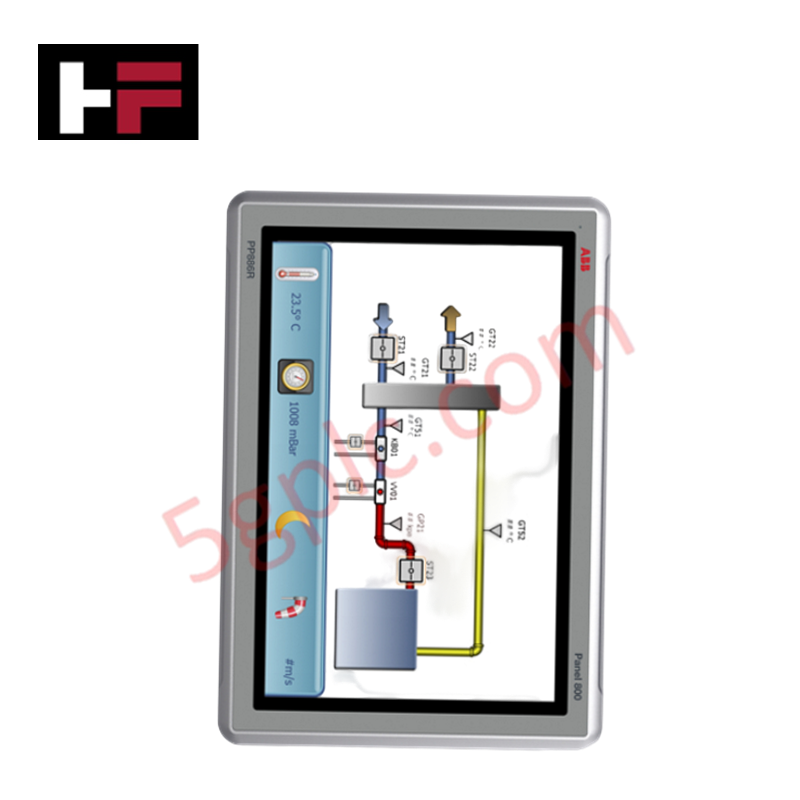
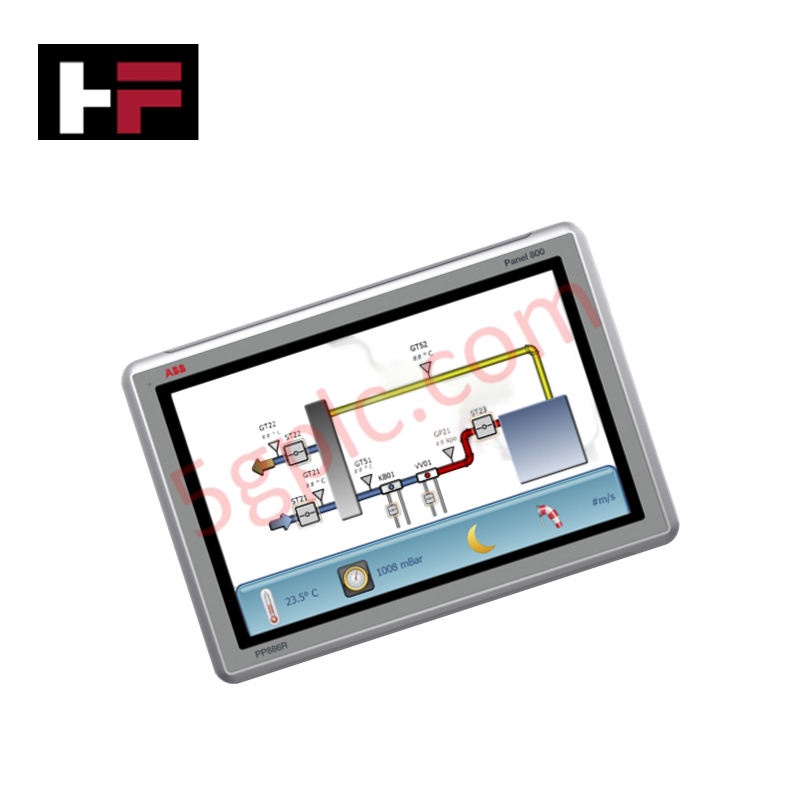
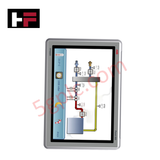
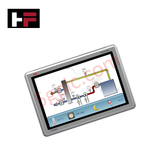
The ABB PP886R 3BSE092985R1, also cataloged as the PP886R Touch Panel, operates as a dedicated hardware component for human-machine interface visualization and operator control actions within Panel 800 networks.
Hardware Specifications
| Parameter | Specification |
|---|---|
| Model | PP886R 3BSE092985R1 |
| Brand | ABB |
| Origin | USA / Europe standard sourcing |
| Weight | 4.1 kg |
| Dimensions | 410 mm x 286 mm x 73 mm (Cut-out: 394 mm x 270 mm) |
| Operating Temp | -30 to +70 deg C |
| Power Consumption | 18 W |
| Display Size | 15.4 inches |
| Resolution | 1280 x 800 pixels (16:10) |
| Display Type | TFT-LCD with LED backlight |
| Brightness | 450 cd/m2 |
| Touchscreen Type | Resistive |
| Processor | ARM9 (800 MHz) |
| Main Memory | 1 GB |
| External Storage | 1 x SD card slot (SDHC supported) |
| Ethernet Ports | 1 x 10/100 Base-T (shielded RJ45) |
| USB Ports | 2 x USB 2.0 (maximum 500 mA per port) |
| Serial Ports | 1 x RS232, 1 x RS422/485 |
| Mounting Type | Panel mount, VESA |
| Protection Rating | IP66 (front), IP20 (rear) |
Profinet / EtherNet/IP Deterministic Networks and I/O Density Scaling
The ABB PP886R 3BSE092985R1 utilizes an integrated ARM9 processor executing runtime communications across distributed controller architectures. The shielded RJ45 Ethernet link bridges internal data registers to Profinet / EtherNet/IP deterministic networks, ensuring consistent HMI variable refresh cycles even during high network loading. When executing system expansion, the panel accommodates localized I/O density scaling by modifying internal tag allocation maps within the project environment. Field modification of protocol mappings does not impact baseline firmware flash compatibility, maintaining stable memory boundary segregation under continuous multi-channel operational load.
Frequently Asked Questions
Q: What are the continuous power limits and internal protection metrics for the 24 VDC power interface?
A: The panel operates on a nominal supply loop drawing 18 W. Internal power management circuits do not support hot-swapping or active line manipulation while energized. Disconnecting the primary terminal plug under active load conditions introduces voltage transient risks capable of compromising internal logic boards.
Q: How does the panel manage external memory devices under extreme low-temperature limits?
A: The onboard SDHC card slot and dual USB 2.0 ports remain functional across the complete -30 to +70 deg C operating envelope. However, physical medium insertions must utilize industrial-grade storage units tested to match the specific low-temperature thresholds to prevent data read/write timeout errors.
Field Installation Guidelines
- Cut the mounting aperture according to the specified 394 mm x 270 mm panel dimensions, ensuring all cutout perimeter edges are deburred and smooth.
- Verify the integrated sealing gasket is properly seated within its groove on the front bezel assembly before inserting the hardware into the enclosure cutout.
- Tighten all panel mount bracket screws in a sequential cross-pattern to distribute compressed gasket pressure uniformly and maintain the front IP66 environmental seal integrity.
- Terminate a dedicated low-impedance copper ground wire from the rear chassis earth grounding screw to the main equipment enclosure ground bar to mitigate industrial EMI interference.
Additional Information
- 100% Genuine Parts: All products are original and authentic, ensuring reliable industrial performance.
- 30-Day Refund Guarantee: Return any in-stock item within 30 days in original, unopened packaging for a full refund (excluding shipping and fees).
- 12-Month Warranty: Covers defects in materials or workmanship; excludes misuse, normal wear, or unauthorized modifications.
- Worldwide Shipping: We ship via USPS, UPS, FedEx, and DHL. Delivery times vary by country and may be subject to customs or import fees.
- Support & Contact: Technical and warranty assistance is available anytime. Contact us here: Contact.
- Purchase Guidance: Check product specifications and compatibility carefully before ordering to ensure proper application.






Tech & Buying Guide

Demystifying Open Platform Communication (OPC): The Backbone of Industrial Interoperability
Interoperability remains a cornerstone requirement for modern smart factories and process automation. Open Platform Communication (OPC) bridges the gap between disparate hardware platforms, control systems, and visualization software. By establishing a universal communication standard, OPC allows field controllers, SCADA platforms, and enterprise software from different vendors to exchange real-time data seamlessly.

Understanding Siemens PLC Memory Cards: MMC, SMC, and SD Solutions in Industrial Automation
Memory management plays a pivotal role in maintaining control system reliability across modern manufacturing plants. Industrial control systems rely on specialized memory cards to store project logic, firmware updates, and retentive system data. Siemens uses several memory architectures, including Micro Memory Cards (MMC) and SIMATIC Memory Cards (SMC). Engineers must understand these hardware variations to ensure zero data loss and minimize downtime during maintenance routines.

Redefining Control Systems: The Rise of Flexible I/O Modules in Industrial Automation
Conventional input-output architectures often limit engineering agility and inflate long-term inventory costs. Today, Flexible Input/Output Modules (FIOM) are transforming how control system engineers design, commission, and maintain automation infrastructure. By allowing individual channel software configuration, FIOM technology bridges the gap between rigid hardware design and dynamic plant requirements.