










Product Details
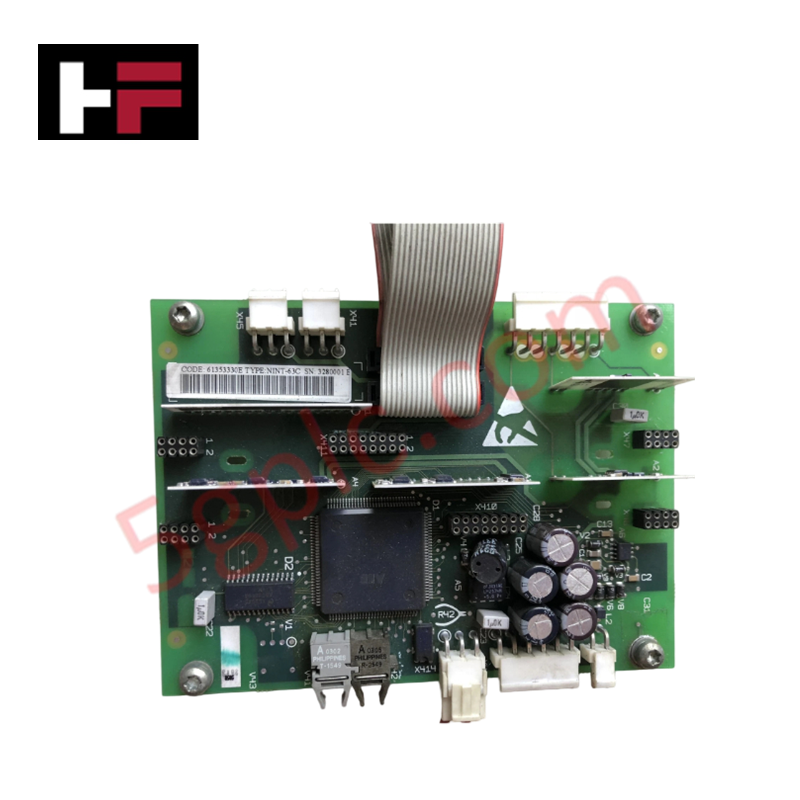
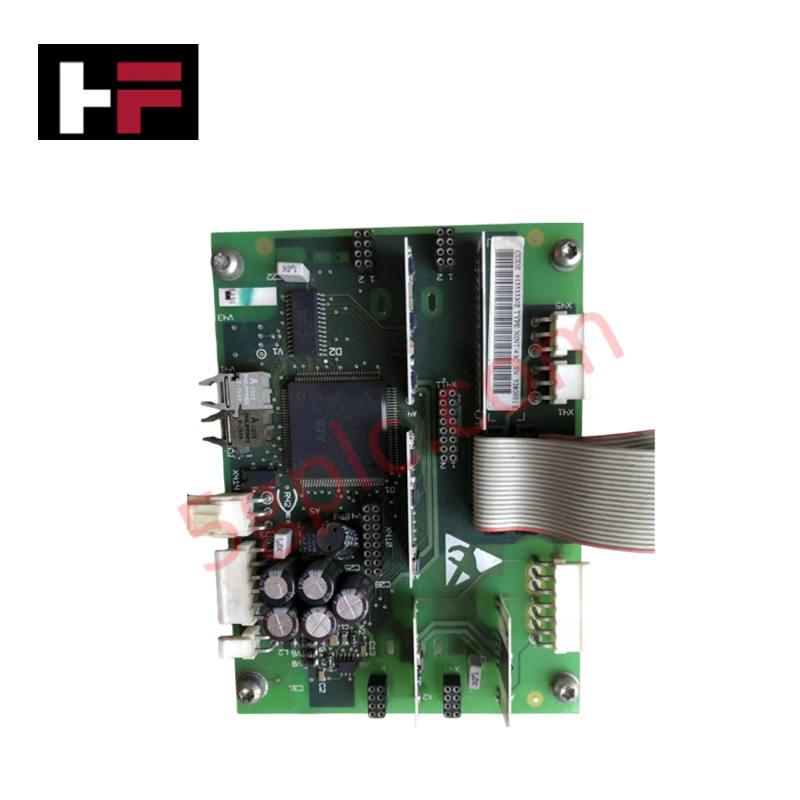
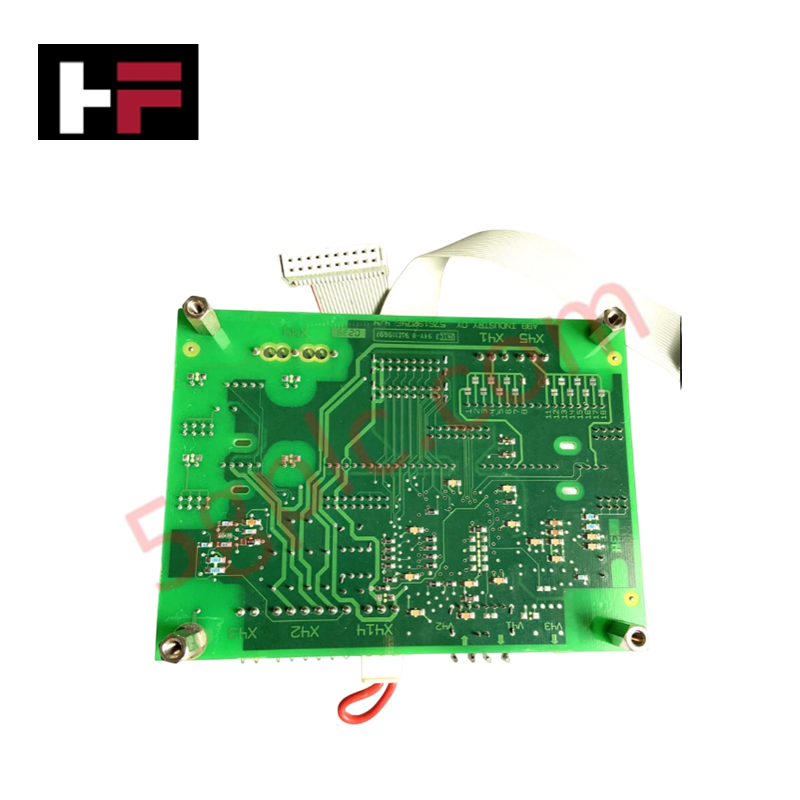
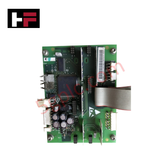
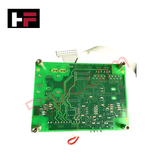
The ABB NINT-63C, also cataloged as the NINT-63C Main Circuit Interface Board, operates as a dedicated hardware component for inverter main circuit signal interfacing within ABB drive control topologies.
Hardware Specifications
| Parameter | Specification |
|---|---|
| Model | NINT-63C (Product ID: 61353330) |
| Brand | ABB |
| Origin | Europe standard sourcing |
| Weight | 0.15 kg |
| Dimensions | Standard internal drive chassis frame allocation |
| Operating Temp | Standard industrial drive cabinet range |
| Power Consumption | Supplied via internal drive gate driver backplane connection |
| Functional Designation | Main Circuit Integration Interface |
| Minimum Order Quantity | 1 piece |
Profinet / EtherNet/IP Deterministic Networks and Firmware Flash Compatibility
The ABB NINT-63C processes local gates, fault metrics, and phase current voltages directly matching the inverter's power switches. It routes critical intermediate-circuit signals through standard backplane traces while ensuring synchronous execution across multi-drive branch systems. When integrated within large automation loops, this circuit hardware isolates local signal paths to sustain low latency requirements of Profinet / EtherNet/IP deterministic networks. The layout layout matches local memory buffers, which protects underlying drive control software allocations and ensures absolute firmware flash compatibility during critical lifecycle field modifications.
Frequently Asked Questions
Q: Can the NINT-63C interface board be uninstalled while the drive system intermediate DC bus is charged?
A: No. The board must never be handled until the main power input is disconnected and the internal DC link capacitors are fully discharged according to the drive specification timing. Residual charge can cause immediate electrical damage to the interface tracks.
Q: How is galvanic isolation verified across the gate driver connections on this board?
A: Isolation paths are physically etched directly into the circuit layout design to separate the high-potential main power circuit components from the low-voltage control backplane electronics, preventing cross-channel electrical damage during voltage fluctuations.
Field Installation Guidelines
- Terminate all input power networks and ensure the main chassis is de-energized prior to fitting the board into the mounting carriage.
- Secure the printed circuit assembly firmly to the metallic frame using all provided screw grounding locations to ensure a reliable path for high-frequency electrical noise.
- Keep control signal wiring separated from three-phase AC power paths within the drive housing to prevent inductive coupling and data corruption.
- Check the fiber-optic or parallel ribbon cable connectors for physical alignment before fully interlocking the main harness socket to avoid bent contact pins.
Additional Information
- 100% Genuine Parts: All products are original and authentic, ensuring reliable industrial performance.
- 30-Day Refund Guarantee: Return any in-stock item within 30 days in original, unopened packaging for a full refund (excluding shipping and fees).
- 12-Month Warranty: Covers defects in materials or workmanship; excludes misuse, normal wear, or unauthorized modifications.
- Worldwide Shipping: We ship via USPS, UPS, FedEx, and DHL. Delivery times vary by country and may be subject to customs or import fees.
- Support & Contact: Technical and warranty assistance is available anytime. Contact us here: Contact.
- Purchase Guidance: Check product specifications and compatibility carefully before ordering to ensure proper application.






Tech & Buying Guide

Demystifying CPU Communication Ports in Siemens PLC Architectures
Industrial automation relies heavily on robust data exchange between devices. Without seamless connectivity, field instruments, network switches, human-machine interfaces, and programmable logic controllers cannot coordinate effectively. Therefore, understanding the various CPU communication ports available in Siemens hardware ensures efficient factory automation design and seamless system integration.

Mastering the Siemens PLC Scan Cycle: How the CPU Executes Automation Programs
Industrial automation relies heavily on programmable logic controllers (PLCs) to manage complex manufacturing processes. Many engineers dive straight into programming without mastering the underlying architecture. However, understanding how a PLC CPU executes a program ensures reliable system design. Therefore, mastering the scan cycle optimizes both performance and troubleshooting in modern control systems.

How to Connect to Siemens S7 PLCs: 5 Essential Communication Methods
Establishing a reliable hardware link between a programming terminal and a Siemens SIMATIC controller is essential for engineering workflows. Field engineers rely on distinct physical layers, ranging from legacy serial connections to high-speed Industrial Ethernet protocols. Modern factory automation environments prioritize fast data transfer and seamless driver integration. Selecting the correct connection method simplifies program downloads, online monitoring, and system troubleshooting in complex control systems.