










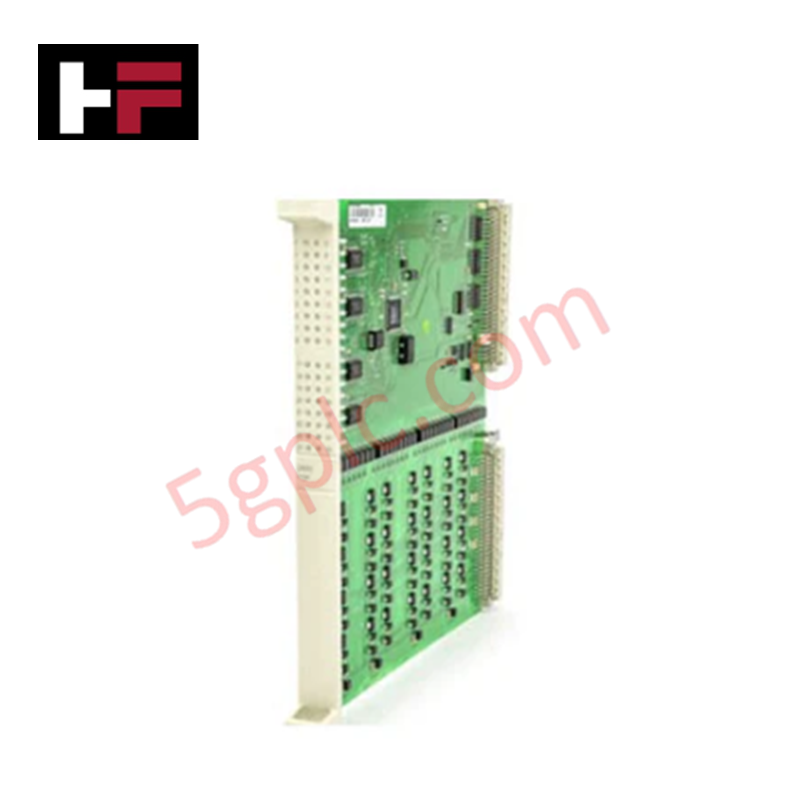
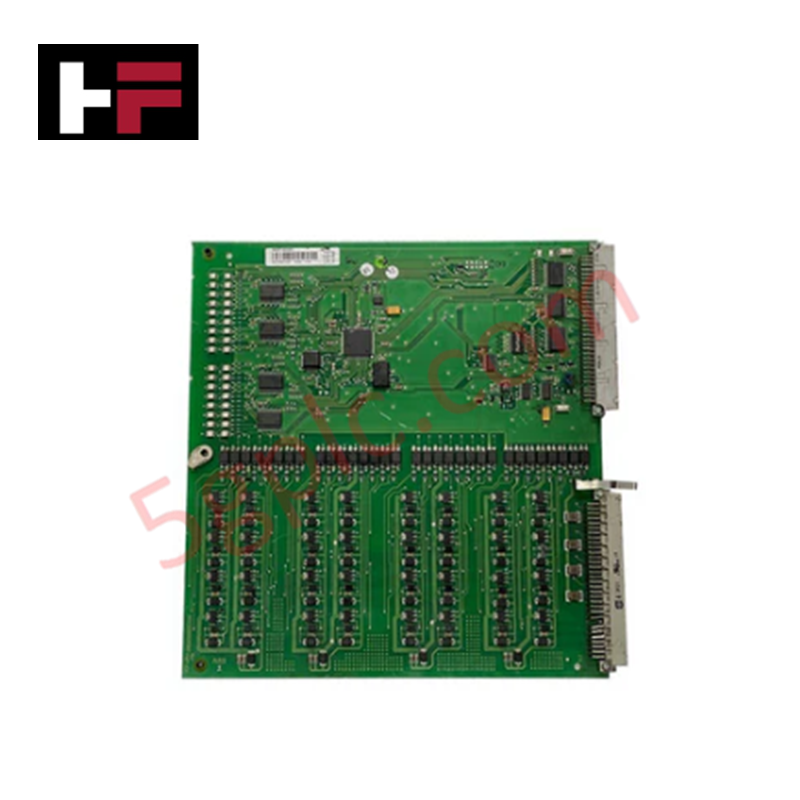
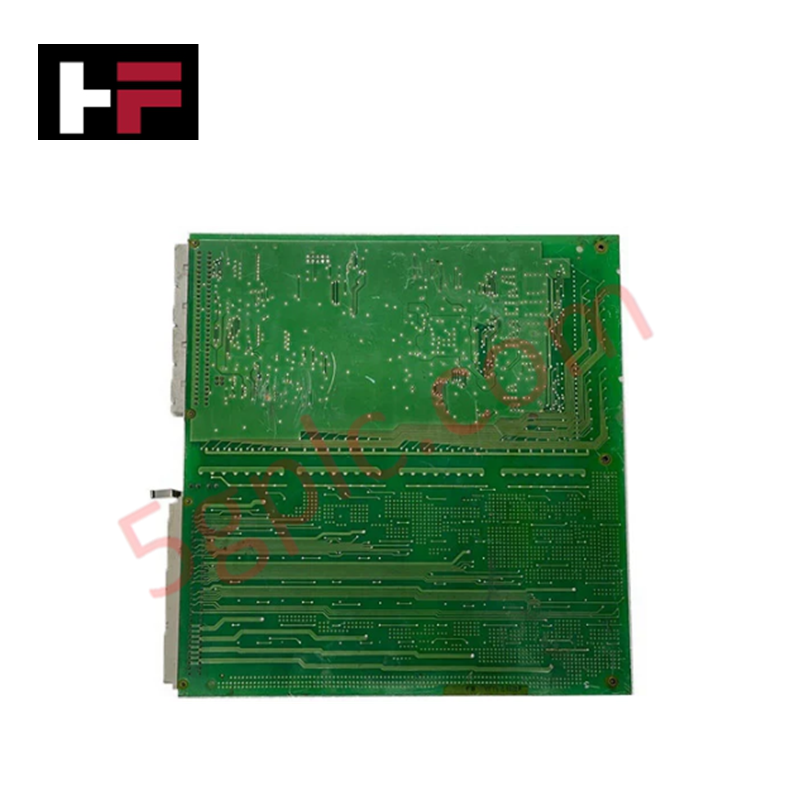
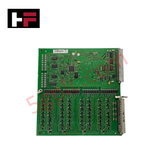
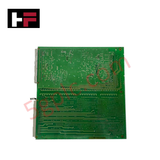
Product Details
The ABB DSDO 115A 3BSE018298R1, also cataloged as the DSDO 115A Digital Output Board, operates as a dedicated hardware component for binary signal switching within Advant Master system platforms. Configured for discrete loop execution, the module translates electronic logic commands into physical load excitation voltages across external multi-channel actuator terminations.
Hardware Specifications
| Parameter | Specification |
|---|---|
| Model | DSDO 115A |
| Brand | ABB |
| Product ID | 3BSE018298R1 |
| Origin | Sweden |
| Weight | 0.32 kg net |
| Dimensions | 234 mm x 22.5 mm x 324 mm (W x H x D) |
| Operating Temp | 0 to +55 deg C (Standard backplane enclosure baseline) |
| Power Consumption | Logic derived from backplane; channel feed requires external 24 VDC |
| Output Channels | 32 discrete channels |
| Rated Channel Current | 0.5 A per channel |
| Output Voltage Rating | 24 VDC |
Deterministic Networks & I/O Density Scaling
The 32-channel high-density electronic assembly interfaces directly with the processing subrack backplane to maximize localized I/O density scaling profiles. Internal output registers lock state execution synchronously with deterministic scan segments regulated by active backplane bus communication velocity licenses. This synchronous behavior prevents propagation jitter across Profinet / EtherNet/IP deterministic networks, ensuring steady signal replication and precise field-level timing during parallel operational tasks without altering baseline firmware flash compatibility parameters of the master CPU framework.
Frequently Asked Questions
Q: Does the DSDO 115A module support live component replacement (hot-swapping) during subrack execution?
A: No. Electrical isolation of the host subrack chassis and the 24 VDC external field power source is mandatory before inserting or extracting the board to eliminate transient cross-talk and prevent violations of the active backplane bus communication velocity licenses.
Q: How is the hardware protected against continuous overload currents on the 0.5 A digital channels?
A: The module relies on localized internal thermal protection loops and discrete circuit fusing grouped on the channel clusters to drop current flow during persistent field shorts, preventing structural damage to the board layers.
Q: What indicates a fault regarding firmware flash compatibility during unit commissioning?
A: The master system controller logs an I/O bus communication error, prevents cyclic data updates from reaching the 32 output channels, and locks the module transceivers into an uninitialized safe state.
Field Installation Guidelines
- Slide the circuit card assembly smoothly into its assigned slot within the subrack frame, pushing firmly to seat the rear-facing pin array before securing the faceplate locking tabs.
- Separate all 24 VDC discrete field wiring bundles from parallel AC distribution and motor drive paths by a minimum distance of 100 mm to stop electromagnetic cross-talk.
- Terminate external field power supply grounds and cable shielding wraps directly to the master enclosure copper bus bar using low-impedance connections.
- Verify that total concurrent load current profiles match the local thermal limits, providing sufficient cabinet airflow to keep operation within the 0 to +55 deg C range.
Additional Information
- 100% Genuine Parts: All products are original and authentic, ensuring reliable industrial performance.
- 30-Day Refund Guarantee: Return any in-stock item within 30 days in original, unopened packaging for a full refund (excluding shipping and fees).
- 12-Month Warranty: Covers defects in materials or workmanship; excludes misuse, normal wear, or unauthorized modifications.
- Worldwide Shipping: We ship via USPS, UPS, FedEx, and DHL. Delivery times vary by country and may be subject to customs or import fees.
- Support & Contact: Technical and warranty assistance is available anytime. Contact us here: Contact.
- Purchase Guidance: Check product specifications and compatibility carefully before ordering to ensure proper application.






Tech & Buying Guide

Redefining Control Systems: The Rise of Flexible I/O Modules in Industrial Automation
Conventional input-output architectures often limit engineering agility and inflate long-term inventory costs. Today, Flexible Input/Output Modules (FIOM) are transforming how control system engineers design, commission, and maintain automation infrastructure. By allowing individual channel software configuration, FIOM technology bridges the gap between rigid hardware design and dynamic plant requirements.
Understanding Modern SCADA Systems: Architecture, Communication Topologies, and Industrial Applications
Supervisory Control and Data Acquisition (SCADA) systems form the digital backbone of modern industrial automation. They collect critical field data, transmit signals across vast distances, and empower plant operators with real-time process visibility. Across modern infrastructures, SCADA solutions streamline centralized control and maintain continuous operational uptime.
Understanding OPC Servers in Modern Industrial Automation: Principles, Architecture, and Applications
In industrial automation, connecting physical hardware with high-level software remains a primary operational challenge. Factories utilize programmable logic controllers (PLCs), distributed control systems (DCS), human-machine interfaces (HMIs), and smart sensors from diverse vendors. These devices often speak different proprietary protocols. Open Platform Communications (OPC) servers solve this interoperability challenge by standardizing how data flows across factory networks.