










Product Details
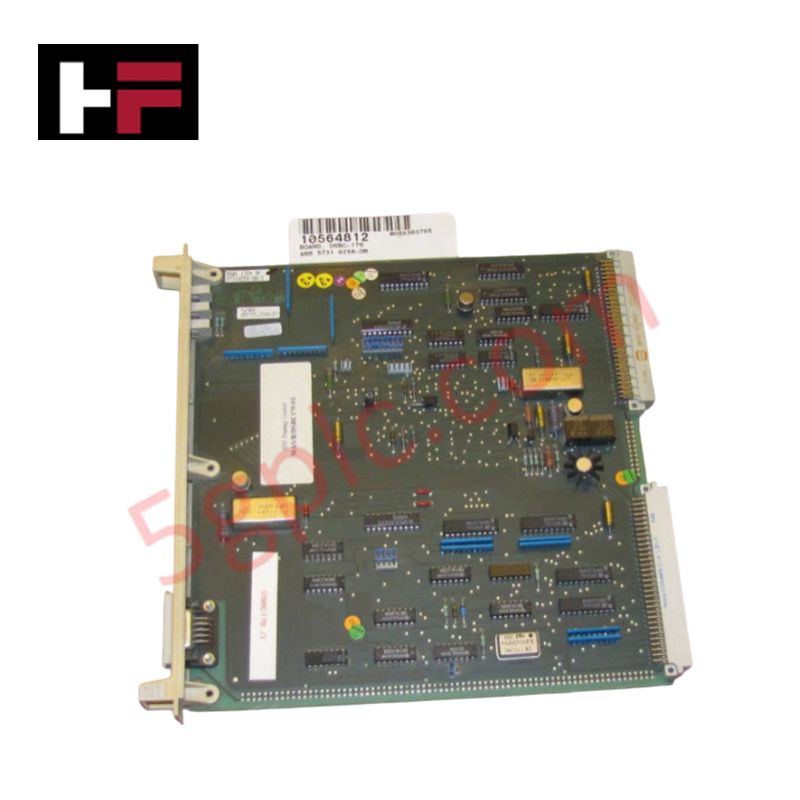
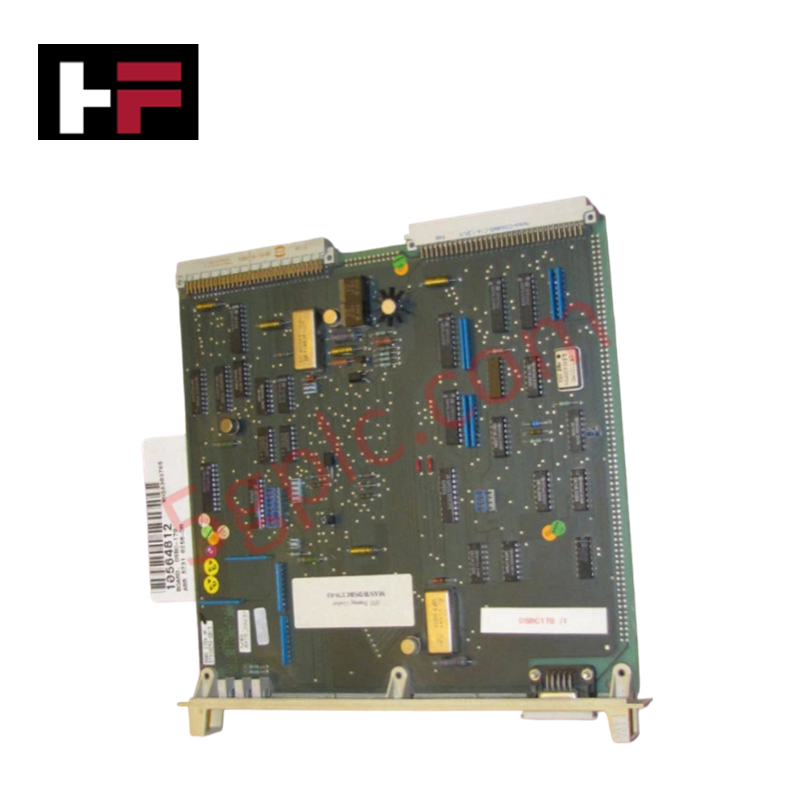
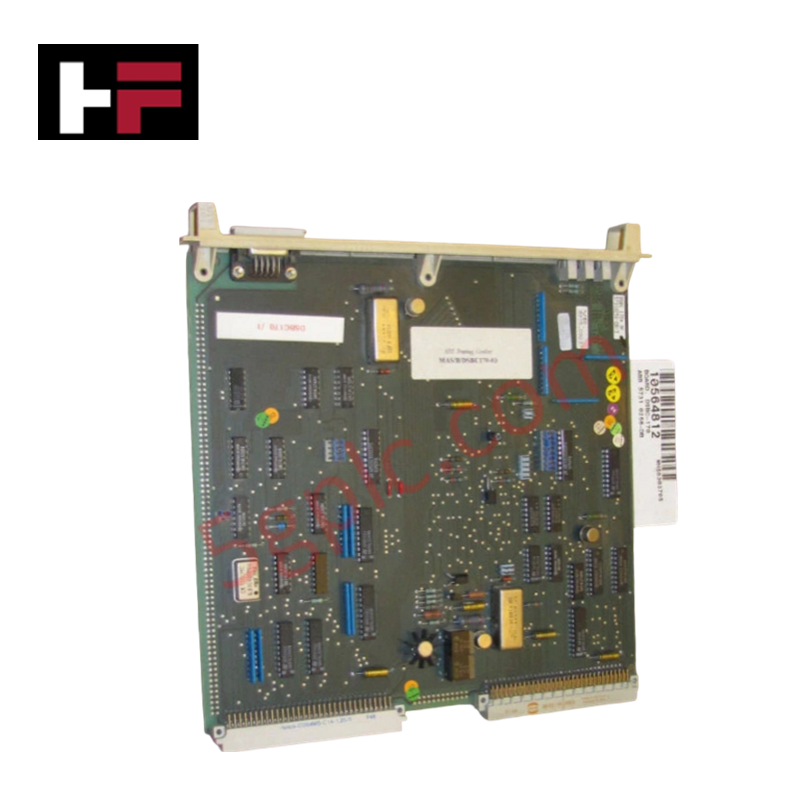
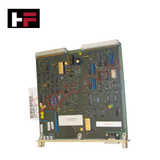
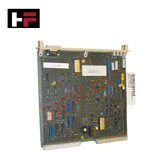
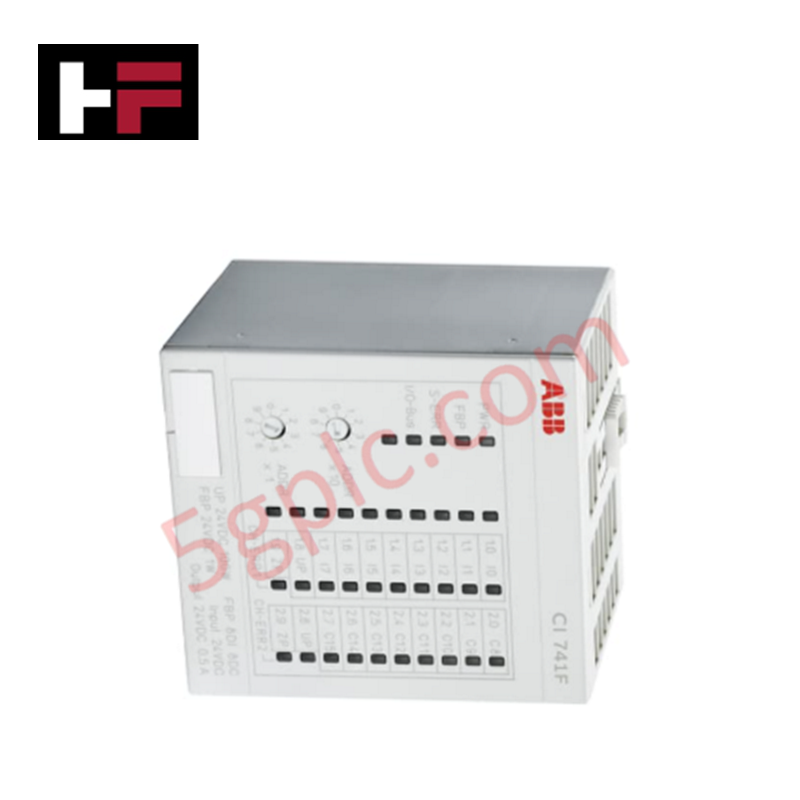
The ABB EXC57310256-DB, also cataloged as the DSBC 170 Communication Module, operates as a dedicated hardware component for bus signal amplification and extension within Advant Master system architectures. Configured as a Bus Repeater Master, the unit electrically refreshes communication signals on parallel bus paths to sustain deterministic data exchange levels across distant subrack nodes.
Hardware Specifications
| Parameter | Specification |
|---|---|
| Model | DSBC 170 |
| Brand | ABB |
| Product ID | EXC57310256-DB |
| Origin | Sweden |
| Weight | 0.43 kg net / 0.43 kg gross |
| Dimensions | Standard industrial subrack single-slot format |
| Operating Temp | 0 to +55 deg C (Standard enclosure environment baseline) |
| Power Consumption | Sustained via host subrack backplane power rail distribution |
| Core Function | Bus signal regeneration and network extension |
| Customs Tariff Number | 85176200 |
Deterministic Networks & Firmware Compatibility
The module integrates directly into standard frame subracks to address constraints in physical distance and loop impedance degradation. Bus signal distribution profiles match timing slots regulated by specific backplane bus communication velocity licenses. This structural interface manages processing data across Profinet / EtherNet/IP deterministic networks, maintaining tight timing window thresholds and strict firmware flash compatibility constants between local masters and remote bus link cards during high I/O density scaling routines.
Frequently Asked Questions
Q: Does the DSBC 170 support active online replacement (hot-swapping) under bus load conditions?
A: No. Electrical isolation of the host subrack framework is necessary before removing or inserting the module. Live servicing risks introducing transient voltage spikes that disrupt the backplane bus communication velocity licenses, causing active processor nodes to fault.
Q: How is the physical electrical boundary line terminated when using the DSBC 170 master repeater?
A: Standard characteristic impedance termination must be maintained at the final terminal boundaries of the expanded bus extension segment, ensuring signal wave reflections do not compromise the data frames.
Q: What is indicated if a mismatch exists in the firmware flash compatibility verification during a system upgrade?
A: The master repeater will fail to synchronize communication packets with the host CPU. The processing nodes will block cyclic data updates, forcing the hardware interface into an uninitialized configuration state.
Field Installation Guidelines
- Slide the module along the chassis guides of the dedicated subrack until the backplane interface pins slide completely into the mating bus terminal sockets.
- Maintain a minimum separation boundary of 100 mm between external bus communication cables and local AC power or drive cabling paths.
- Connect all network shield braids cleanly to the panel's central low-resistance copper grounding strip to minimize high-frequency electromagnetic noise.
- Secure all front faceplate retention fasteners to eliminate micro-vibration hazards that could degrade connection interface stability over long operating schedules.
Additional Information
- 100% Genuine Parts: All products are original and authentic, ensuring reliable industrial performance.
- 30-Day Refund Guarantee: Return any in-stock item within 30 days in original, unopened packaging for a full refund (excluding shipping and fees).
- 12-Month Warranty: Covers defects in materials or workmanship; excludes misuse, normal wear, or unauthorized modifications.
- Worldwide Shipping: We ship via USPS, UPS, FedEx, and DHL. Delivery times vary by country and may be subject to customs or import fees.
- Support & Contact: Technical and warranty assistance is available anytime. Contact us here: Contact.
- Purchase Guidance: Check product specifications and compatibility carefully before ordering to ensure proper application.






Tech & Buying Guide

Redefining Control Systems: The Rise of Flexible I/O Modules in Industrial Automation
Conventional input-output architectures often limit engineering agility and inflate long-term inventory costs. Today, Flexible Input/Output Modules (FIOM) are transforming how control system engineers design, commission, and maintain automation infrastructure. By allowing individual channel software configuration, FIOM technology bridges the gap between rigid hardware design and dynamic plant requirements.

Understanding Modern SCADA Systems: Architecture, Communication Topologies, and Industrial Applications
Supervisory Control and Data Acquisition (SCADA) systems form the digital backbone of modern industrial automation. They collect critical field data, transmit signals across vast distances, and empower plant operators with real-time process visibility. Across modern infrastructures, SCADA solutions streamline centralized control and maintain continuous operational uptime.
Understanding OPC Servers in Modern Industrial Automation: Principles, Architecture, and Applications
In industrial automation, connecting physical hardware with high-level software remains a primary operational challenge. Factories utilize programmable logic controllers (PLCs), distributed control systems (DCS), human-machine interfaces (HMIs), and smart sensors from diverse vendors. These devices often speak different proprietary protocols. Open Platform Communications (OPC) servers solve this interoperability challenge by standardizing how data flows across factory networks.