










Product Details
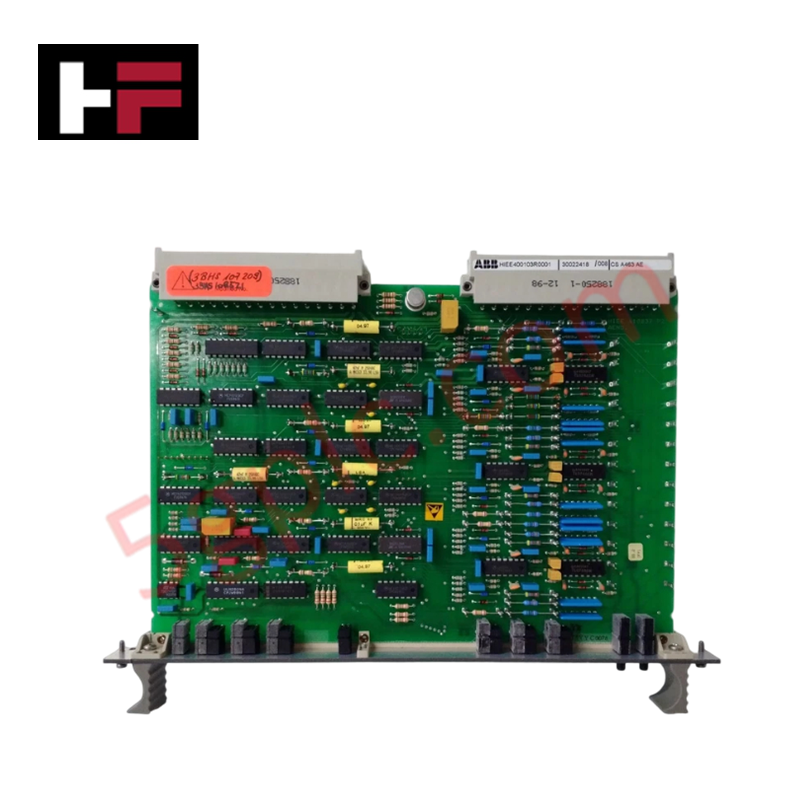
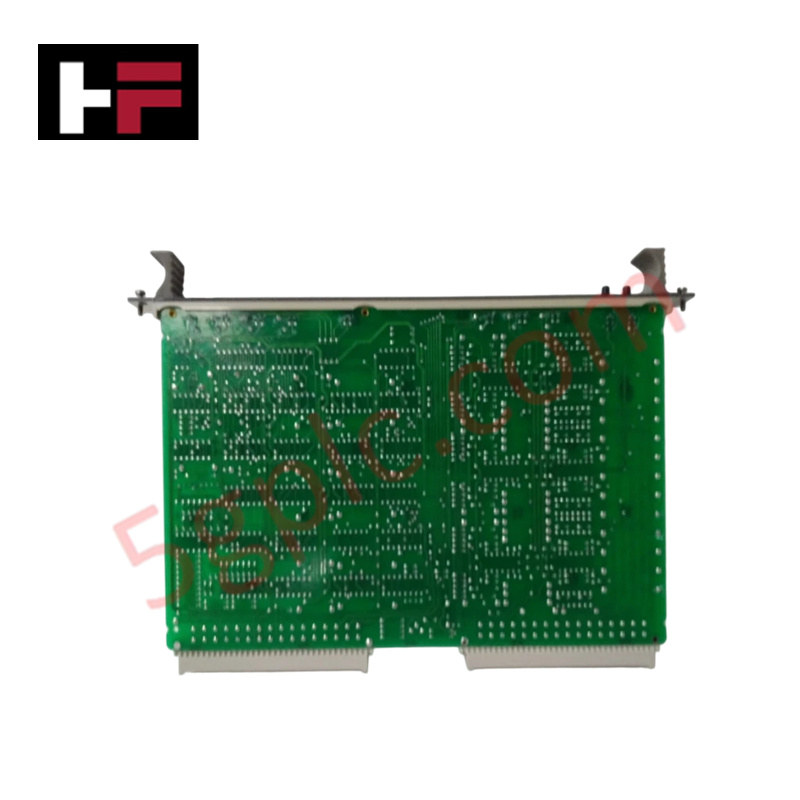
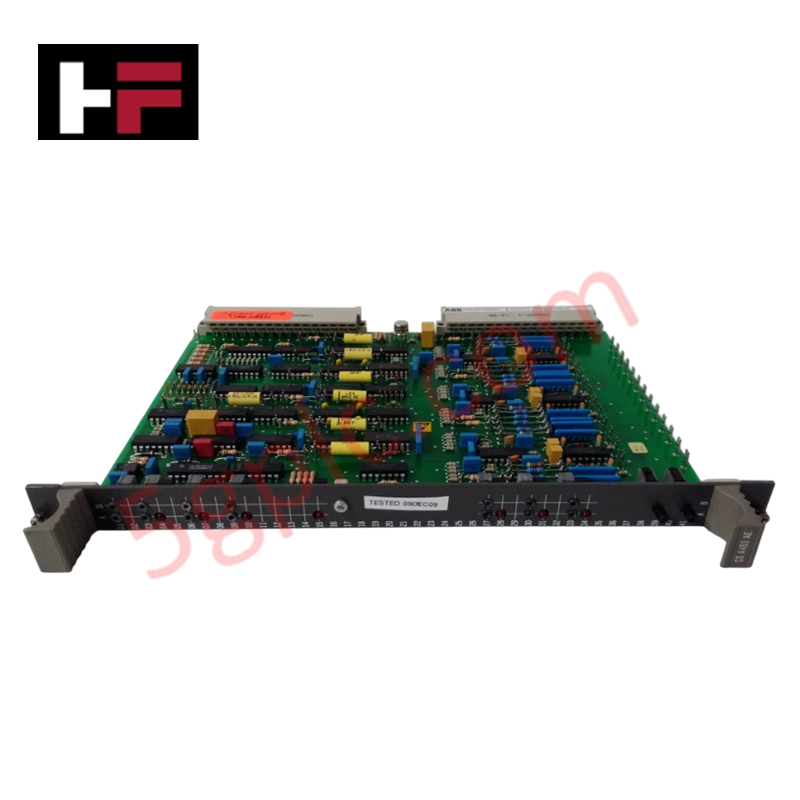
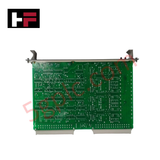
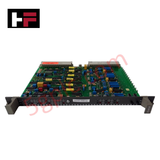
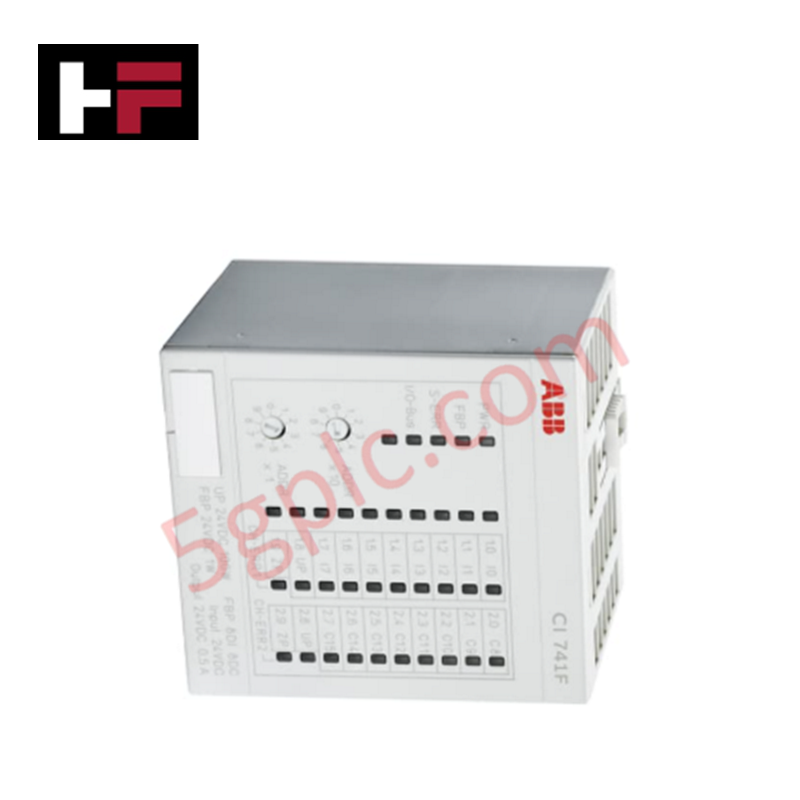
Configured for discrete and analog voltage routing in industrial drive networks, the ABB CS A463 AE HIEE400103R0001 (CS A463 AE Circuit Board) provides direct physical/electrical execution. The hardware regulates and partitions internal DC rails to supply secondary processing elements, generating multiple regulated voltage potentials from a centralized 24 VDC industrial source. It distributes steady active currents to local sub-modules and ensures communication frame integrity between integrated control components and the host power semiconductor assembly.
Hardware Specifications
| Parameter | Specification |
|---|---|
| Model | CS A463 AE HIEE400103R0001 |
| Brand | ABB |
| Origin | Switzerland |
| Weight | 0.2 kg |
| Dimensions | 115 mm x 60 mm x 25 mm |
| Operating Temp | -20 to +70 deg C |
| Power Consumption | 10 W |
| Input Voltage | 24 VDC |
| Output Voltages | 5 VDC, 12 VDC, 24 VDC |
| Output Current | 2 A |
| Storage Temperature | -40 to +85 deg C |
| Drive Compatibility | ACS500, ACS800, ACS1000 Series |
| Certifications | CE, CSA |
Profinet / EtherNet/IP Deterministic Networks and I/O Density Scaling
The internal trace routing on this module is mapped to support multi-channel signal distribution inside major drive chassis frameworks. When operating alongside peripheral modules connected via Profinet / EtherNet/IP deterministic networks, system engineers must adjust bus timing constants to accommodate local voltage rail switching frequencies. Proper isolation matching prevents localized electromagnetic fields from corrupting binary logic states or constraining external I/O density scaling during high-frequency data arbitration cycles.
Frequently Asked Questions
Q: What are the specific hot-swap limits for the HIEE400103R0001 board inside active drives?
A: This board cannot be hot-swapped or handled while the host drive unit or primary 24 VDC source is energized. Live extraction will drop internal 5 VDC and 12 VDC secondary logic lines, which induces immediate drive faults and risks memory loss on connected processing cores.
Q: How is the 2 A output current threshold distributed among the secondary 5 VDC, 12 VDC, and 24 VDC rails?
A: The 2 A maximum limit represents the cumulative aggregate current load allowable across all three voltage branches combined. Individual sub-circuit currents must be engineered to prevent exceeding this shared threshold under maximum thermal load profiles.
Q: Do firmware flash variations inside the drive processor affect the physical operation of this board?
A: No, this module acts purely as a hardware voltage management and signal interface platform, meaning it functions independently of host processor flash firmware updates as long as incoming voltage variables remain within standard limits.
Field Installation Guidelines
Mount the 0.2 kg card vertically within the designated module slot of the ACS drive chassis, confirming complete engagement of the physical pin headers before securing structural screws. Verify that the drive enclosure maintains a direct low-impedance ground connection to the central copper station earth system to suppress external electrical transient lines. Route all low-voltage dc power lines and bus pathways away from three-phase high-voltage AC motor output cables to eliminate magnetic cross-talk. Maintain the standard structural clearance around the 115 mm x 60 mm x 25 mm envelope to permit unrestricted natural heat dissipation across the entire -20 to +70 deg C operating range.
Additional Information
- 100% Genuine Parts: All products are original and authentic, ensuring reliable industrial performance.
- 30-Day Refund Guarantee: Return any in-stock item within 30 days in original, unopened packaging for a full refund (excluding shipping and fees).
- 12-Month Warranty: Covers defects in materials or workmanship; excludes misuse, normal wear, or unauthorized modifications.
- Worldwide Shipping: We ship via USPS, UPS, FedEx, and DHL. Delivery times vary by country and may be subject to customs or import fees.
- Support & Contact: Technical and warranty assistance is available anytime. Contact us here: Contact.
- Purchase Guidance: Check product specifications and compatibility carefully before ordering to ensure proper application.






Tech & Buying Guide

Demystifying the DDE Protocol in Legacy Industrial Automation Systems
Modern control systems rely heavily on seamless interprocess communication to exchange operational data between software programs. Microsoft first introduced the Dynamic Data Exchange (DDE) protocol in 1987 to enable real-time data sharing. In factory automation, DDE served as an early bridge between control software and Windows desktop applications. Therefore, understanding DDE mechanics provides crucial insights into how legacy industrial networks established software-level connectivity.

Demystifying CPU Communication Ports in Siemens PLC Architectures
Industrial automation relies heavily on robust data exchange between devices. Without seamless connectivity, field instruments, network switches, human-machine interfaces, and programmable logic controllers cannot coordinate effectively. Therefore, understanding the various CPU communication ports available in Siemens hardware ensures efficient factory automation design and seamless system integration.

Mastering the Siemens PLC Scan Cycle: How the CPU Executes Automation Programs
Industrial automation relies heavily on programmable logic controllers (PLCs) to manage complex manufacturing processes. Many engineers dive straight into programming without mastering the underlying architecture. However, understanding how a PLC CPU executes a program ensures reliable system design. Therefore, mastering the scan cycle optimizes both performance and troubleshooting in modern control systems.