










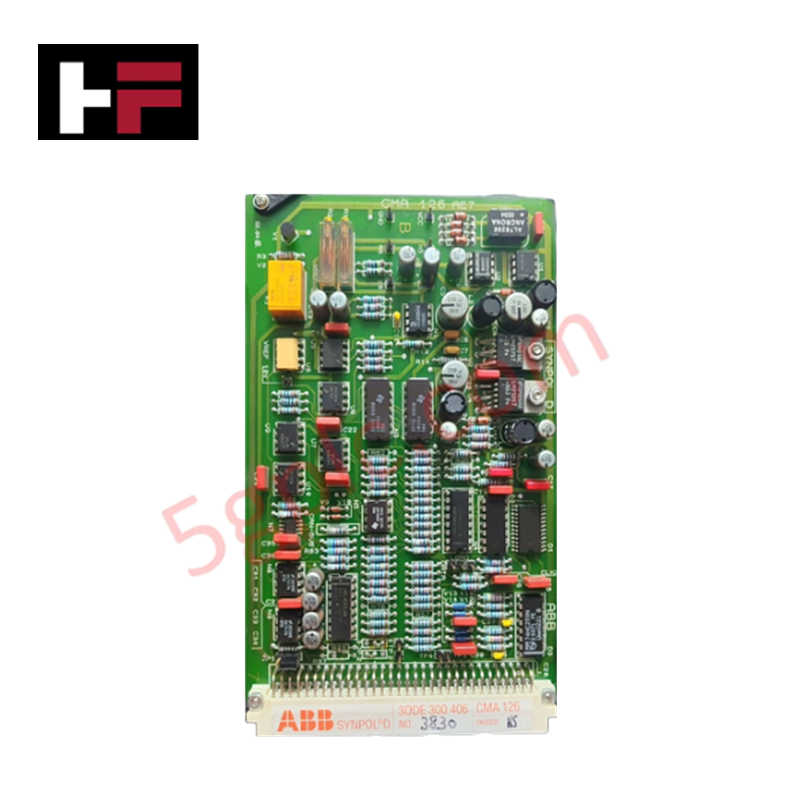
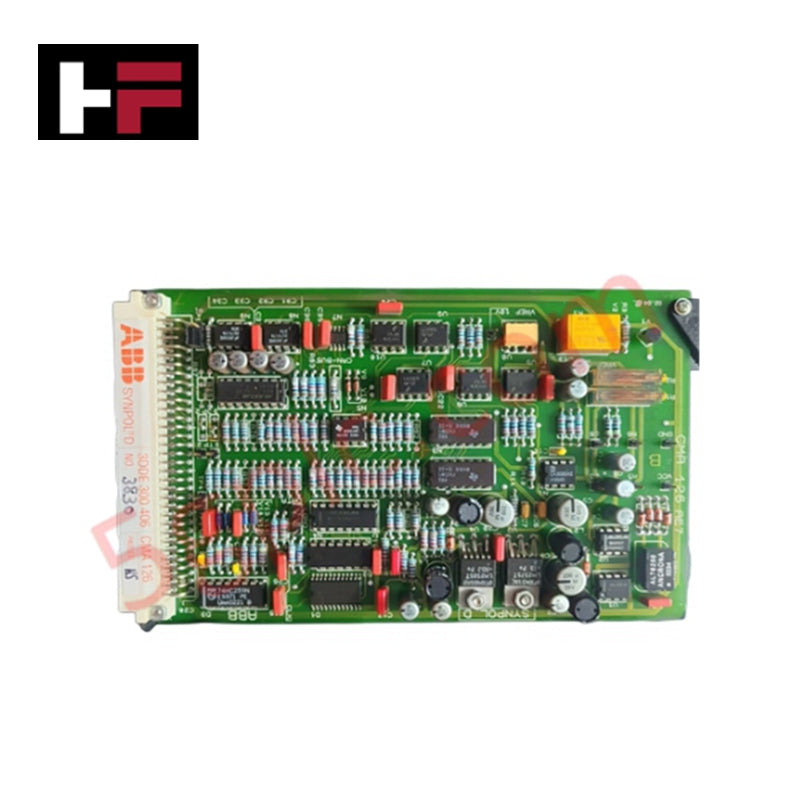
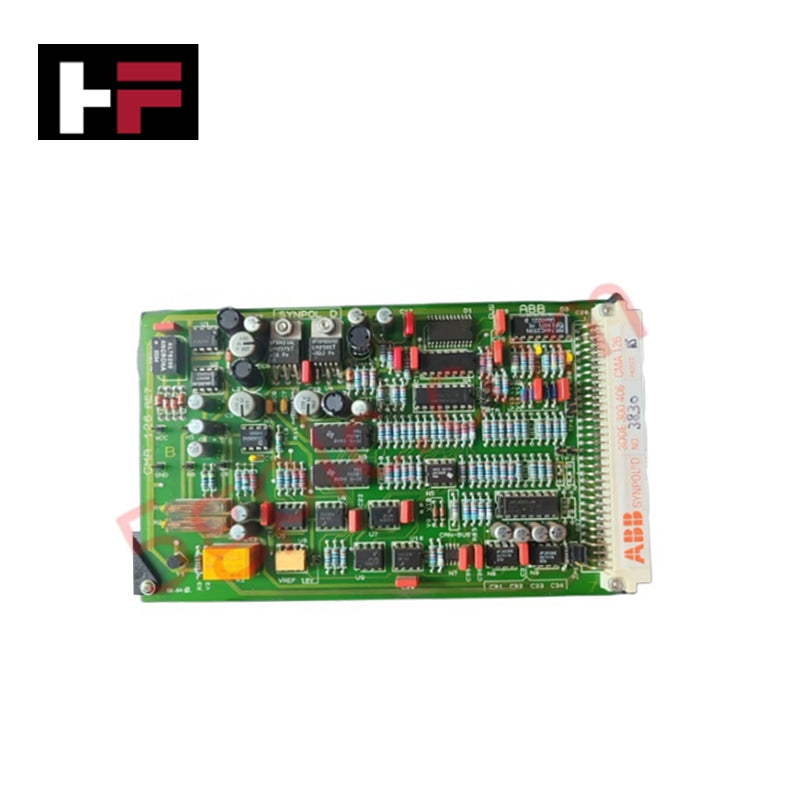
Product Details
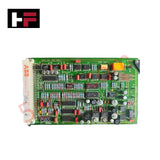
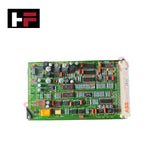
The ABB CMA 126 3DDE 300 406, also cataloged as the CMA 126 Interface Card, operates as a dedicated hardware component for multi-protocol fieldbus translation within SYNPOL D network architectures. The module facilitates physical and electrical interfacing between AC motor drive controllers and supervisory industrial networks. It manages serial data packet conversion across dual isolated RS-485 nodes and an Ethernet physical layer, sustaining concurrent data exchange with up to 16 external drive units simultaneously while operating on a nominal 24 VDC external supply.
Hardware Specifications
| Parameter | Specification |
|---|---|
| Model | CMA 126 3DDE 300 406 |
| Brand | ABB |
| Origin | Sweden |
| Weight | 0.35 kg |
| Dimensions | 126 mm x 45 mm x 68 mm |
| Operating Temp | -20 to 70 deg C |
| Power Consumption | 2.5 W |
| Protocols Supported | CANopen, PROFIBUS DP, Modbus RTU |
| Physical Interfaces | 2x Isolated RS-485 ports, 1x Ethernet port, 1x USB port |
| Drive Capacity | Up to 16 drives concurrently |
| Protection Rating | IP20 |
Profinet and EtherNet/IP Deterministic Networks Alignment
The ABB CMA 126 hardware layout features distinct galvanic isolation for its serial ports to maintain execution stability over long distance RS-485 bus structures. The internal processing core allocates memory registers dynamically to reconcile deterministic communication protocols with backplane bus communication velocity constraints. This implementation minimizes latency when bridging standard fieldbus parameters into high-speed Ethernet environments, ensuring predictable cycle times during multi-drive coordination.
Frequently Asked Questions
Q: Is the USB port on the front panel designed for continuous real-time drive monitoring?
A: No, the USB interface is intended exclusively for localized maintenance, parameter configuration updates, and temporary diagnostic access. It is not rated for continuous, noise-isolated runtime control.
Q: What are the restrictions regarding the hot-swap capabilities of this interface card?
A: This module does not support hot-swapping. Extracting or inserting the card while the 24 VDC power supply is active can induce electrical transients that disrupt the connected RS-485 network topology or degrade internal logic components.
Q: How is the RS-485 port isolation implemented on this physical card?
A: The dual RS-485 ports feature integrated galvanic isolation to prevent ground loop currents from propagating from the motor drive chassis into the central automation backplane.
Field Installation Guidelines
The interface card must be mounted within a secure industrial enclosure providing an IP24 or higher classification to mitigate environmental contamination. When wiring the RS-485 networks, use shielded twisted-pair cabling and apply standard termination resistors (typically 120 ohms) at both ends of the physical bus segment. All communication cable shields must terminate directly at the functional earth rail via low-impedance grounding clamps. Maintain a minimum physical separation distance of 100 mm between communication lines and high-voltage AC motor power cables within the wire ducts to eliminate cross-talk and electromagnetic noise injection.
Additional Information
- 100% Genuine Parts: All products are original and authentic, ensuring reliable industrial performance.
- 30-Day Refund Guarantee: Return any in-stock item within 30 days in original, unopened packaging for a full refund (excluding shipping and fees).
- 12-Month Warranty: Covers defects in materials or workmanship; excludes misuse, normal wear, or unauthorized modifications.
- Worldwide Shipping: We ship via USPS, UPS, FedEx, and DHL. Delivery times vary by country and may be subject to customs or import fees.
- Support & Contact: Technical and warranty assistance is available anytime. Contact us here: Contact.
- Purchase Guidance: Check product specifications and compatibility carefully before ordering to ensure proper application.






Tech & Buying Guide

Demystifying CPU Communication Ports in Siemens PLC Architectures
Industrial automation relies heavily on robust data exchange between devices. Without seamless connectivity, field instruments, network switches, human-machine interfaces, and programmable logic controllers cannot coordinate effectively. Therefore, understanding the various CPU communication ports available in Siemens hardware ensures efficient factory automation design and seamless system integration.

Mastering the Siemens PLC Scan Cycle: How the CPU Executes Automation Programs
Industrial automation relies heavily on programmable logic controllers (PLCs) to manage complex manufacturing processes. Many engineers dive straight into programming without mastering the underlying architecture. However, understanding how a PLC CPU executes a program ensures reliable system design. Therefore, mastering the scan cycle optimizes both performance and troubleshooting in modern control systems.

How to Connect to Siemens S7 PLCs: 5 Essential Communication Methods
Establishing a reliable hardware link between a programming terminal and a Siemens SIMATIC controller is essential for engineering workflows. Field engineers rely on distinct physical layers, ranging from legacy serial connections to high-speed Industrial Ethernet protocols. Modern factory automation environments prioritize fast data transfer and seamless driver integration. Selecting the correct connection method simplifies program downloads, online monitoring, and system troubleshooting in complex control systems.