










Product Details
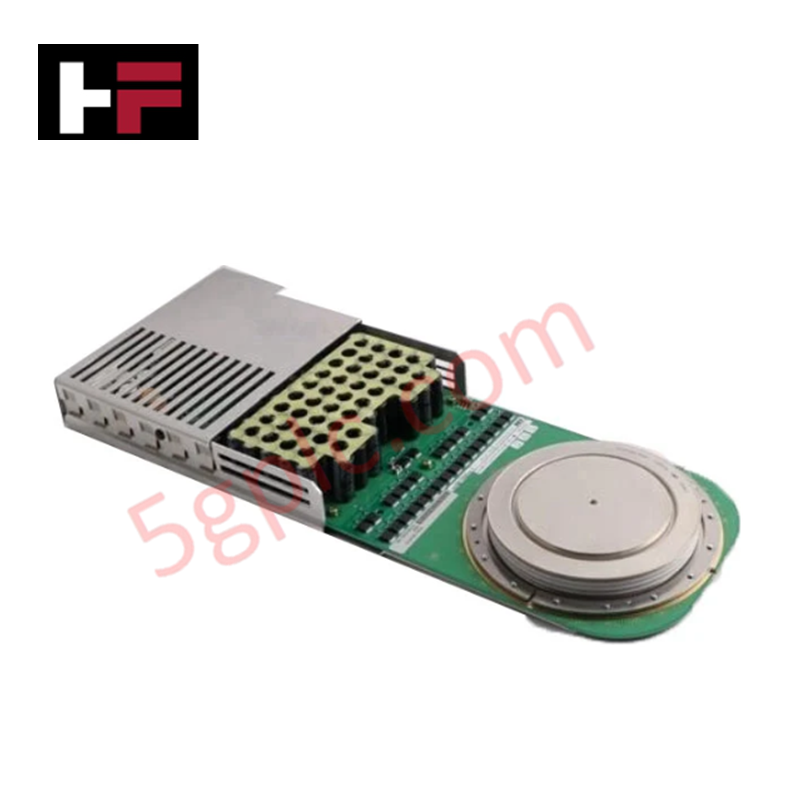
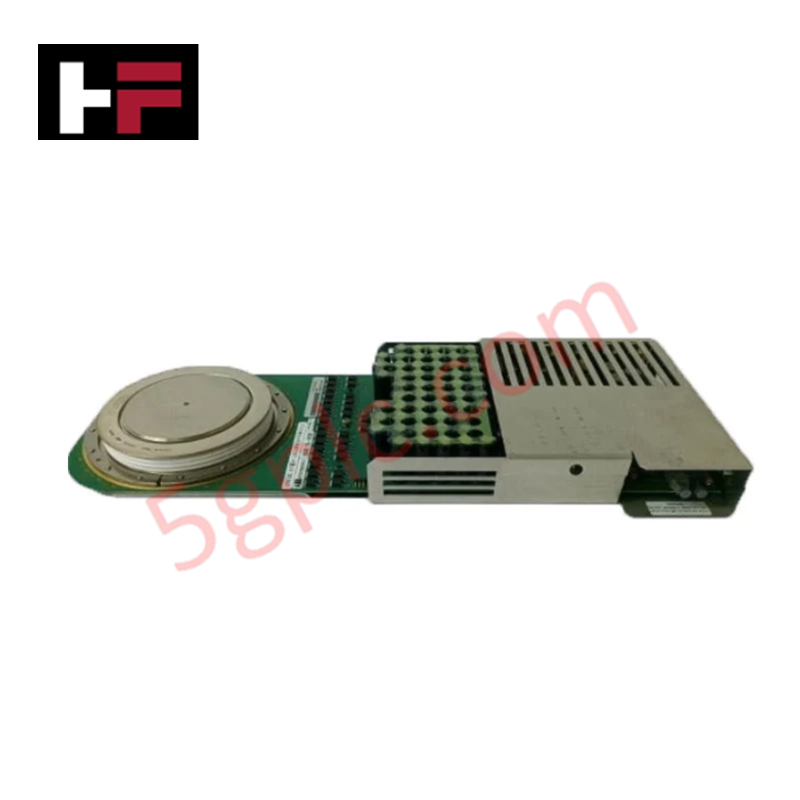
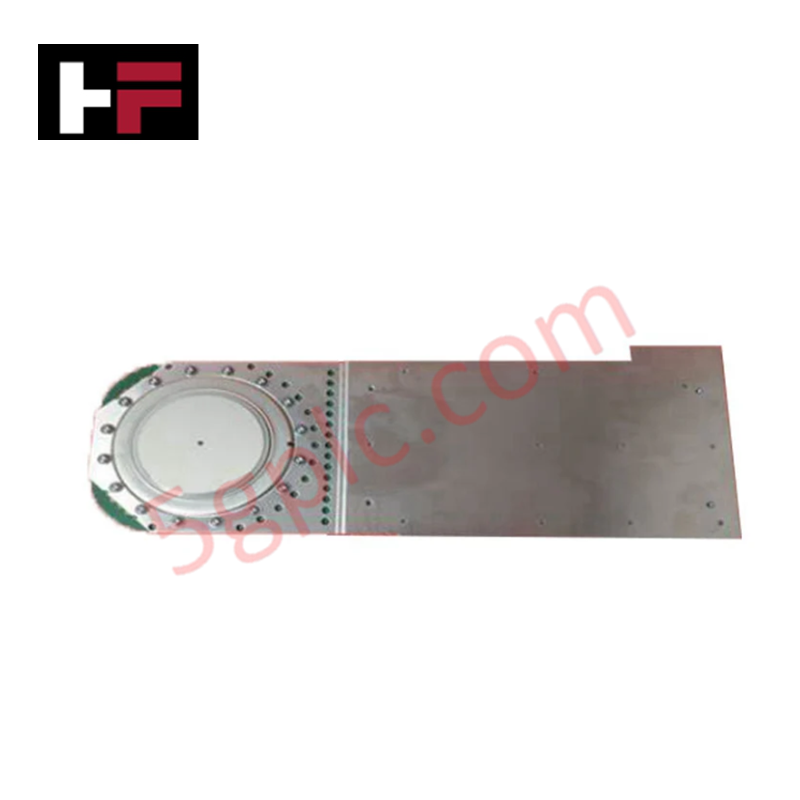
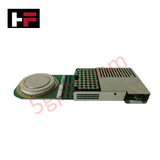
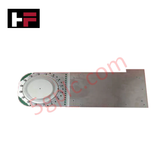
The ABB 5SHY5045L0020, also cataloged as the 5SHY5045L0020 IGCT Module, operates as a dedicated hardware component for high-power solid-state circuit commutation within medium-voltage and High Voltage Direct Current (HVDC) conversion systems. The module combines the thyristor structure and the integrated 5SXE10-0181 gate driver (AC10272001R0101) to execute fast snubberless turn-off switching sequences across the power phase lines.
Hardware Specifications
| Parameter | Specification |
|---|---|
| Model | 5SHY5045L0020 |
| Brand | ABB |
| Sub-Assembly Part Numbers | AC10272001R0101 / 5SXE10-0181 |
| Origin | Switzerland / Sweden |
| Voltage Rating | 4500 V |
| Turn-Off Capability | Snubberless commutation |
| Drive Architecture | Integrated built-in gate driver unit |
| Operating Temp | Standard industrial range (Refer to system enclosure parameters) |
| Power Consumption | Frequency and gate-drive load dependent |
| Weight | 2.5 to 3.0 kg (including gate unit) |
| Dimensions | Standard press-pack housing (Refer to framework drawings) |
Profinet / EtherNet/IP Deterministic Networks Performance
The physical execution of gating pulses within the semiconductor wafer requires strict timing coordination with the backplane bus communication velocity of the central drive processor. High I/O density scaling profiles managed by the integrated driver electronics govern synchronous triggering to execute sub-microsecond state transitions without phase jitter. Proper firmware flash compatibility across all linked power modules is mandatory to eliminate transmission latencies or command signal dropouts during operation on deterministic industrial networks.
Frequently Asked Questions
Q: What are the live insertion or hot-swap limits for this assembly?
A: Hot-swapping this component is completely prohibited. The primary 4500 V links and all auxiliary gate control supplies must be fully de-energized, isolated, and discharged before any physical handling or structural removal.
Q: How does the integrated drive architecture function?
A: The built-in gate driver circuit layer directly interfaces with the silicon wafer inside a singular mechanical envelope, removing external gate wiring and minimizing loop inductance during turn-off sequences.
Q: Can this module be utilized in stacked arrangements?
A: Yes. The structural design and insulation profile are optimized for series connection schemes, allowing multiple modules to be arranged sequentially to match high-voltage converter valve demands.
Field Installation Guidelines
- Mechanical Compression Controls: Place the module within a calibrated semiconductor press frame. Apply the specified clamping force uniformly across the poles to prevent physical damage to the internal silicon layers and ensure low electrical contact resistance.
- Control Path Routing and EMI Shielding: Route low-voltage optical control signals and auxiliary power feeds through dedicated, isolated channels. Maintain physical separation from high-voltage main phase lines to sustain high electromagnetic immunity.
- Mating Surface Cleaning: Ensure that all physical cooling blocks and semiconductor poles are cleared of oxidation or dust. Apply a micro-thin, uniform layer of thermal interface material across the bare metal contact planes prior to completing mechanical clamping.
Additional Information
- 100% Genuine Parts: All products are original and authentic, ensuring reliable industrial performance.
- 30-Day Refund Guarantee: Return any in-stock item within 30 days in original, unopened packaging for a full refund (excluding shipping and fees).
- 12-Month Warranty: Covers defects in materials or workmanship; excludes misuse, normal wear, or unauthorized modifications.
- Worldwide Shipping: We ship via USPS, UPS, FedEx, and DHL. Delivery times vary by country and may be subject to customs or import fees.
- Support & Contact: Technical and warranty assistance is available anytime. Contact us here: Contact.
- Purchase Guidance: Check product specifications and compatibility carefully before ordering to ensure proper application.









Tech & Buying Guide

Demystifying the DDE Protocol in Legacy Industrial Automation Systems
Modern control systems rely heavily on seamless interprocess communication to exchange operational data between software programs. Microsoft first introduced the Dynamic Data Exchange (DDE) protocol in 1987 to enable real-time data sharing. In factory automation, DDE served as an early bridge between control software and Windows desktop applications. Therefore, understanding DDE mechanics provides crucial insights into how legacy industrial networks established software-level connectivity.

Demystifying CPU Communication Ports in Siemens PLC Architectures
Industrial automation relies heavily on robust data exchange between devices. Without seamless connectivity, field instruments, network switches, human-machine interfaces, and programmable logic controllers cannot coordinate effectively. Therefore, understanding the various CPU communication ports available in Siemens hardware ensures efficient factory automation design and seamless system integration.

Mastering the Siemens PLC Scan Cycle: How the CPU Executes Automation Programs
Industrial automation relies heavily on programmable logic controllers (PLCs) to manage complex manufacturing processes. Many engineers dive straight into programming without mastering the underlying architecture. However, understanding how a PLC CPU executes a program ensures reliable system design. Therefore, mastering the scan cycle optimizes both performance and troubleshooting in modern control systems.