










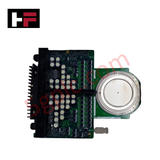
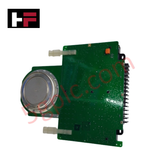
Product Details
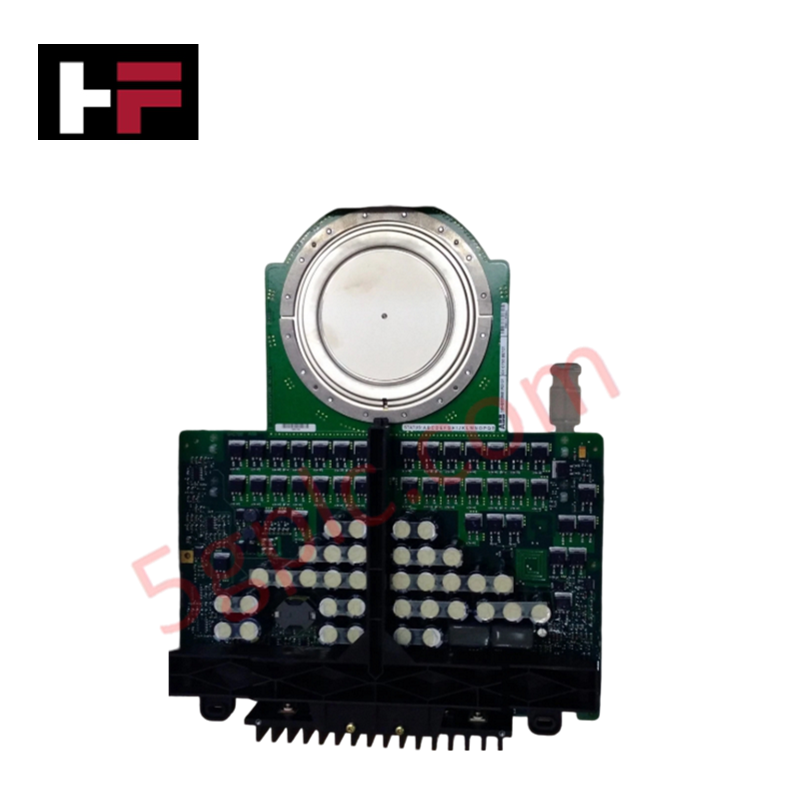
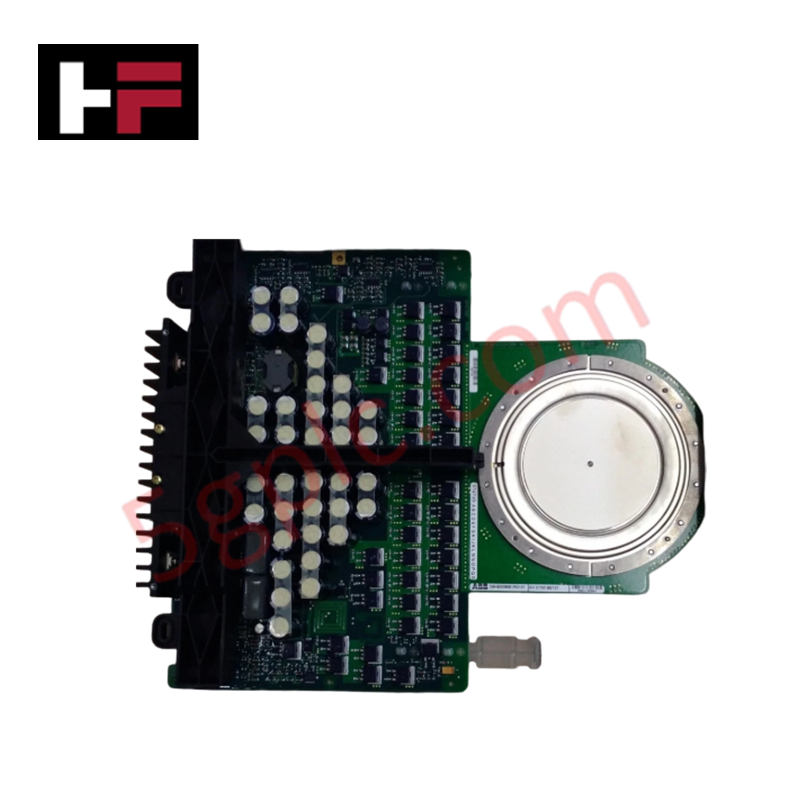
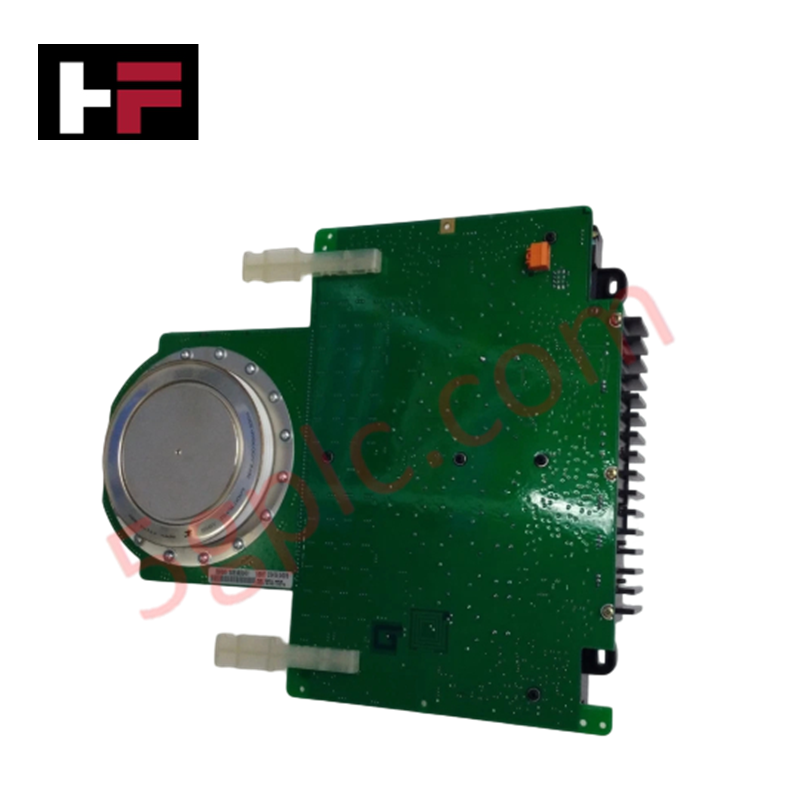
The ABB 5SHY4045L0006 3BHB030310R0001, also cataloged as the 5SHY4045L0006 IGCT Module, operates as a dedicated hardware component for high-power semiconductor switching within industrial power converter assemblies. Configured for fast electrical circuit commutation paths, the unit provides direct physical execution of thyristor-level conduction states controlled via its integrated gate unit.
Hardware Specifications
| Parameter | Specification |
|---|---|
| Model | 5SHY4045L0006 |
| Brand | ABB |
| Product ID | 3BHB030310R0001 |
| Origin | United States (US), Czech Republic (CZ), Switzerland (CH), Finland (FI) |
| Rated Voltage | 4500 V |
| Component Diameter | 91 mm |
| Net Weight | 3 kg |
| Operating Temp | Standard industrial range (Refer to enclosure parameters) |
| Power Consumption | Dependent on active gating frequency and load profile |
| Dimensions | 91 mm wafer envelope assembly |
Profinet / EtherNet/IP Deterministic Networks Performance
The firing timing control of the integrated 91 mm thyristor wafer relies on exact synchronization with the backplane bus communication velocity of the drive architecture. To process rapid gate turn-off sequences at 4500 V without jitter, the internal driver board logic utilizes precise I/O density scaling profiles. Ensuring absolute firmware flash compatibility across all interconnected control boards is necessary to prevent command propagation delays over deterministic automation networks.
Frequently Asked Questions
Q: What are the live insertion or hot-swap limitations for this module?
A: Hot-swapping is strictly prohibited. The 4500 V main power bus bars and all low-voltage gate power lines must be entirely isolated and verified as discharged before any handling or removal.
Q: How is the command communication path connected to this gate unit?
A: The gate control signals are linked using dedicated fiber optic connections to maintain complete galvanic isolation and high immunity against electromagnetic noise.
Q: What physical verification must be performed during mechanical mounting?
A: The 91 mm press-pack wafer requires uniform mechanical force application to ensure low forward slope resistance and to maintain structural compatibility with matching heatsinks.
Field Installation Guidelines
- Mechanical Clamp Calibration: Insert the press-pack module inside a calibrated force clamp frame. Torque the mounting hardware evenly to the exact specified force limit to avoid mechanical stress cracking on the silicon wafer.
- Fiber Optic Route Protection: Route all optical fibers through independent wireways. Adhere strictly to the maximum bend radius limits to prevent control pulse attenuation or physical conductor failure.
- Thermal Plane Inspection: Verify that both the semiconductor poles and the cooling block surfaces are clear of particulate matter and oxide layers. Apply a uniform, ultra-thin coating of non-conductive thermal paste prior to mechanical lock-down.
Additional Information
- 100% Genuine Parts: All products are original and authentic, ensuring reliable industrial performance.
- 30-Day Refund Guarantee: Return any in-stock item within 30 days in original, unopened packaging for a full refund (excluding shipping and fees).
- 12-Month Warranty: Covers defects in materials or workmanship; excludes misuse, normal wear, or unauthorized modifications.
- Worldwide Shipping: We ship via USPS, UPS, FedEx, and DHL. Delivery times vary by country and may be subject to customs or import fees.
- Support & Contact: Technical and warranty assistance is available anytime. Contact us here: Contact.
- Purchase Guidance: Check product specifications and compatibility carefully before ordering to ensure proper application.






Tech & Buying Guide

Demystifying CPU Communication Ports in Siemens PLC Architectures
Industrial automation relies heavily on robust data exchange between devices. Without seamless connectivity, field instruments, network switches, human-machine interfaces, and programmable logic controllers cannot coordinate effectively. Therefore, understanding the various CPU communication ports available in Siemens hardware ensures efficient factory automation design and seamless system integration.

Mastering the Siemens PLC Scan Cycle: How the CPU Executes Automation Programs
Industrial automation relies heavily on programmable logic controllers (PLCs) to manage complex manufacturing processes. Many engineers dive straight into programming without mastering the underlying architecture. However, understanding how a PLC CPU executes a program ensures reliable system design. Therefore, mastering the scan cycle optimizes both performance and troubleshooting in modern control systems.

How to Connect to Siemens S7 PLCs: 5 Essential Communication Methods
Establishing a reliable hardware link between a programming terminal and a Siemens SIMATIC controller is essential for engineering workflows. Field engineers rely on distinct physical layers, ranging from legacy serial connections to high-speed Industrial Ethernet protocols. Modern factory automation environments prioritize fast data transfer and seamless driver integration. Selecting the correct connection method simplifies program downloads, online monitoring, and system troubleshooting in complex control systems.