












Product Details
Product Overview
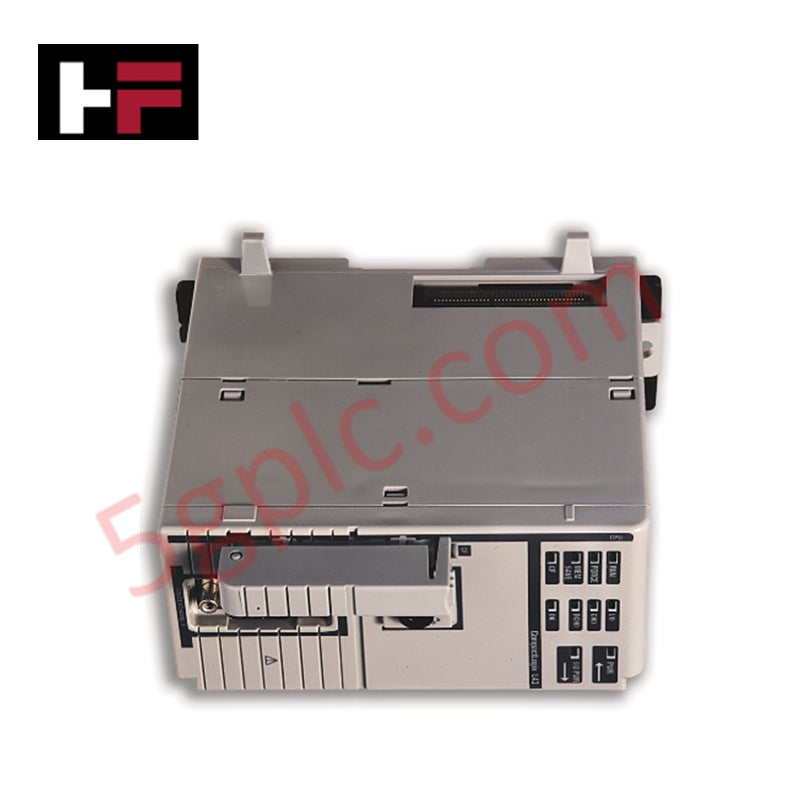
The Allen-Bradley 1768-L45 serves as the central processing unit for CompactLogix control systems. This processor module executes control logic, manages motion control, and handles communication tasks for small to mid-sized applications. It supports up to 4 local 1768 I/O modules and up to 30 remote 1769 I/O modules, providing scalable control architecture. The unit consumes 48 Watts of power and delivers 2 Amps of backplane current to support local modules. We supply this item as a 100% Brand New, factory-sealed unit.
Part Number Breakdown
-
1768: Identifies the CompactLogix 1768 platform.
-
L: Denotes the Logic processor category.
-
45: Specifies the specific series and performance tier.
Technical Specifications
| Parameter | Specification |
|---|---|
| Manufacturer | Allen-Bradley (Rockwell Automation) |
| Product Type | CompactLogix Processor |
| Max Local I/O | 4 Modules (1768 Series) |
| Max Remote I/O | 30 Modules (1769 Series) |
| Max I/O Banks | 3 Banks |
| Backplane Current | 2 Amps at 24 Volts |
| Power Dissipation | 8.3 Watts |
| Total Power Consumption | 48 Watts |
| Operating Temperature | 0 to 60°C (32 to 140°F) |
| Operating Shock | 30 G |
| Weight | 0.75 lbs (0.34 kg) |
Engineering Advantages
Scalable Hybrid Architecture
The 1768-L45 bridges the gap between the 1768 and 1769 form factors. You can connect up to 4 high-performance 1768 modules directly to the processor for specialized tasks like analog processing or communication. Additionally, the processor controls up to 30 remote 1769 I/O modules over a network, allowing you to distribute I/O closer to the machine while keeping the processor in a protected panel location.
Efficient Power Management
This processor manages power distribution efficiently, providing 2 Amps of current at 24 Volts to the local backplane. This capacity supports multiple 1768 expansion modules without requiring external power supplies for the local rack. The unit itself consumes only 48 Watts, reducing the thermal load inside your enclosure and minimizing the need for active cooling.
Ruggedized for Industrial Duty
The 1768-L45 operates reliably in temperatures ranging from 0°C to 60°C. It withstands operating shock up to 30 G, making it suitable for applications involving heavy machinery or frequent vibration. The open-style enclosure mounts securely using #8 or M4 screws with a torque of 1.16 Nm, ensuring a stable connection in dynamic environments.
FAQs
Q: How many I/O modules can the 1768-L45 control?
A: The processor supports a maximum of 4 local 1768 I/O modules plugged directly next to it. It also supports up to 30 remote 1769 I/O modules connected via communication network, organized into a maximum of 3 I/O banks.
Q: Does the 1768-L45 power the local modules?
A: Yes. The processor supplies 2 Amps of backplane current at 24 Volts. This power feeds the local 1768 modules, eliminating the need for a separate power supply module in the local rack for low-power configurations.
Q: What type of screws are required for mounting?
A: You should use #8 or M4 mounting screws. Apply a torque of 1.16 Nm to ensure the processor locks securely into the DIN rail or panel sub-panel without damaging the housing.
Q: Can I use 1769 modules directly next to the 1768-L45?
A: No. The 1768-L45 local bus is designed specifically for 1768 modules. You must use a communication interface module to connect 1769 I/O modules remotely.
Additional Information
- 100% Genuine Parts: All products are original and authentic, ensuring reliable industrial performance.
- 30-Day Refund Guarantee: Return any in-stock item within 30 days in original, unopened packaging for a full refund (excluding shipping and fees).
- 12-Month Warranty: Covers defects in materials or workmanship; excludes misuse, normal wear, or unauthorized modifications.
- Worldwide Shipping: We ship via USPS, UPS, FedEx, and DHL. Delivery times vary by country and may be subject to customs or import fees.
- Support & Contact: Technical and warranty assistance is available anytime. Contact us here: Contact.
- Purchase Guidance: Check product specifications and compatibility carefully before ordering to ensure proper application.
Tech & Buying Guide

Essential Best Practices for PLC Wiring and Installation in Industrial Automation
Successful control system deployment begins with thoroughly reviewing manufacturer technical documentation. Controllers from major brands like Allen-Bradley, Siemens, and Schneider Electric feature unique terminal layouts. Engineers must verify voltage requirements before connecting power cables to prevent catastrophic equipment damage. Standard line connections require strict adherence to regional electrical codes and proper wire color coding. Furthermore, panel builders should always establish a robust low-impedance ground connection using at least 16-AWG copper conductor tied directly to the main plant grounding grid.
Demystifying Programmable Logic Controllers: Comprehensive Guide to PLC Classification and Selection in Industrial Automation
Modern industrial automation heavily relies on Programmable Logic Controllers (PLCs) to drive factory floor efficiency. Over my 15 years as an industrial automation expert working with DCS, TSI, and control systems, I have seen PLCs evolve into the central nervous system of modern manufacturing. Selecting the right controller requires a deep understanding of PLC types based on physical size, hardware architecture, and power supply configurations.

Comprehensive Guide to PLC Types in Modern Industrial Automation
Modern industrial automation relies on programmable logic controllers to govern critical factory operations. System integrators classify PLCs based on scale, hardware architecture, and power supply design. Understanding these core categories enables automation engineers to select the right control system architecture. Consequently, proper hardware selection optimizes performance while minimizing long-term operational costs.