












Product Details
Product Overview
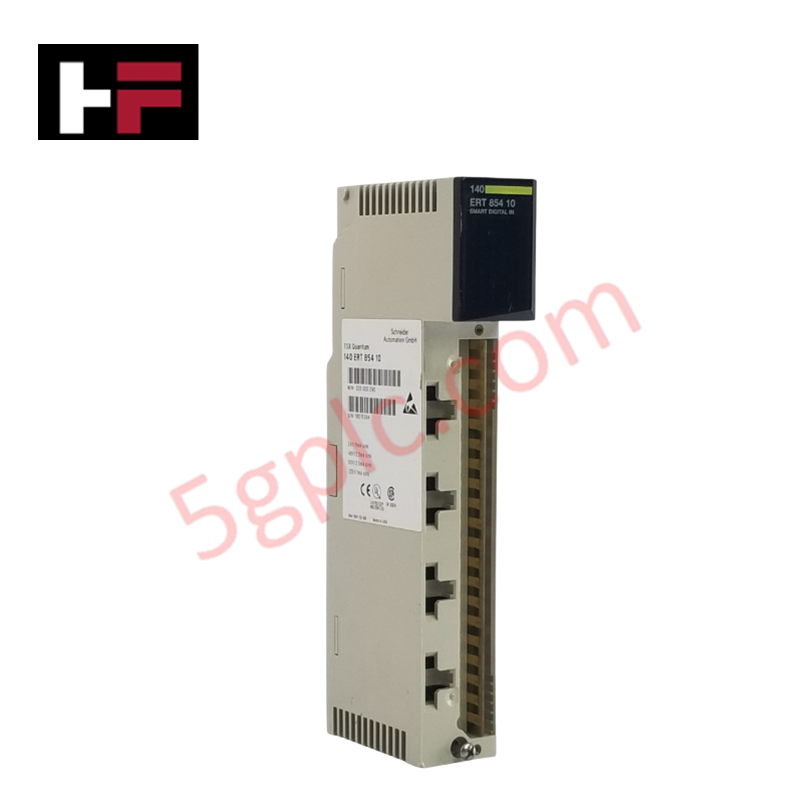
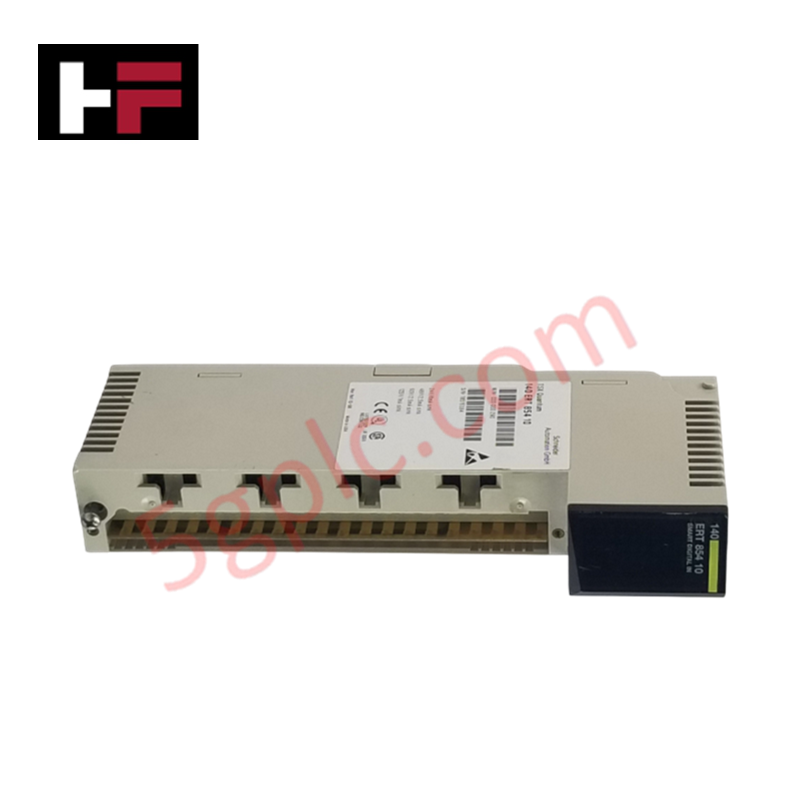
The Schneider Electric 140ERT85410 operates as a high-precision, 32-channel time-stamped multifunction input module within the Modicon Quantum automation platform. This standard-format card captures sequence-of-events (SOE) data by logging discrete process transitions with millisecond-level accuracy. It handles critical fault diagnostic tracking, high-speed status monitoring, and 500 Hz counting loops within power substations, chemical processing facilities, and oil or gas distribution systems. The unit integrates embedded time synchronization via standard clock signals to reconstruct plant-floor failure sequences exactly as they occur. We guarantee this multifunction input module arrives in 100% brand new, original factory-sealed condition.
Technical Specifications
| Parameter | Specification |
| Manufacturer | Schneider Electric / Telemecanique |
| Product Line | Modicon Quantum Automation Platform |
| Part Number | 140ERT85410 |
| Product Type | Time-Stamped Multifunction Input Module |
| Software Compatibility | Concept / Unity Pro |
| Number of Process Inputs | 32 Discrete Inputs (Arranged in 2 groups of 16 channels) |
| Process Input Voltage | 24 to 125 V DC |
| Clock Input Channel | 1 Dedicated Discrete Input at 24 V DC (1 ms acquisition time, 5 mA draw) |
| Time Synchronization | DCF77 Radio Time Signal Protocol |
| Switching Voltage/Current | 125V @ 1mA / 60V @ 2.5mA / 48V @ 2.5mA / 24V @ 6mA |
| High-Speed Counter Rate | 500 Hz Maximum |
| Signal Insulation | Optocoupler isolation between channel groups and clock signal input |
| Anti-Bounce Filtering | Software-configurable from 0 to 255 ms |
| Logic Configuration | Programmable channel state inversion |
| Maximum Field Distance | Shielded cable < 600 m / Unshielded cable < 400 m |
| Termination Interface | 40 Screw terminals on terminal block |
| Backplane Current Draw | 300 mA at 5 V DC bus |
| External Current Draw | 3 mA per channel group at 24...125 V DC |
| Module Format / Weight | Standard Quantum Format / 0.45 kg |
Engineering Advantages
-
Millisecond-Accurate Sequence of Events (SOE) Capture: The onboard microprocessor scans the dedicated clock synchronization channel with a fast 1 ms acquisition window, supporting the DCF77 time synchronization protocol. This design logs and timestamps field status transitions instantly at the hardware level, allowing operators to trace the precise root cause of a cascading multi-breaker plant trip without processor scan time latency.
-
Wide-Range Voltage Tolerance and Flexible Gating: The 32 process inputs adapt seamlessly to fluctuating field voltages ranging from 24V all the way up to 125V DC. By handling varied switching profiles—such as 125V at 1mA or 24V at 6mA—the module eliminates the cost and panel space of external voltage-matching interposing relays when interfacing with mixed legacy utility equipment.
-
Optocoupler Group-to-Group Isolation: High-grade optical isolators segment the 32 input channels into two separate blocks of 16, while completely separating the clock reference circuit. This physical barrier blocks industrial ground loops, high-voltage cross-talk, and transient switching surges from bleeding across channels or migrating back into the central Quantum backplane.
-
Configurable Hardware Anti-Bounce Suppression: Software parameterization inside Unity Pro allows engineers to adjust anti-bounce digital filters between 0 and 255 milliseconds on an individual channel basis. This feature resolves the issue of contact chatter on heavy mechanical limit switches and aging field relays, preventing false event logs from flooding the system memory.
FAQs
-
Does this 140ERT85410 input module ship inside its original factory box?
Yes. We ship this module exclusively as a 100% brand new, factory-original component. The device remains untouched within its sealed anti-static barrier inside the official Schneider Electric corporate box, complete with genuine tracking barcodes and quality assurance inspection stamps.
-
What type of physical connection interface does this module utilize?
The 140ERT85410 features 40 dedicated wiring pins and attaches directly to a standard Modicon Quantum 40-point screw terminal block. This removable terminal assembly allows you to pre-wire field enclosures or replace modules rapidly without unlanding individual signal cables.
-
Can I use this module to count high-speed pulses from industrial flow meters?
Yes. Besides tracking static binary positions, the module incorporates a multifunction counter mode that monitors pulse frequencies up to 500 Hz. You can configure individual channels to tally input pulses and read totalized statistics via your control software application.
-
What are the wiring distance limitations for bringing field signals to this module?
To maintain uncorrupted time-stamp data, you must limit your cable runs based on shielding. The hardware drives clean data over distances up to 600 meters when using high-quality shielded cables, or up to 400 meters when routing unshielded cables through standard industrial conduit tracks.
Additional Information
- 100% Genuine Parts: All products are original and authentic, ensuring reliable industrial performance.
- 30-Day Refund Guarantee: Return any in-stock item within 30 days in original, unopened packaging for a full refund (excluding shipping and fees).
- 12-Month Warranty: Covers defects in materials or workmanship; excludes misuse, normal wear, or unauthorized modifications.
- Worldwide Shipping: We ship via USPS, UPS, FedEx, and DHL. Delivery times vary by country and may be subject to customs or import fees.
- Support & Contact: Technical and warranty assistance is available anytime. Contact us here: Contact.
- Purchase Guidance: Check product specifications and compatibility carefully before ordering to ensure proper application.


Tech & Buying Guide

Hub vs Switch vs Router in Industrial Automation Architecture
Modern factory automation relies on reliable industrial networking infrastructure to exchange real-time field data across operational technology systems. Engineers often encounter networking hardware like hubs, switches, and routers when integrating Programmable Logic Controllers, Distributed Control Systems, and SCADA monitoring nodes. Although these devices share physical ports, they operate at different layers of the Open Systems Interconnection reference model and deliver distinct traffic management capabilities.

Marshalling Cabinet Preventive Maintenance: Essential Healthiness Checks for PLC, DCS, and ESD Systems
Marshalling cabinets serve as the vital interface between field instrumentation and control room electronics in modern process facilities. Regular preventive maintenance of these cabinets ensures signal integrity across programmable logic controllers (PLCs), distributed control systems (DCS), and emergency shutdown (ESD) networks. System technicians must execute structured inspection protocols to mitigate environmental risks, identify loose wiring, and maintain continuous operational readiness.

Spatial Computing in Industrial Automation: Elevating PLC and DCS Operations with AR and VR
Industry 4.0 integrates digital intelligence into field operations, transforming factory automation landscapes worldwide. Spatial technologies—specifically Augmented Reality (AR) and Virtual Reality (VR)—redefine how engineers interact with industrial control systems. By bridging computer-generated CAD models with real-time operational technology (OT) data, immersive displays enable intuitive monitoring, rapid diagnostics, and safer maintenance across complex processing facilities.