










Product Details
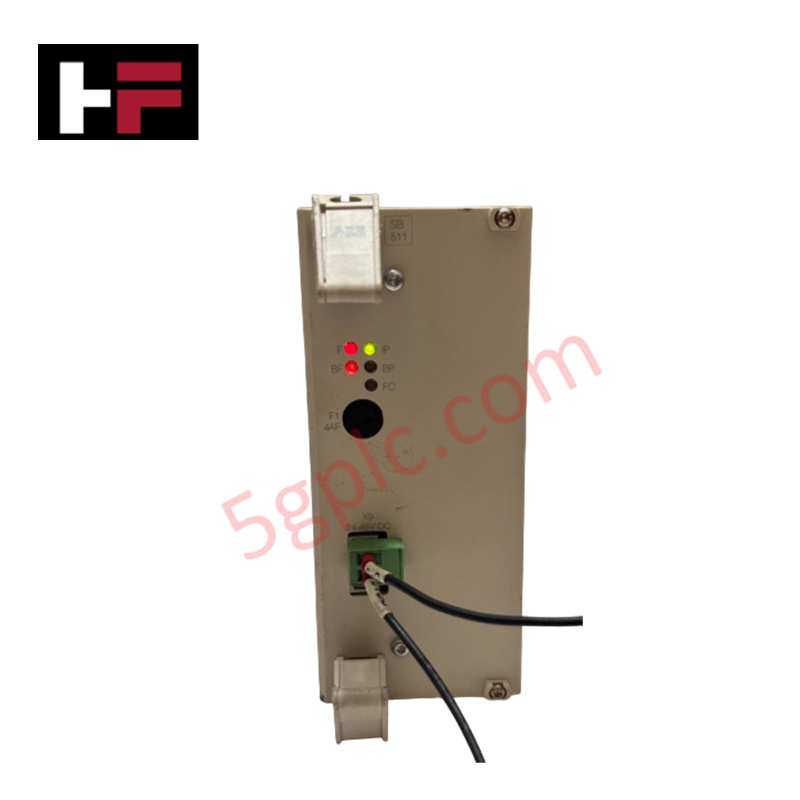
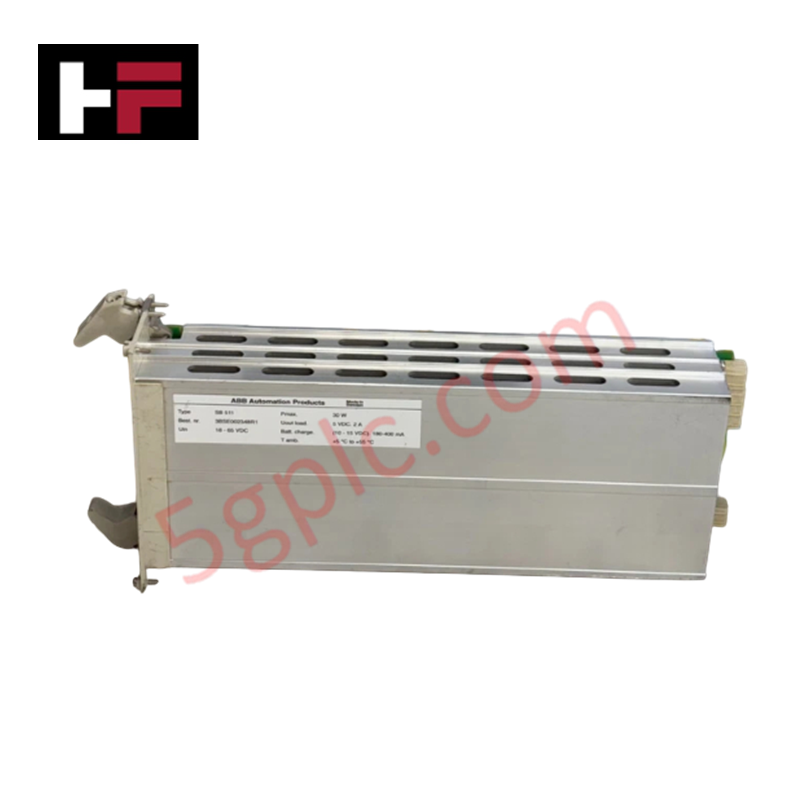
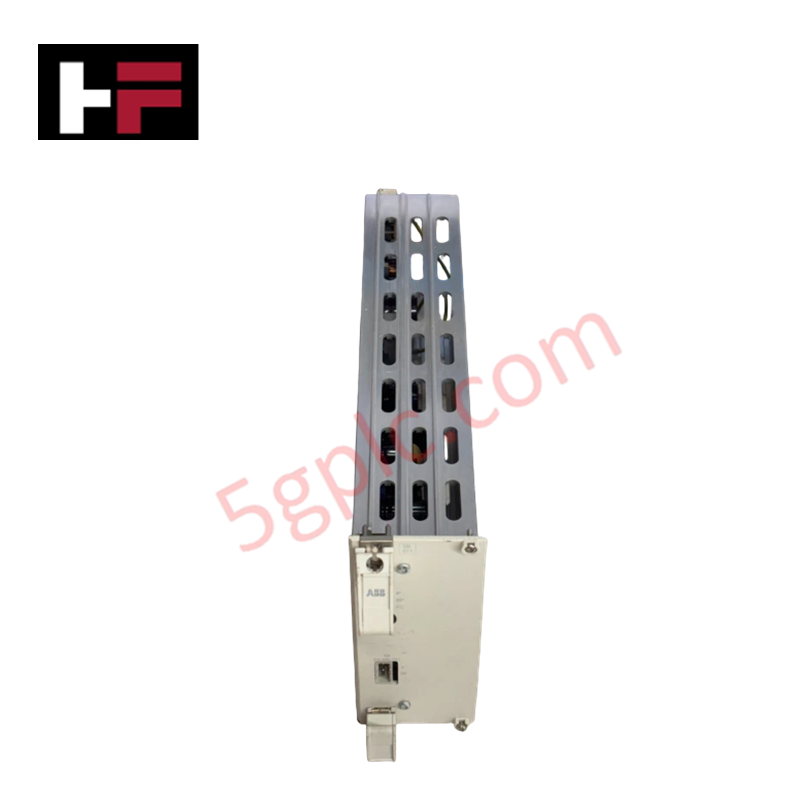
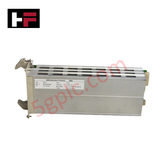
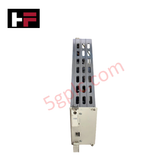
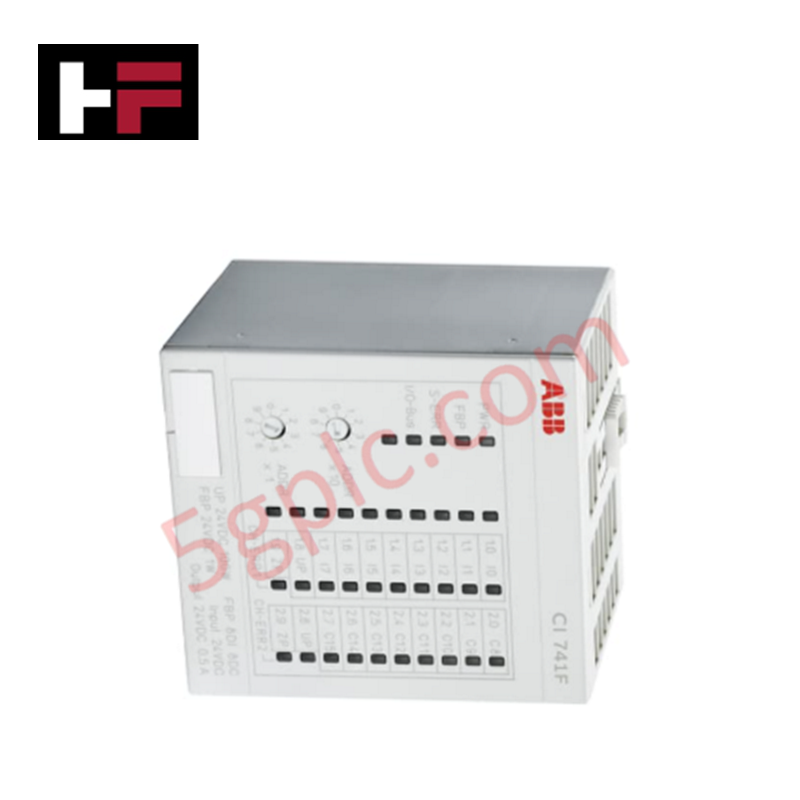
The ABB SB511 3BSE002348R1, also cataloged as the SB511 Power Supply Module, operates as a dedicated hardware component for auxiliary battery charging and DC power regulation within ABB Advant Master Process Control System platforms.
Hardware Specifications
| Parameter | Specification |
|---|---|
| Model | SB511 3BSE002348R1 |
| Brand | ABB |
| Origin | Sweden |
| Weight | 0.96 kg |
| Dimensions | 60 mm x 291 mm x 150 mm |
| Operating Temp | Standard Cabinet Ambient (0 to 55 deg C) |
| Power Consumption | 24-48 VDC Input Range |
| Output Function | 12 V, 4 Ah NiCd Battery Charger |
| Protection Fuse | Spare Fuse Part Number 3BSC770001R50 |
| System Architecture | ABB Advant Master DCS |
Deterministic Network Integration and I/O Density Scaling
The SB511 module interfaces with the system rack backplane to deliver auxiliary DC power stability without introducing noise transients on high-velocity data channels. Maintaining voltage regulation across the backplane bus ensures predictable execution times for Profinet and EtherNet/IP deterministic networks connected across the rack. Firmware flash compatibility across adjacent control modules remains uninhibited, supporting scalable I/O density configurations while maintaining continuous backup charging circuits.
Frequently Asked Questions
Q: What battery type and rating is supported by the SB511 charging circuit?
A: The module is configured to charge 12 V, 4 Ah Nickel-Cadmium (NiCd) battery assemblies.
Q: What fuse replacement part is specified for circuit protection on the unit?
A: Internal current protection utilizes spare fuse designation 3BSC770001R50.
Q: How does the SB511 maintain backplane stability during primary power dips?
A: The module seamlessly switches to the auxiliary battery backup loop to prevent voltage drops on the rack backplane, preserving deterministic bus communication velocity without triggering CPU reset cycles.
Field Installation Guidelines
- Verify input DC supply lines are de-energized prior to inserting the power supply module into the rack slot.
- Ensure correct terminal polarity when connecting external 12 V NiCd battery wiring to prevent reverse-voltage protection fuse clear events.
- Fasten front panel retaining screws completely to establish low-impedance grounding with the cabinet rack chassis.
- Maintain minimum clearance above and below the module enclosure to allow adequate convection cooling across internal power dissipation components.
Additional Information
- 100% Genuine Parts: All products are original and authentic, ensuring reliable industrial performance.
- 30-Day Refund Guarantee: Return any in-stock item within 30 days in original, unopened packaging for a full refund (excluding shipping and fees).
- 12-Month Warranty: Covers defects in materials or workmanship; excludes misuse, normal wear, or unauthorized modifications.
- Worldwide Shipping: We ship via USPS, UPS, FedEx, and DHL. Delivery times vary by country and may be subject to customs or import fees.
- Support & Contact: Technical and warranty assistance is available anytime. Contact us here: Contact.
- Purchase Guidance: Check product specifications and compatibility carefully before ordering to ensure proper application.






Tech & Buying Guide

Redefining Control Systems: The Rise of Flexible I/O Modules in Industrial Automation
Conventional input-output architectures often limit engineering agility and inflate long-term inventory costs. Today, Flexible Input/Output Modules (FIOM) are transforming how control system engineers design, commission, and maintain automation infrastructure. By allowing individual channel software configuration, FIOM technology bridges the gap between rigid hardware design and dynamic plant requirements.

Understanding Modern SCADA Systems: Architecture, Communication Topologies, and Industrial Applications
Supervisory Control and Data Acquisition (SCADA) systems form the digital backbone of modern industrial automation. They collect critical field data, transmit signals across vast distances, and empower plant operators with real-time process visibility. Across modern infrastructures, SCADA solutions streamline centralized control and maintain continuous operational uptime.
Understanding OPC Servers in Modern Industrial Automation: Principles, Architecture, and Applications
In industrial automation, connecting physical hardware with high-level software remains a primary operational challenge. Factories utilize programmable logic controllers (PLCs), distributed control systems (DCS), human-machine interfaces (HMIs), and smart sensors from diverse vendors. These devices often speak different proprietary protocols. Open Platform Communications (OPC) servers solve this interoperability challenge by standardizing how data flows across factory networks.