










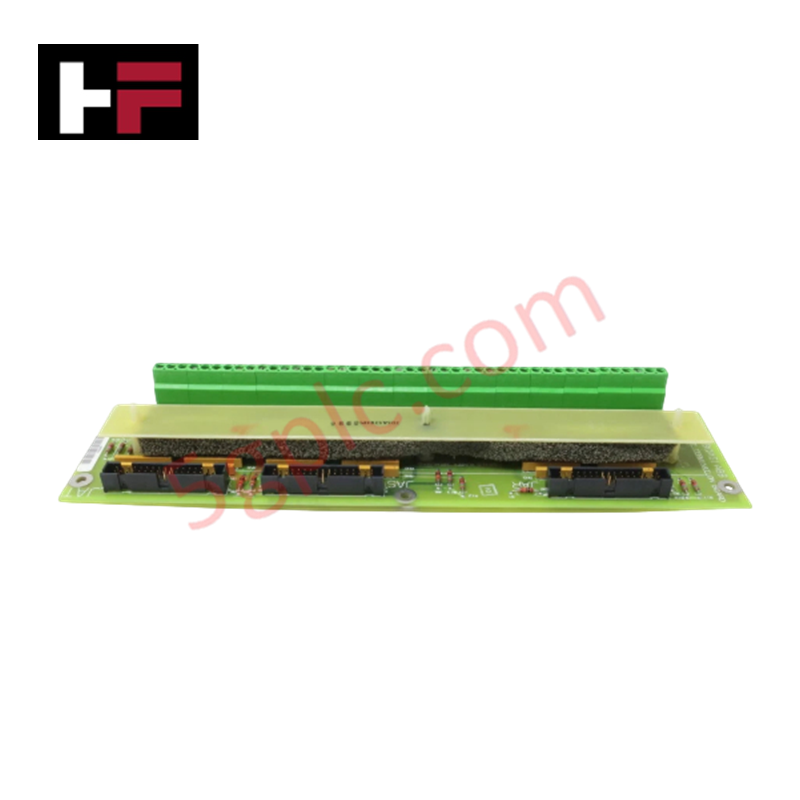
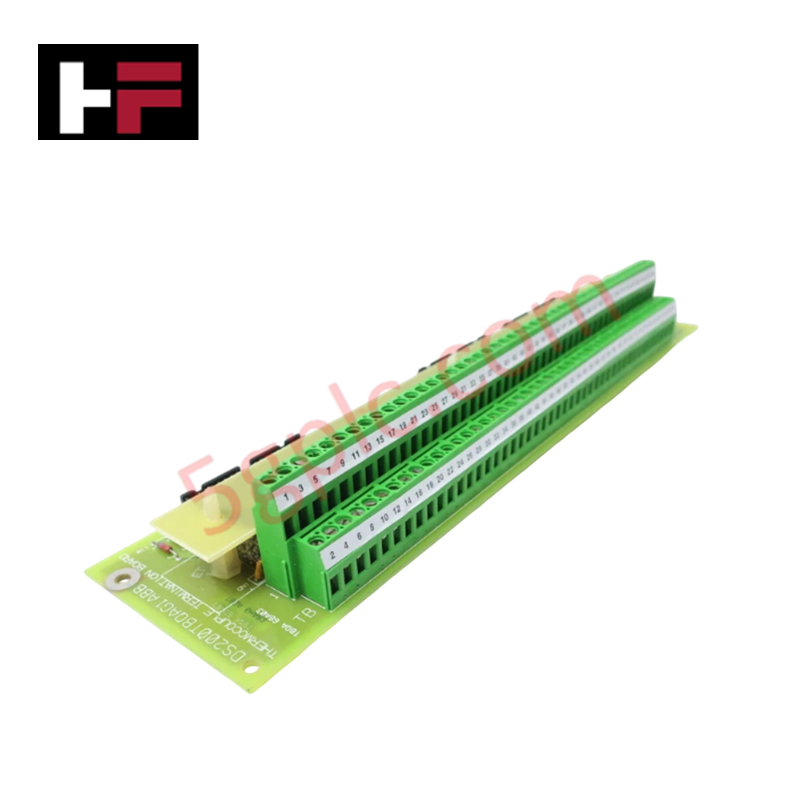
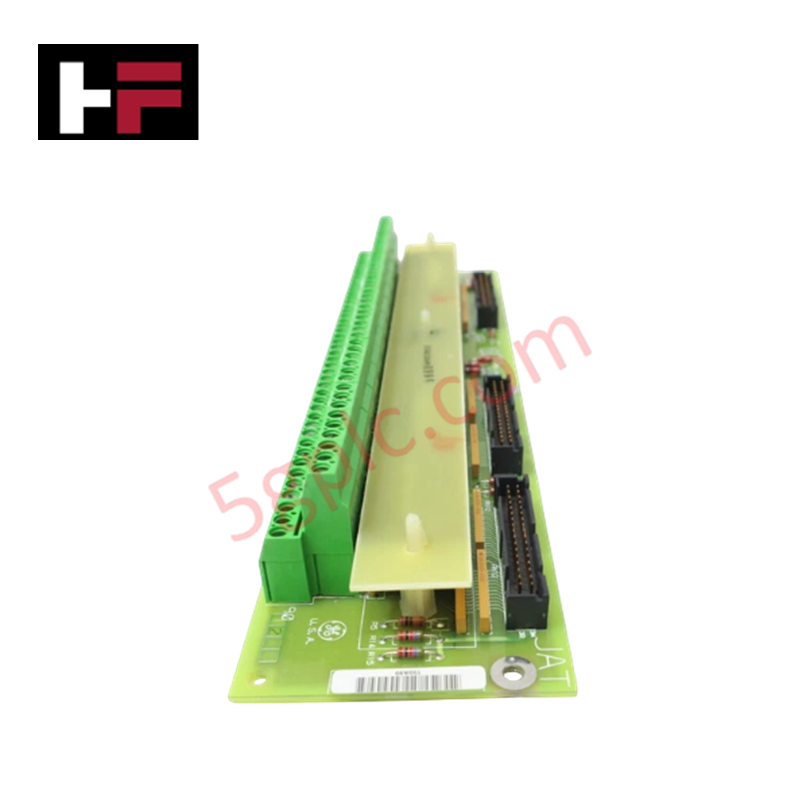
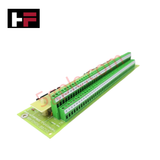
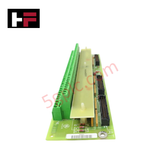
Product Details
Hardware Specifications
| Parameter | Specification |
|---|---|
| Model | DS200TBQAG1ABB |
| Brand | GE (General Electric) |
| Origin | USA |
| Power Consumption | Passive termination assembly; logic power sourced from host rack |
| Functional Acronym | TBQA |
| System Core Interface | RST Termination Board |
| PCB Coating | Normal protective coating |
| Assembly Type | Normal assembly |
| Backward Compatibility | Fully backward compatible with initial two hardware revisions |
Deterministic Network Execution & Backplane Velocity
The DS200TBQAG1ABB translates low-millivolt thermocouple signals directly from field sensor terminals into internal system buses connected to the R, S, and T control cores. The physical board layout minimizes noise interference across input channels, maintaining high signal integrity for internal control loop execution.
Integration with Profinet / EtherNet/IP deterministic networks via host Mark V communication modules ensures synchronized scan execution and real-time processing of temperature data. Strict firmware flash compatibility and circuit topology backward compatibility across prior board revisions prevent scan latency and timing jitter across extended I/O channels.
Frequently Asked Questions
Q: Is the DS200TBQAG1ABB module backward compatible with earlier DS200TBQAG1 hardware revisions?
A: Yes. The DS200TBQAG1ABB hardware revision maintains full backward compatibility with the first two revision levels of the DS200TBQAG1 series.
Q: How does the DS200TBQAG1ABB handle thermocouple signal distribution within the system?
A: The module functions as a TBQA RST termination board, routing thermocouple signals from screw terminals directly to the redundant R, S, and T processing cores via multi-pin header cables.
Q: Does the DS200TBQAG1ABB require direct external AC/DC power inputs for operation?
A: No. The DS200TBQAG1ABB operates as a passive terminal board, drawing logic power and cold junction reference signals from the connected core processor rack.
Field Installation Guidelines
- System Power Isolation: Ensure all main power feeds to the Speedtronic Mark V panel are isolated and grounded before handling the terminal board.
- Mounting Procedure: Mount the DS200TBQAG1ABB securely on the core frame standoffs, ensuring all grounding contact points make solid mechanical connection.
- Cable Interconnection: Connect the multi-conductor ribbon cables from the internal core processors directly into the designated board header sockets.
- Field Wiring: Route thermocouple lead wires to the designated terminal screw points, ensuring proper polarity (+/-) and tight mechanical clamping.
- ESD Safeguards: Wear a grounded ESD wrist strap connected to the enclosure frame during installation to protect sensitive board components from static electricity.
Additional Information
- 100% Genuine Parts: All products are original and authentic, ensuring reliable industrial performance.
- 30-Day Refund Guarantee: Return any in-stock item within 30 days in original, unopened packaging for a full refund (excluding shipping and fees).
- 12-Month Warranty: Covers defects in materials or workmanship; excludes misuse, normal wear, or unauthorized modifications.
- Worldwide Shipping: We ship via USPS, UPS, FedEx, and DHL. Delivery times vary by country and may be subject to customs or import fees.
- Support & Contact: Technical and warranty assistance is available anytime. Contact us here: Contact.
- Purchase Guidance: Check product specifications and compatibility carefully before ordering to ensure proper application.






Tech & Buying Guide

Redefining Control Systems: The Rise of Flexible I/O Modules in Industrial Automation
Conventional input-output architectures often limit engineering agility and inflate long-term inventory costs. Today, Flexible Input/Output Modules (FIOM) are transforming how control system engineers design, commission, and maintain automation infrastructure. By allowing individual channel software configuration, FIOM technology bridges the gap between rigid hardware design and dynamic plant requirements.

Understanding Modern SCADA Systems: Architecture, Communication Topologies, and Industrial Applications
Supervisory Control and Data Acquisition (SCADA) systems form the digital backbone of modern industrial automation. They collect critical field data, transmit signals across vast distances, and empower plant operators with real-time process visibility. Across modern infrastructures, SCADA solutions streamline centralized control and maintain continuous operational uptime.
Understanding OPC Servers in Modern Industrial Automation: Principles, Architecture, and Applications
In industrial automation, connecting physical hardware with high-level software remains a primary operational challenge. Factories utilize programmable logic controllers (PLCs), distributed control systems (DCS), human-machine interfaces (HMIs), and smart sensors from diverse vendors. These devices often speak different proprietary protocols. Open Platform Communications (OPC) servers solve this interoperability challenge by standardizing how data flows across factory networks.