










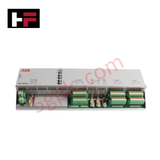
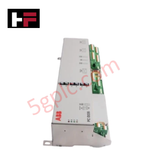
Product Details
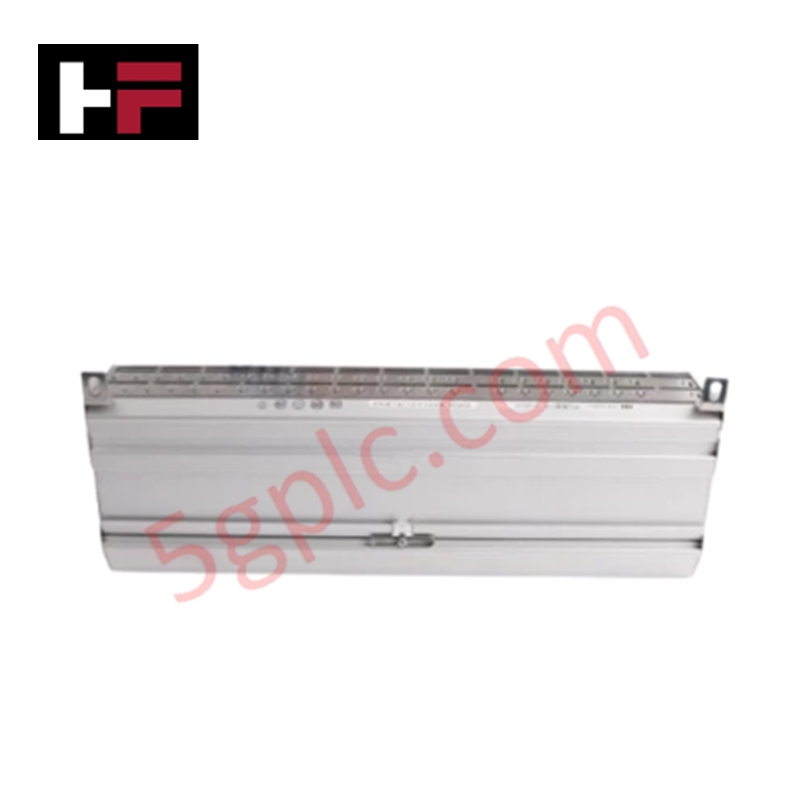
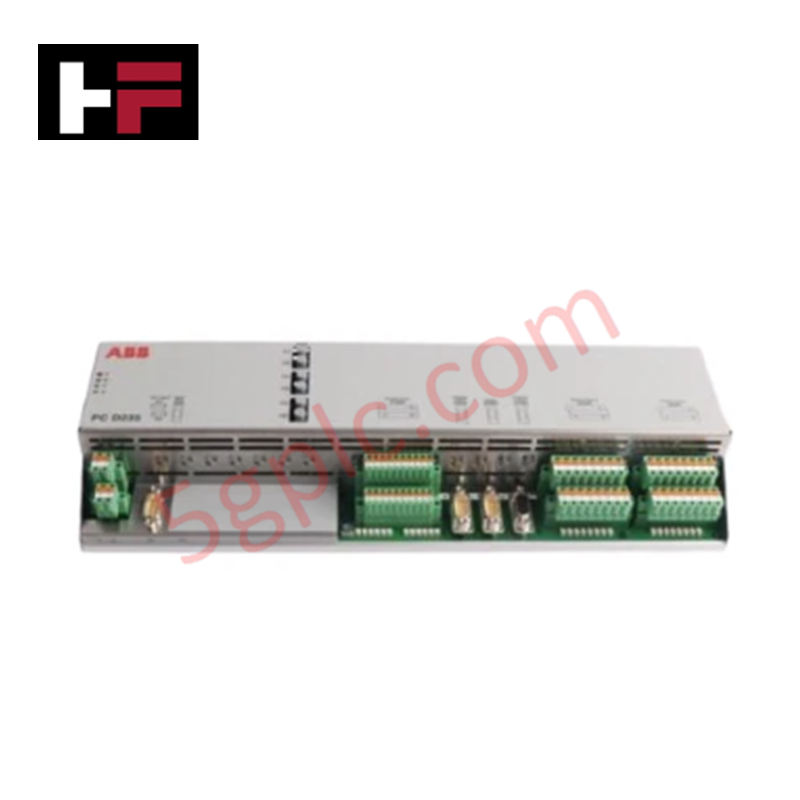
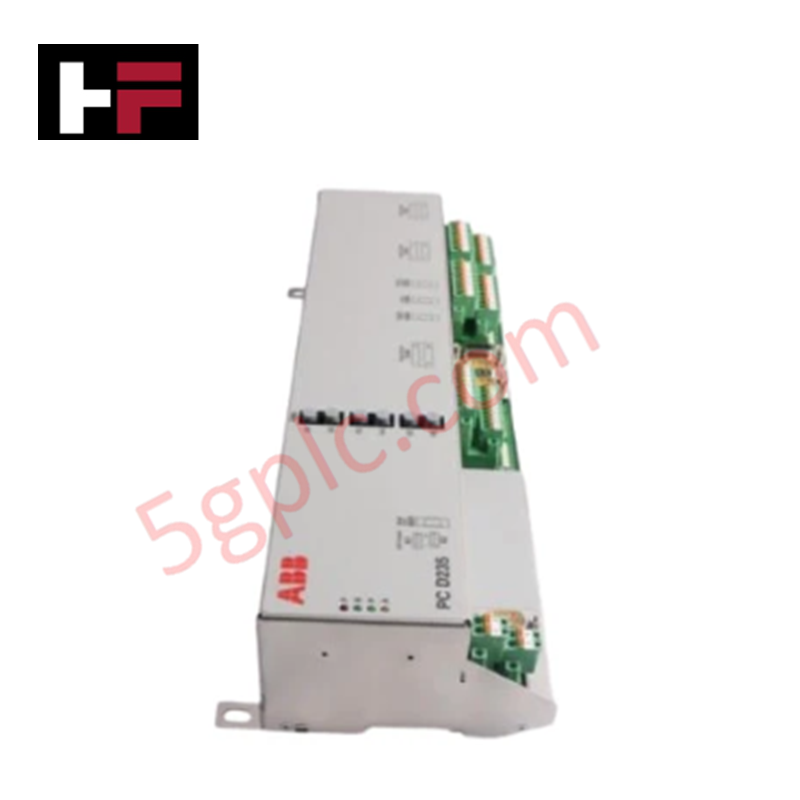
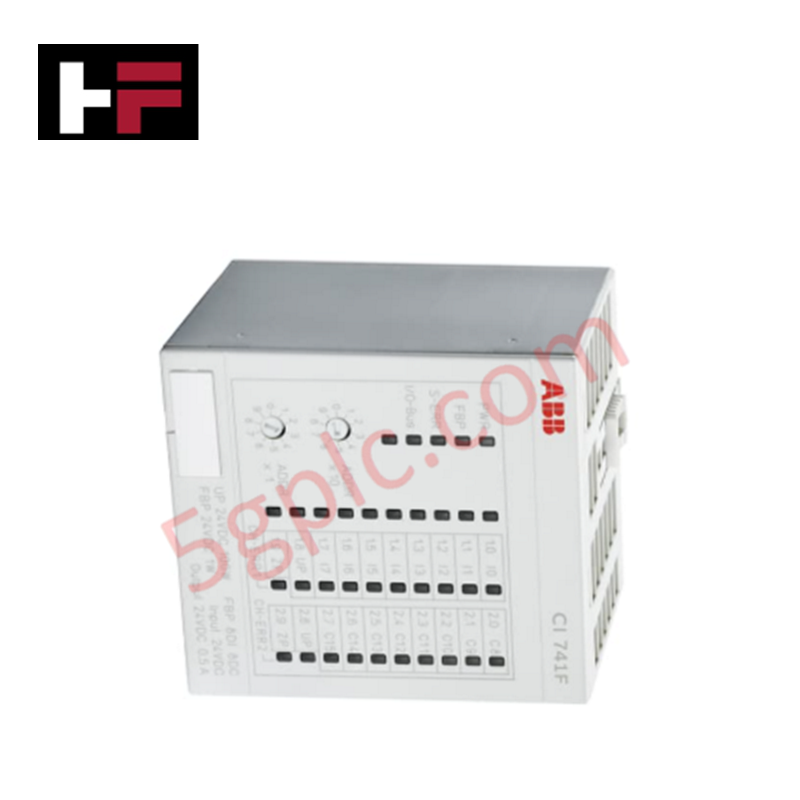
The ABB NPCU-52C, also cataloged as the NPCU-52C Branching Unit, operates as a dedicated hardware component for multi-motor power and control signal distribution within ABB ACS600 MultiDrive system architectures.
Hardware Specifications
| Parameter | Specification |
|---|---|
| Model | NPCU-52C |
| Brand | ABB |
| Origin | Finland / Europe standard sourcing |
| Weight | Standard industrial chassis weight |
| Dimensions | Compact multi-drive enclosure layout |
| Operating Temp | Standard industrial cabinet range |
| Power Consumption | System backplane/drive inter-connected power |
| Processor Speed | 200 MHz |
| Digital Inputs | 128 |
| Digital Outputs | 64 |
| Analog Inputs | 8 |
| Analog Outputs | 4 |
| Communication Ports | Ethernet, USB, RS-232 |
Profinet / EtherNet/IP Deterministic Networks and I/O Density Scaling
The ABB NPCU-52C processes cross-channel allocations between the master NDCU drive control hub and multiple distributed motor endpoints. Operating at a baseline processor clock speed of 200 MHz, the unit arbitrates high I/O density scaling through 128 digital inputs and 64 digital outputs without generating communication bottlenecks. The embedded processing firmware structures communication sequences to maintain total compatibility with Profinet / EtherNet/IP deterministic networks, ensuring bounded loop latencies for time-critical motor sync phases. Direct integration features accommodate system-wide updates, validating local variables across firmware flash compatibility boundaries during active runtime modifications.
Frequently Asked Questions
Q: How does the NPCU-52C maintain synchronization across its large digital I/O layout?
A: The onboard 200 MHz processing core operates synchronous internal hardware interrupts that latch the state of all 128 digital inputs concurrently, preventing data skewing across parallel channels before transmission onto the host network.
Q: Is hot-swapping supported for the NPCU-52C while the ACS600 multi-drive bus bar is live?
A: No. Disconnecting the branching unit while under load introduces severe voltage transients on the communication links and drops the feedback loop instantly, which triggers critical drive overcurrent faults and mechanical stops.
Field Installation Guidelines
- Mount the unit inside the designated compartment of the ACS600 drive enclosure using standard chassis positioning points to maximize thermal convection flow.
- Direct all analog control lines through separate, isolated wiring paths, keeping them distant from three-phase AC motor leads to suppress inductive noise.
- Terminate the overall shielding braids of the communication lines directly to the central enclosure earth point using low-impedance grounding clamps.
- Verify that all connection interfaces (Ethernet, USB, and RS-232) utilize industrial-grade locking hoods to secure data continuity under ambient physical vibration.
Additional Information
- 100% Genuine Parts: All products are original and authentic, ensuring reliable industrial performance.
- 30-Day Refund Guarantee: Return any in-stock item within 30 days in original, unopened packaging for a full refund (excluding shipping and fees).
- 12-Month Warranty: Covers defects in materials or workmanship; excludes misuse, normal wear, or unauthorized modifications.
- Worldwide Shipping: We ship via USPS, UPS, FedEx, and DHL. Delivery times vary by country and may be subject to customs or import fees.
- Support & Contact: Technical and warranty assistance is available anytime. Contact us here: Contact.
- Purchase Guidance: Check product specifications and compatibility carefully before ordering to ensure proper application.






Tech & Buying Guide

Demystifying the DDE Protocol in Legacy Industrial Automation Systems
Modern control systems rely heavily on seamless interprocess communication to exchange operational data between software programs. Microsoft first introduced the Dynamic Data Exchange (DDE) protocol in 1987 to enable real-time data sharing. In factory automation, DDE served as an early bridge between control software and Windows desktop applications. Therefore, understanding DDE mechanics provides crucial insights into how legacy industrial networks established software-level connectivity.

Demystifying CPU Communication Ports in Siemens PLC Architectures
Industrial automation relies heavily on robust data exchange between devices. Without seamless connectivity, field instruments, network switches, human-machine interfaces, and programmable logic controllers cannot coordinate effectively. Therefore, understanding the various CPU communication ports available in Siemens hardware ensures efficient factory automation design and seamless system integration.

Mastering the Siemens PLC Scan Cycle: How the CPU Executes Automation Programs
Industrial automation relies heavily on programmable logic controllers (PLCs) to manage complex manufacturing processes. Many engineers dive straight into programming without mastering the underlying architecture. However, understanding how a PLC CPU executes a program ensures reliable system design. Therefore, mastering the scan cycle optimizes both performance and troubleshooting in modern control systems.