










Product Details
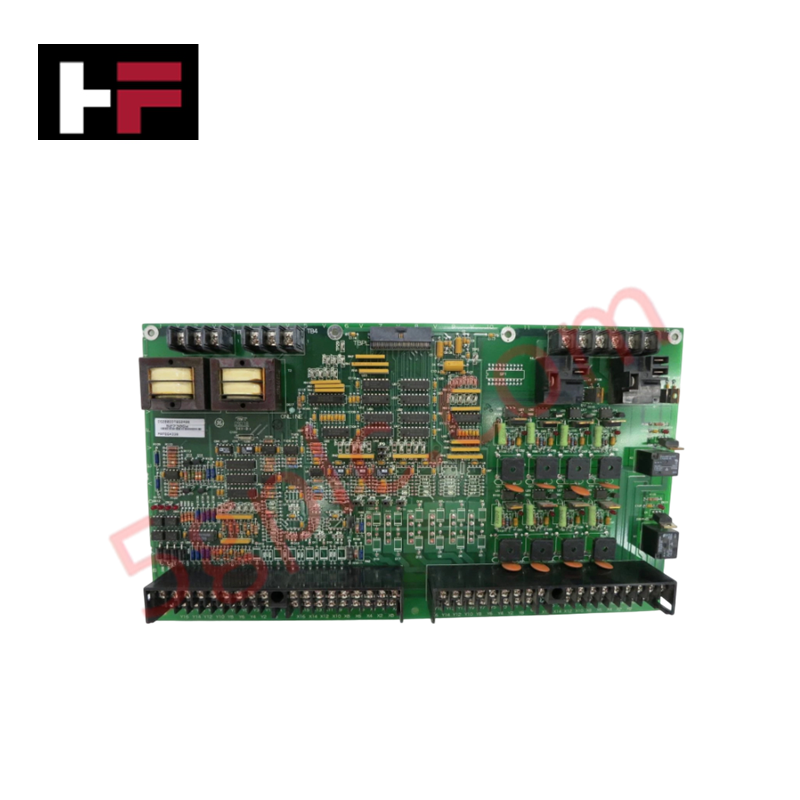
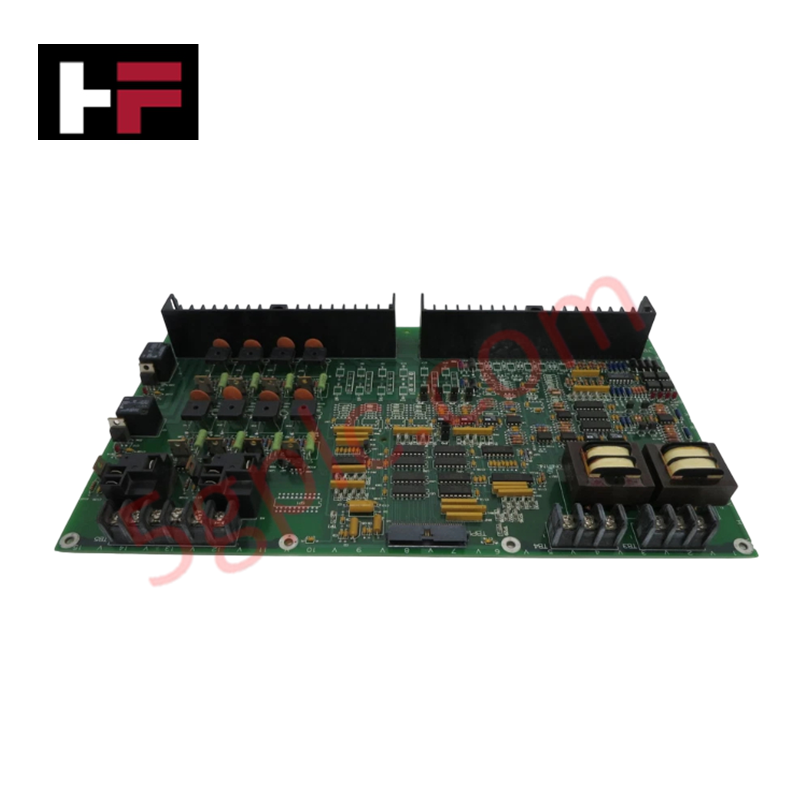
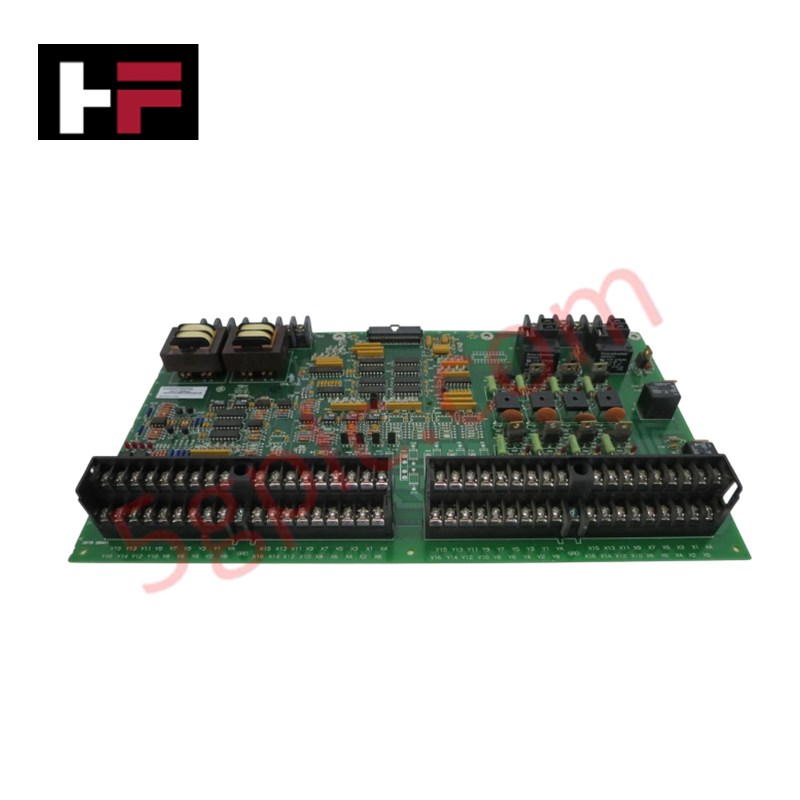
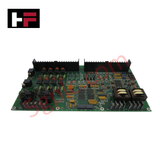
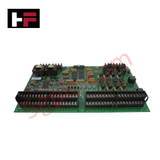
The General Electric DS200DDTBG2A, also cataloged as the DS200DDTB LCI Auxiliary I/O Terminal Board, operates as a dedicated hardware component for high-voltage signal conditioning and interface distribution within Mark V LM Speedtronic turbine control platforms.
Hardware Specifications
| Parameter | Specification |
|---|---|
| Model | DS200DDTBG2A |
| Brand | General Electric |
| Origin | USA |
| Dimensions | Panel/rack-mounted form factor |
| Operating Temp | -20 deg C to +60 deg C |
| Power Consumption | Derived from ADMA module |
| Voltage Range | 14 V dc to 32 V dc |
| I/O Channels | 12 total |
Industrial Control and Firmware Compatibility
The DS200DDTBG2A requires backplane bus communication velocity settings compatible with the Mark V LM rack architecture. Firmware flash compatibility is managed through the interconnected DS200ADMA daughterboard, which interfaces with the DSPC processor. The board supports I/O density scaling by allowing multiple high-voltage and current-sensing signals to be multiplexed into the DSP control loops. Deterministic network performance is maintained as the DDTB provides the necessary scaling and buffering for the DSP to execute real-time control algorithms. Ensure all terminal board jumpers and configuration settings are verified against the specific turbine control system logic.
Frequently Asked Questions
Q: Can the 4-20 mA current output and voltage output be used simultaneously?
A: Yes. The board supports both output types actively. They can be used individually or simultaneously by connecting to the respective screw terminals provided for each output type.
Q: What is the isolation rating for the high-voltage AC inputs?
A: The high-voltage AC inputs use isolated step-down transformers and passive filtering. The screw terminal blocks and internal circuit paths are rated and isolated for 1000 V peak transients.
Q: How is the board powered in the LCI system?
A: Power is supplied to the DS200DDTBG2A via the DS200ADMA analog-to-digital module daughterboard through high-density connectors and a ribbon cable interface.
Field Installation Guidelines
- Mounting: Secure the board to the rack or panel using appropriate hardware. Ensure sufficient clearance is maintained for the high-density ribbon cable routing.
- Signal Wiring: Use shielded twisted-pair cables for all analog and current-sensing inputs. Ensure cable shields are terminated at the cabinet entry to prevent electromagnetic interference (EMI).
- High-Voltage Handling: Observe all safety protocols when connecting high-voltage AC inputs. Verify that all terminal block screws are tightened to the specified torque to prevent arcing or thermal buildup at the connection points.
- Current Sensing: For CT inputs (±5 A) and low current signals (±0.224 A), ensure polarity is strictly maintained according to the system wiring diagram to prevent phase errors in the LCI control loop.
- Grounding: Ensure the board chassis is connected to the protective earth (PE) busbar to provide a stable reference for the differential buffering stages.
Additional Information
- 100% Genuine Parts: All products are original and authentic, ensuring reliable industrial performance.
- 30-Day Refund Guarantee: Return any in-stock item within 30 days in original, unopened packaging for a full refund (excluding shipping and fees).
- 12-Month Warranty: Covers defects in materials or workmanship; excludes misuse, normal wear, or unauthorized modifications.
- Worldwide Shipping: We ship via USPS, UPS, FedEx, and DHL. Delivery times vary by country and may be subject to customs or import fees.
- Support & Contact: Technical and warranty assistance is available anytime. Contact us here: Contact.
- Purchase Guidance: Check product specifications and compatibility carefully before ordering to ensure proper application.


Tech & Buying Guide

Demystifying the DDE Protocol in Legacy Industrial Automation Systems
Modern control systems rely heavily on seamless interprocess communication to exchange operational data between software programs. Microsoft first introduced the Dynamic Data Exchange (DDE) protocol in 1987 to enable real-time data sharing. In factory automation, DDE served as an early bridge between control software and Windows desktop applications. Therefore, understanding DDE mechanics provides crucial insights into how legacy industrial networks established software-level connectivity.

Demystifying CPU Communication Ports in Siemens PLC Architectures
Industrial automation relies heavily on robust data exchange between devices. Without seamless connectivity, field instruments, network switches, human-machine interfaces, and programmable logic controllers cannot coordinate effectively. Therefore, understanding the various CPU communication ports available in Siemens hardware ensures efficient factory automation design and seamless system integration.

Mastering the Siemens PLC Scan Cycle: How the CPU Executes Automation Programs
Industrial automation relies heavily on programmable logic controllers (PLCs) to manage complex manufacturing processes. Many engineers dive straight into programming without mastering the underlying architecture. However, understanding how a PLC CPU executes a program ensures reliable system design. Therefore, mastering the scan cycle optimizes both performance and troubleshooting in modern control systems.