










Product Details
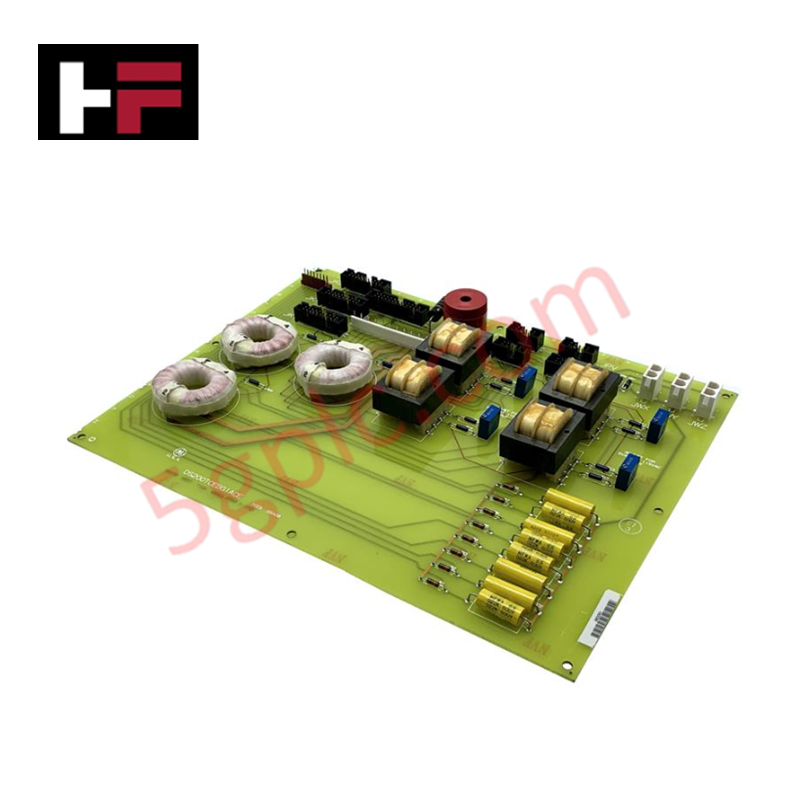
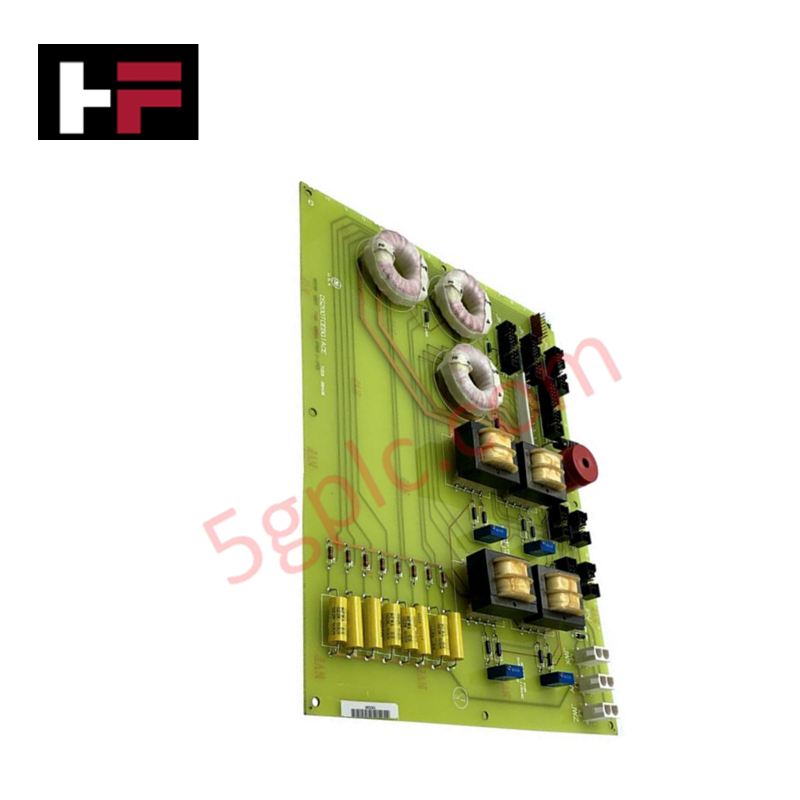
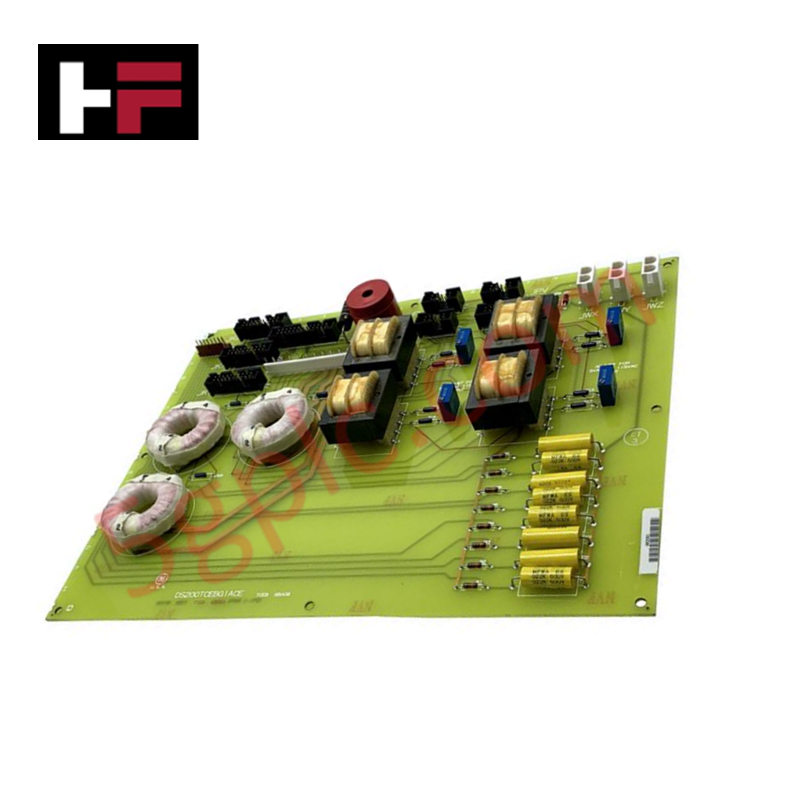
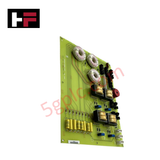
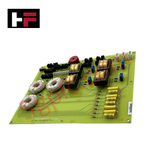
The GE DS200TCEBG1A, also cataloged as the DS200TCEB Protective Termination Expander Board, operates as a dedicated hardware component for signal routing and terminal expansion within Mark V turbine control platforms.
Hardware Specifications
| Parameter | Specification |
|---|---|
| Model | DS200TCEBG1A |
| Brand | GE General Electric |
| Origin | USA |
| Dimensions | Standard Mark V PCB footprint |
| Operating Temp | Per Mark V environmental standards |
| Power Consumption | Passive signal path component |
| Interface Connectors | 1 x 26-pin, 4 x 10-pin, 3 x 20-pin |
| Mechanical Mounting | 8-point screw securement |
Industrial Control and Firmware Compatibility
The DS200TCEBG1A serves as a signal conditioning and termination interface for the Mark V control rack. Unlike processor-heavy modules, this board functions as a passive expansion assembly featuring signal transformers and voltage-limiting components (resistors, diodes, capacitors) to protect the underlying control electronics. As this module does not contain programmable microprocessors or PROM modules, it does not require firmware flash compatibility or backplane bus communication velocity settings. It is designed to scale I/O connectivity for complex drive assemblies without adding computational overhead to the host controller.
Frequently Asked Questions
Q: Does the board require software or hardware configuration?
A: No. The DS200TCEBG1A is a passive termination expander board. It contains no user-configurable jumpers or switches, and requires no software parameter entry for operation.
Q: How many mounting points are provided for installation?
A: The board is designed with 8 screw holes to ensure mechanical stability given the weight of the onboard transformers and connectors. All 8 screws must be utilized to prevent vibration-induced fatigue.
Field Installation Guidelines
- Documentation: Before disconnecting any cables, label every ribbon cable and wiring harness with its corresponding connector ID (e.g., JKX, JMP, JPU). This is critical for preventing misconnection during the re-installation phase.
- Component Retention: When removing the securing screws, ensure the board is supported with one hand to prevent the PCB from dropping into the drive interior. If any hardware (screws/washers) falls into the drive, it must be retrieved immediately to prevent potential electrical shorts or mechanical interference.
- Connector Integrity: Inspect all connectors (JKX/Y/Z, JMP, JVA, etc.) for bent pins or debris before mating. Ensure cables are fully seated and latched to maintain signal integrity.
- Mounting: Tighten all 8 mounting screws evenly to ensure the PCB remains flat against the standoffs, preventing mechanical stress on the board or its mounted components.
- Safety: Confirm that the drive system is fully de-energized and capacitors are discharged before removing or installing the board to prevent accidental short circuits or electrical shock.
Additional Information
- 100% Genuine Parts: All products are original and authentic, ensuring reliable industrial performance.
- 30-Day Refund Guarantee: Return any in-stock item within 30 days in original, unopened packaging for a full refund (excluding shipping and fees).
- 12-Month Warranty: Covers defects in materials or workmanship; excludes misuse, normal wear, or unauthorized modifications.
- Worldwide Shipping: We ship via USPS, UPS, FedEx, and DHL. Delivery times vary by country and may be subject to customs or import fees.
- Support & Contact: Technical and warranty assistance is available anytime. Contact us here: Contact.
- Purchase Guidance: Check product specifications and compatibility carefully before ordering to ensure proper application.


Tech & Buying Guide

Demystifying CPU Communication Ports in Siemens PLC Architectures
Industrial automation relies heavily on robust data exchange between devices. Without seamless connectivity, field instruments, network switches, human-machine interfaces, and programmable logic controllers cannot coordinate effectively. Therefore, understanding the various CPU communication ports available in Siemens hardware ensures efficient factory automation design and seamless system integration.

Mastering the Siemens PLC Scan Cycle: How the CPU Executes Automation Programs
Industrial automation relies heavily on programmable logic controllers (PLCs) to manage complex manufacturing processes. Many engineers dive straight into programming without mastering the underlying architecture. However, understanding how a PLC CPU executes a program ensures reliable system design. Therefore, mastering the scan cycle optimizes both performance and troubleshooting in modern control systems.

How to Connect to Siemens S7 PLCs: 5 Essential Communication Methods
Establishing a reliable hardware link between a programming terminal and a Siemens SIMATIC controller is essential for engineering workflows. Field engineers rely on distinct physical layers, ranging from legacy serial connections to high-speed Industrial Ethernet protocols. Modern factory automation environments prioritize fast data transfer and seamless driver integration. Selecting the correct connection method simplifies program downloads, online monitoring, and system troubleshooting in complex control systems.