








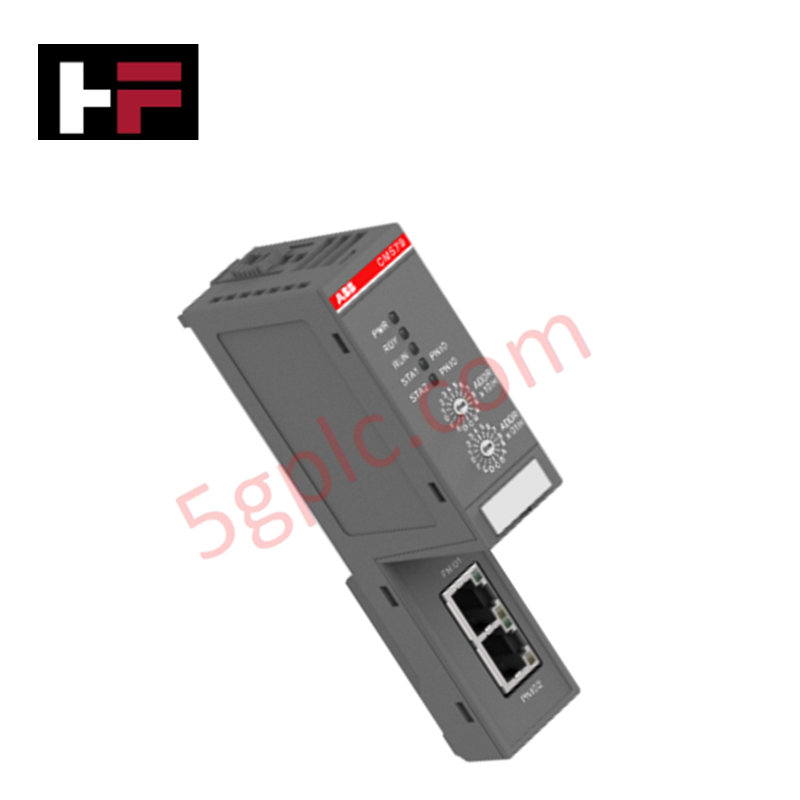
Product Details
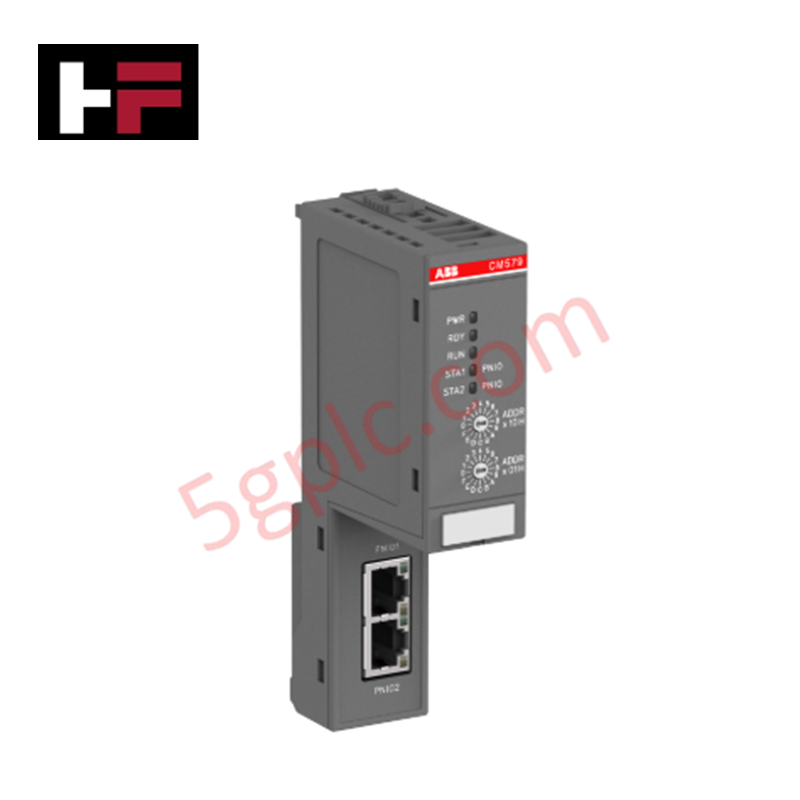
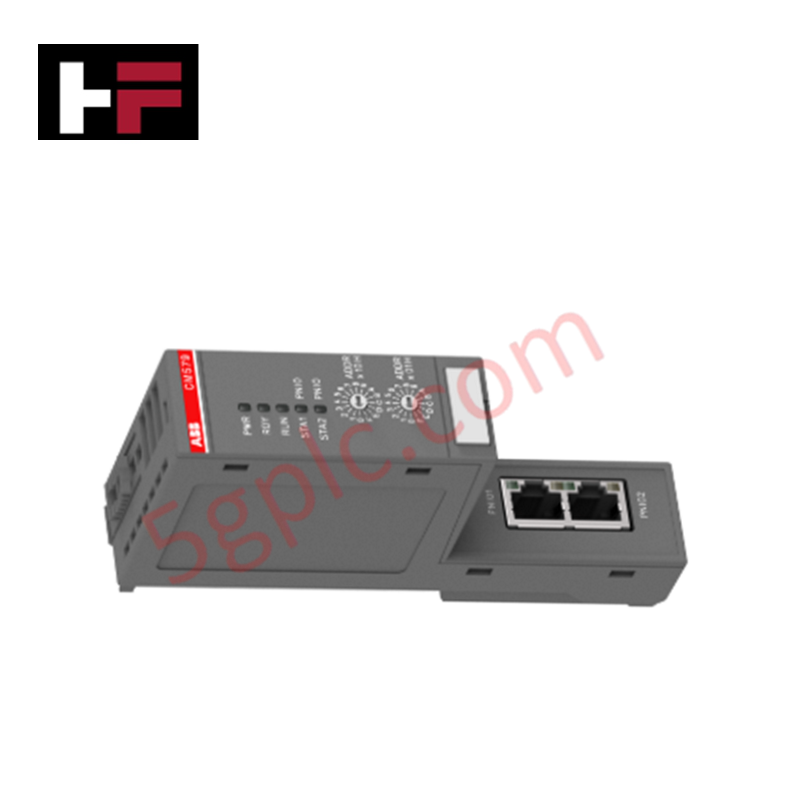
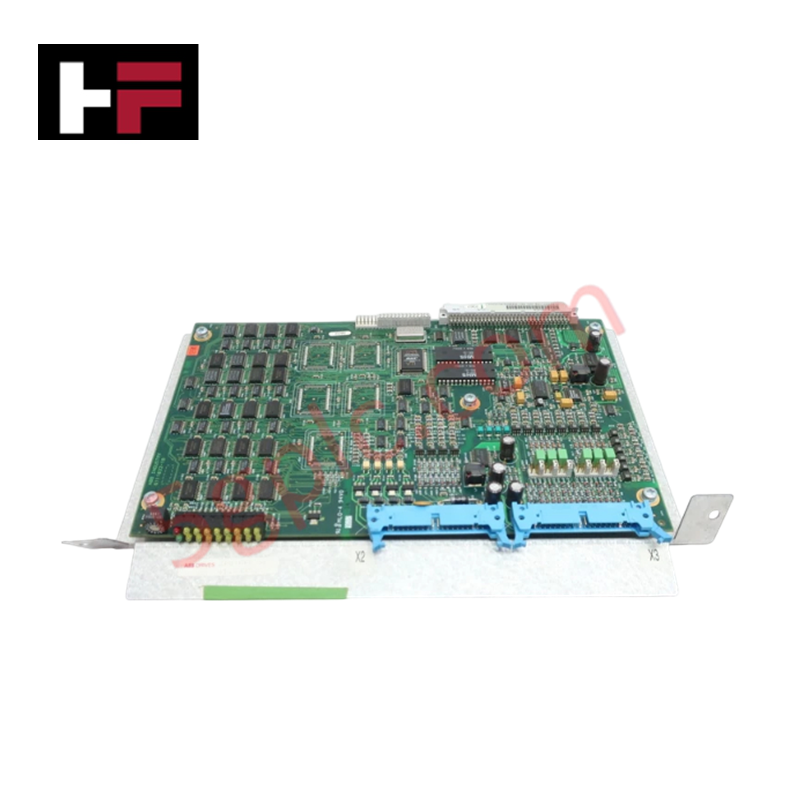
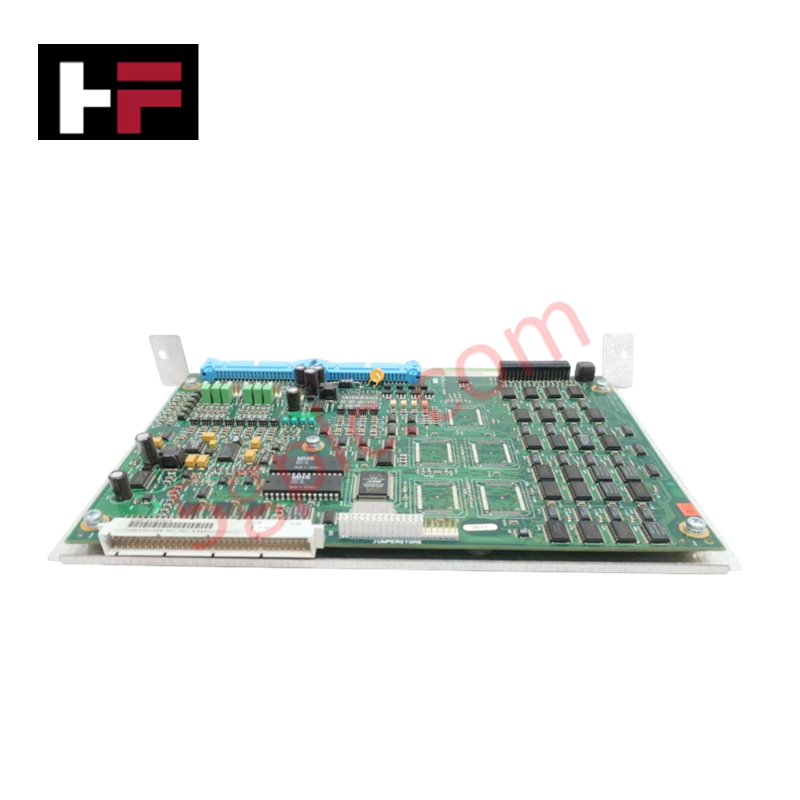
The ABB CM579-PNIO 1SAP170901R0101, also cataloged as the CM579-PNIO Communication Module, operates as a dedicated hardware component for industrial Ethernet network coordination within AC500 PLC platforms. The module manages localized process data transfer via two integrated physical interfaces operating as a real-time hardware switch. Working at a specified data transmission rate of 100000 kbit/s, the device directly executes PROFINET IO RT master or device cyclic frames and interfaces safety telegrams under the PROFIsafe sub-protocol specification.
Hardware Specifications
| Parameter | Specification |
|---|---|
| Model | CM579-PNIO (1SAP170901R0101) |
| Brand | ABB |
| Origin | Germany |
| Weight | 0.1 kg |
| Dimensions | 28 mm x 62 mm x 135 mm |
| Operating Temp | 0 to +60 deg C (Standard industrial parameters apply) |
| Power Consumption | Supplied via AC500 CPU bus coupler |
| Function | PROFINET IO RT Controller |
| Communication Protocols | PROFINET IO, PROFIsafe |
| Hardware Interfaces | 2x Industrial Ethernet (Integrated Switch) |
| Transmission Rate | 100000 kbit/s (100 Mbit/s) |
| Degree of Protection | IP20 |
Profinet / EtherNet/IP Deterministic Networks Mapping
The ABB CM579-PNIO implements prioritized frame processing mechanisms to achieve precise transmission alignment with Profinet / EtherNet/IP deterministic networks. The dual internal ports bypass standard commercial routing latency by utilizing a localized media access control architecture, validating consistent scan cycles across the synchronous PLC environment. This processing architecture provides predictable data synchronization profiles even when scaling local I/O density demands on the multi-drop controller network.
Frequently Asked Questions
Q: Does the CM579-PNIO module support active hot-swapping into the AC500 terminal base during runtime?
A: No, this communication module does not allow live insertion or removal. The entire local PLC segment must be de-energized before mounting or decoupling the card to prevent catastrophic data bus interruption or hardware latch-up constraints.
Q: Can both Ethernet interfaces be assigned independent IP addresses on different network subnets?
A: No, the two interfaces are connected through an integrated physical layer switch. They share identical MAC and IP configuration fields, functioning primarily to establish a daisy-chain linear topology without an external switch.
Q: How does firmware flash compatibility affect PROFIsafe safety configurations on this card?
A: Safety validation profiles dictate that any firmware flash adjustments on the controller base match the exact certified revision blocks listed within the safety parameters tool to prevent execution halts or default safe-state activations.
Field Installation Guidelines
The communication card must be locked directly onto the designated slot of the AC500 terminal base before sliding the assembly into place onto a standard, grounded structural DIN-rail. To fulfill standard industrial EMC constraints, connection to the integrated switch ports must utilize category 5e or higher shielded twisted-pair (STP) cabling. The grounding shield of the Industrial Ethernet wiring must hook into the physical frame structure via conductive spring clips. Ensure proper ventilation boundaries by retaining a minimum vertical displacement gap of 25 mm above and below the module face plate to prevent internal heat concentration.
Additional Information
- 100% Genuine Parts: All products are original and authentic, ensuring reliable industrial performance.
- 30-Day Refund Guarantee: Return any in-stock item within 30 days in original, unopened packaging for a full refund (excluding shipping and fees).
- 12-Month Warranty: Covers defects in materials or workmanship; excludes misuse, normal wear, or unauthorized modifications.
- Worldwide Shipping: We ship via USPS, UPS, FedEx, and DHL. Delivery times vary by country and may be subject to customs or import fees.
- Support & Contact: Technical and warranty assistance is available anytime. Contact us here: Contact.
- Purchase Guidance: Check product specifications and compatibility carefully before ordering to ensure proper application.
Tech & Buying Guide

Batch vs Continuous Processing in Industrial Automation: Architectural Strategies for Control Engineers
Selecting the proper control architecture remains a pivotal decision when designing industrial automation systems. Automation engineers must evaluate whether a batch or continuous process model best fits their production requirements. This fundamental choice influences PLC and DCS programming, hardware redundancy, sensor selection, and overall factory automation layouts.

Demystifying Signal Isolators: Operating Principles, Architectural Types, and Industrial Applications
Industrial automation systems rely on pristine analog signal transmission across complex control loops. Instrument technicians and system integrators frequently deploy signal isolators to maintain signal integrity between field sensors and control platforms. Eliminating electrical noise, ground loops, and high-voltage transients protects delicate PLC, DCS, and SCADA input channels from permanent damage.

Demystifying Industrial Control Systems: Comparing PLC, DCS, RTU, SCADA, and PAC
Modern factory automation relies on distinct control architectures to manage complex process environments efficiently. Control engineers often evaluate PLC, DCS, RTU, SCADA, and PAC platforms when designing industrial infrastructure. Understanding the functional boundaries of each technology ensures optimal system performance, high availability, and long-term cost efficiency.