










Product Details
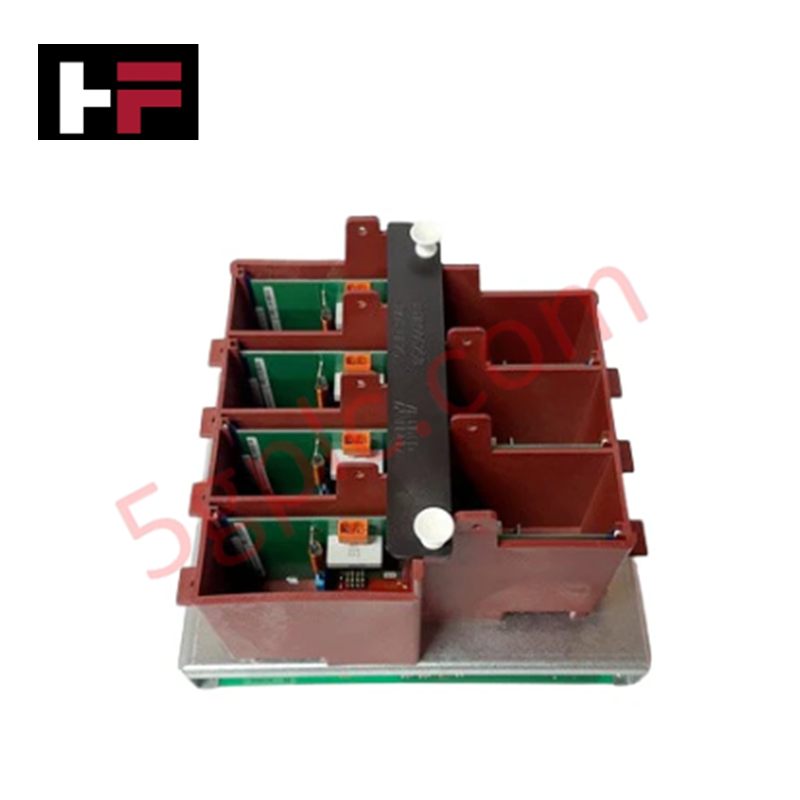
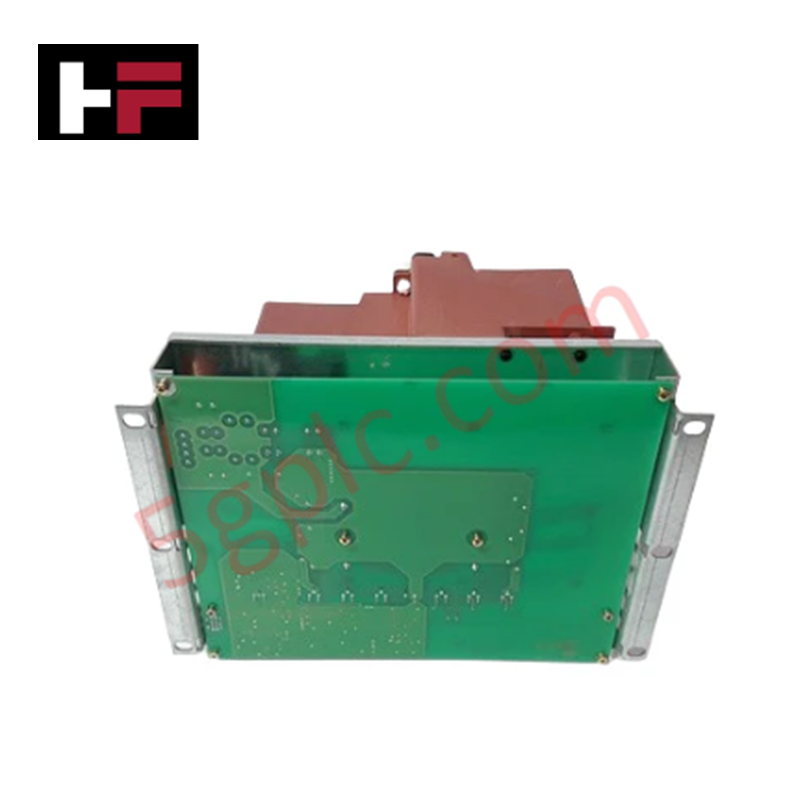
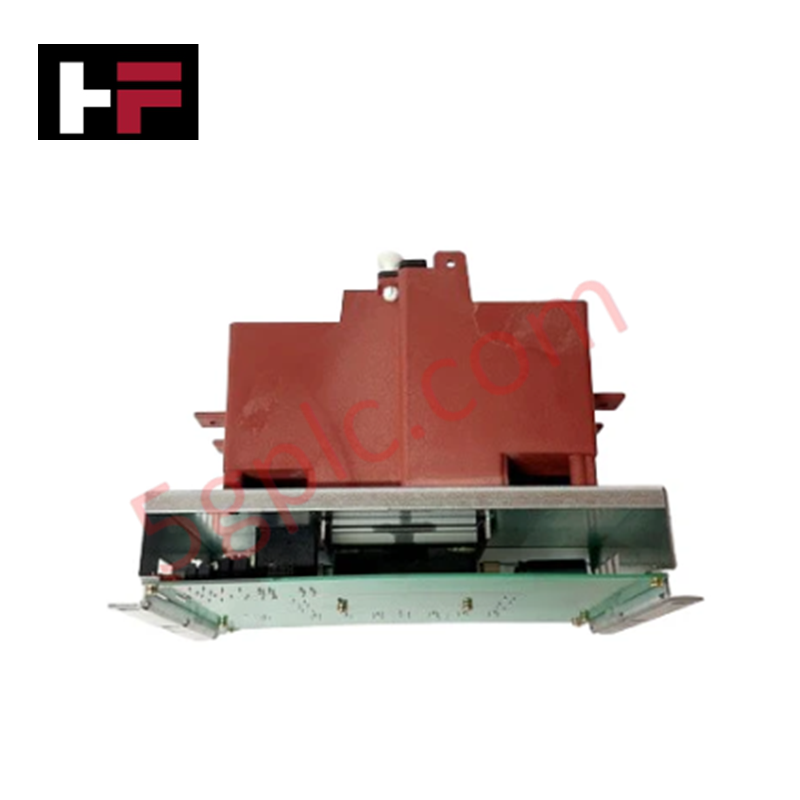
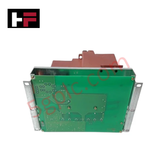
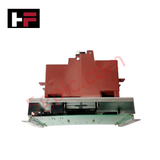
The ABB KUC711AE101 3BHB004661R0101, also cataloged as the KUC711AE101 Gate Unit Power Supply, operates as a dedicated hardware component for power distribution to semiconductor gate firing circuits within ACS1000 medium voltage AC drive topologies. The hardware routes, isolates, and steps down multi-channel electrical energy to drive internal firing pulses, integrating seven auxiliary HB003688R0101 subboards within a single mechanical footprint. It executes continuous voltage conversion to deliver regulated potential directly to localized gate driver units without external conditioning networks.
Hardware Specifications
| Parameter | Specification |
|---|---|
| Model | KUC711AE101 3BHB004661R0101 |
| Brand | ABB |
| Origin | Switzerland |
| Weight | 4.7 kg |
| Dimensions | Standard ACS1000 Module Frame |
| Operating Temp | 0 to +50 deg C |
| Power Consumption | 150 W |
| Integrated Subboards | 7 x HB003688R0101 subboards |
| Type Designation | KU C711 AE |
| Function Type | Gate Unit Power Supply (GUSP) |
| Drive Compatibility | ACS1000 Series Medium Voltage Drives |
Profinet / EtherNet/IP Deterministic Networks and Firmware Flash Compatibility
The hardware architecture interfaces with centralized firing control networks through high-speed internal lines. For drive configurations mapped via Profinet / EtherNet/IP deterministic networks, precise time-slot alignment must be sustained between the main control processor and the power distribution grid. Prior to initial power activation, engineers must execute system checks to ensure firmware flash compatibility across all master and subboard communication microcontrollers, suppressing data delivery latency to protect power semiconductor cells from unaligned gate voltage levels.
Frequently Asked Questions
Q: What are the explicit hot-swap restrictions for the KUC711AE101 power assembly?
A: This gate unit power supply does not support hot-swapping under live load parameters. The medium voltage AC drive power stage and all auxiliary 24 V DC backplane connections must be fully isolated before extraction to mitigate destructive arcing across high-current terminals.
Q: How does a component failure on one of the seven integrated HB003688R0101 subboards affect operation?
A: The internal power architecture isolates localized channel failures to prevent faults from propagating across adjacent subboards, but an uncorrected subboard error will drop gate drive power to its corresponding phase leg, triggering an automated system shutdown.
Q: What baseline electrical checks must be executed post firmware update?
A: Following any control logic flash sequence, the output voltage rails on the gate unit supply terminals must be physically metered under isolated conditions to ensure execution parameters match the baseline performance specification.
Field Installation Guidelines
Mount the 4.7 kg chassis assembly vertically within its specified slot in the ACS1000 medium voltage drive enclosure, ensuring full mechanical engagement of all structural retention fasteners. Route all low-voltage gating control leads and power feeds through shielded, isolated conduits to prevent electromagnetic cross-talk from the primary high-voltage phase busbars. Verify that all system grounding connections use low-impedance copper braids terminated directly to the common master ground bar. Maintain free space clearance profiles around the perimeter of the unit to ensure unhindered convective thermal air exchange through the module.
Additional Information
- 100% Genuine Parts: All products are original and authentic, ensuring reliable industrial performance.
- 30-Day Refund Guarantee: Return any in-stock item within 30 days in original, unopened packaging for a full refund (excluding shipping and fees).
- 12-Month Warranty: Covers defects in materials or workmanship; excludes misuse, normal wear, or unauthorized modifications.
- Worldwide Shipping: We ship via USPS, UPS, FedEx, and DHL. Delivery times vary by country and may be subject to customs or import fees.
- Support & Contact: Technical and warranty assistance is available anytime. Contact us here: Contact.
- Purchase Guidance: Check product specifications and compatibility carefully before ordering to ensure proper application.






Tech & Buying Guide

Demystifying the DDE Protocol in Legacy Industrial Automation Systems
Modern control systems rely heavily on seamless interprocess communication to exchange operational data between software programs. Microsoft first introduced the Dynamic Data Exchange (DDE) protocol in 1987 to enable real-time data sharing. In factory automation, DDE served as an early bridge between control software and Windows desktop applications. Therefore, understanding DDE mechanics provides crucial insights into how legacy industrial networks established software-level connectivity.

Demystifying CPU Communication Ports in Siemens PLC Architectures
Industrial automation relies heavily on robust data exchange between devices. Without seamless connectivity, field instruments, network switches, human-machine interfaces, and programmable logic controllers cannot coordinate effectively. Therefore, understanding the various CPU communication ports available in Siemens hardware ensures efficient factory automation design and seamless system integration.

Mastering the Siemens PLC Scan Cycle: How the CPU Executes Automation Programs
Industrial automation relies heavily on programmable logic controllers (PLCs) to manage complex manufacturing processes. Many engineers dive straight into programming without mastering the underlying architecture. However, understanding how a PLC CPU executes a program ensures reliable system design. Therefore, mastering the scan cycle optimizes both performance and troubleshooting in modern control systems.