










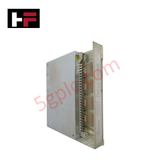
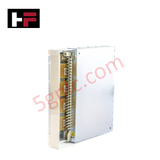
Product Details
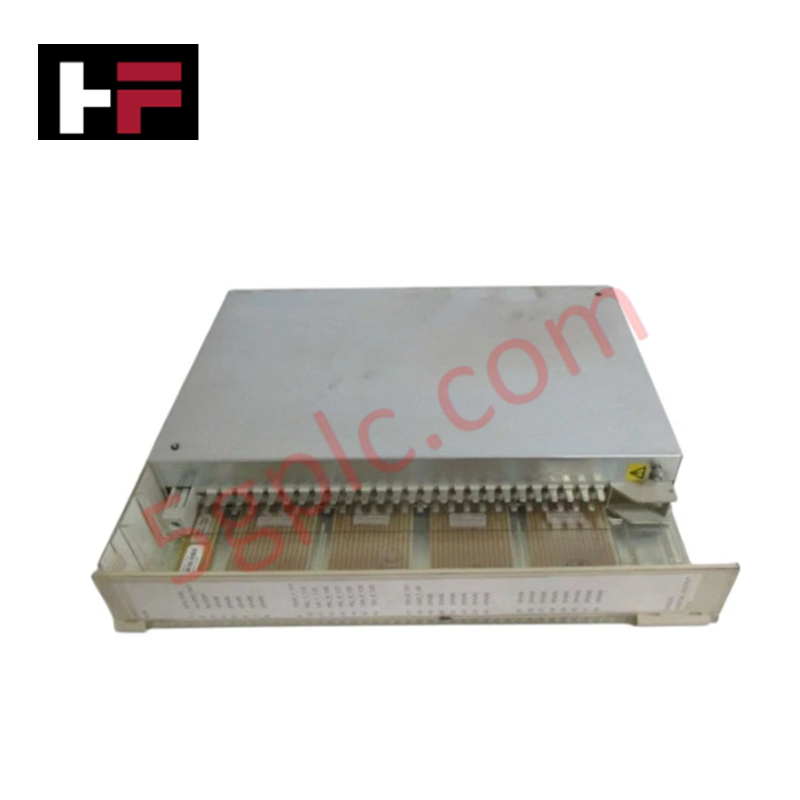
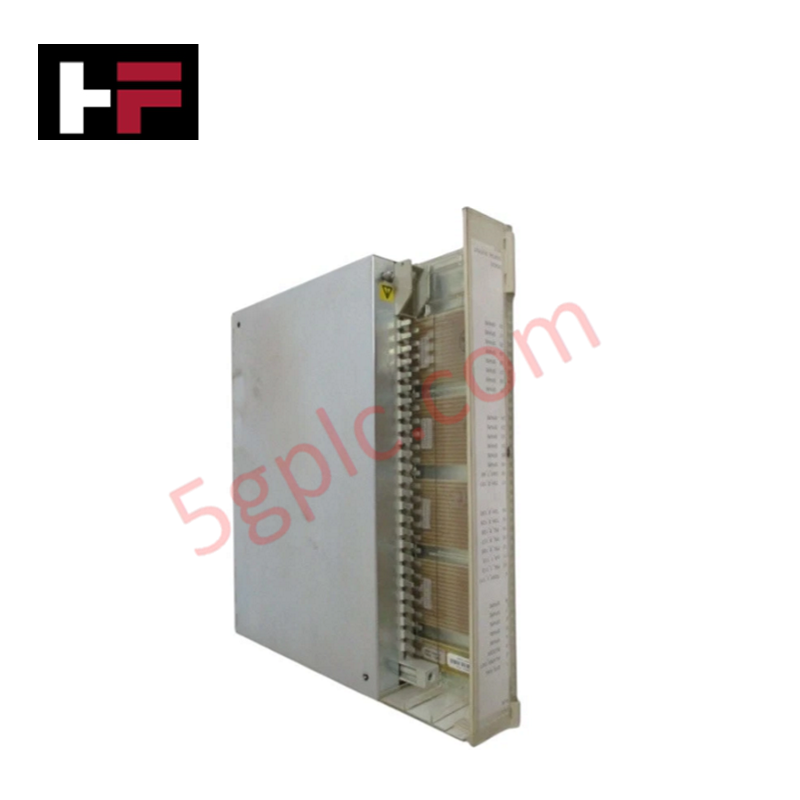
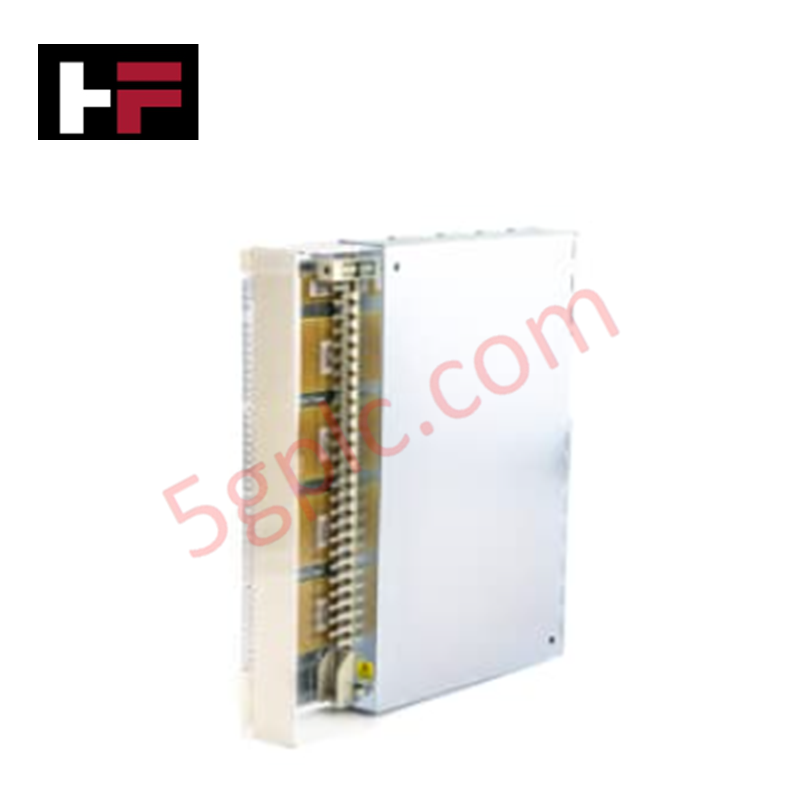
Configured for high-density discrete actuation in industrial automation networks, the ABB DO620 3BHT300009R1 (DO620 I-O Module) provides direct physical/electrical execution. The hardware manages 32 isolated digital output channels split into four distinct galvanic groups to drive solid-state loads, interposing relays, or indicator elements up to a maximum threshold of 60 VDC. Operating with short-circuit proof transistor elements, the unit converts backplane data commands directly into independent electrical line switching states without thermal overloading.
Hardware Specifications
| Parameter | Specification |
|---|---|
| Model | DO620 3BHT300009R1 |
| Brand | ABB |
| Origin | Sweden (Standard manufacturing location applies) |
| Weight | 1.2 kg |
| Dimensions | 252 mm x 40 mm x 273 mm |
| Operating Temp | 0 to +60 deg C (Standard industrial parameters apply) |
| Power Consumption | Subsystem loop dependent |
| Total Output Capacity | 32 Digital Output Channels |
| Maximum Voltage Allocation | 60 VDC |
| Maximum Load Current | 0.5 A per channel |
| Circuit Protection | Short-circuit proof transistors |
| Isolation Type | Opto-isolated in four separate groups |
| Environmental Compliance | Exempted from the scope of 2011/65/EU (RoHS) |
Backplane Bus Communication Velocity Licences
The DO620 module works via synchronized communication lines to coordinate state configurations with the main system backplane bus communication velocity licences. The on-board transistor arrays receive data updates via internal registers that match the cyclic execution intervals of the central processor rack. This direct mapping eliminates packet propagation delays across expanded networks, enabling consistent, low-latency execution of binary command sets across multiple remote I/O density scaling racks without losing state consistency.
Frequently Asked Questions
Q: How does the short-circuit protection mechanism on the DO620 respond to a field loop fault?
A: The on-board short-circuit proof transistors immediately restrict excess current flow when a short circuit occurs on an output channel. This safety response protects the internal opto-isolation components from thermal damage without resetting or interrupting the remaining channels within that galvanic group.
Q: Is hot-swapping supported for the DO620 module during active industrial automation operations?
A: No, hot-swapping this card out of the active rack assembly is not permitted while the backplane is energized. Removing the module under load can cause inductive voltage spikes on the external line terminals and trigger communication errors on adjacent I/O modules on the same bus segment.
Q: Why is this module designated as exempt from the standard 2011/65/EU RoHS directive scope?
A: The DO620 is certified as a dedicated replacement and expansion component for legacy systems deployed before certain statutory deadlines, conforming to the structural criteria of the ABB Advant Master process control system documentation.
Field Installation Guidelines
The DO620 module must be fitted securely into its designated slot within the S600 I/O sub-rack assembly inside an industrial enclosure. Ensure that the module is locked onto the backplane connector guide rails to achieve uniform contact pressure across all terminal pins. Field control wires must be shielded twisted-pair configurations, keeping all 60 VDC lines physically separated from low-level analog or communication cables inside the wiring ducts. The master chassis enclosure frame must connect directly to the central system instrumentation earth bar to prevent common-mode electrical noise and maintain opto-isolation limits across the four channel groups.
Additional Information
- 100% Genuine Parts: All products are original and authentic, ensuring reliable industrial performance.
- 30-Day Refund Guarantee: Return any in-stock item within 30 days in original, unopened packaging for a full refund (excluding shipping and fees).
- 12-Month Warranty: Covers defects in materials or workmanship; excludes misuse, normal wear, or unauthorized modifications.
- Worldwide Shipping: We ship via USPS, UPS, FedEx, and DHL. Delivery times vary by country and may be subject to customs or import fees.
- Support & Contact: Technical and warranty assistance is available anytime. Contact us here: Contact.
- Purchase Guidance: Check product specifications and compatibility carefully before ordering to ensure proper application.






Tech & Buying Guide

Demystifying the DDE Protocol in Legacy Industrial Automation Systems
Modern control systems rely heavily on seamless interprocess communication to exchange operational data between software programs. Microsoft first introduced the Dynamic Data Exchange (DDE) protocol in 1987 to enable real-time data sharing. In factory automation, DDE served as an early bridge between control software and Windows desktop applications. Therefore, understanding DDE mechanics provides crucial insights into how legacy industrial networks established software-level connectivity.

Demystifying CPU Communication Ports in Siemens PLC Architectures
Industrial automation relies heavily on robust data exchange between devices. Without seamless connectivity, field instruments, network switches, human-machine interfaces, and programmable logic controllers cannot coordinate effectively. Therefore, understanding the various CPU communication ports available in Siemens hardware ensures efficient factory automation design and seamless system integration.

Mastering the Siemens PLC Scan Cycle: How the CPU Executes Automation Programs
Industrial automation relies heavily on programmable logic controllers (PLCs) to manage complex manufacturing processes. Many engineers dive straight into programming without mastering the underlying architecture. However, understanding how a PLC CPU executes a program ensures reliable system design. Therefore, mastering the scan cycle optimizes both performance and troubleshooting in modern control systems.