










Product Details
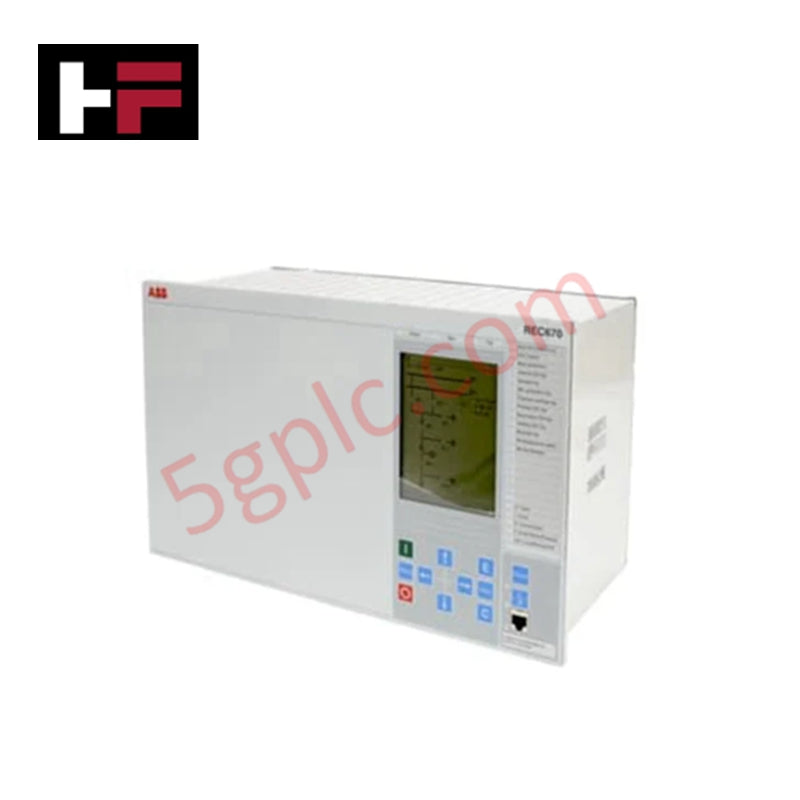
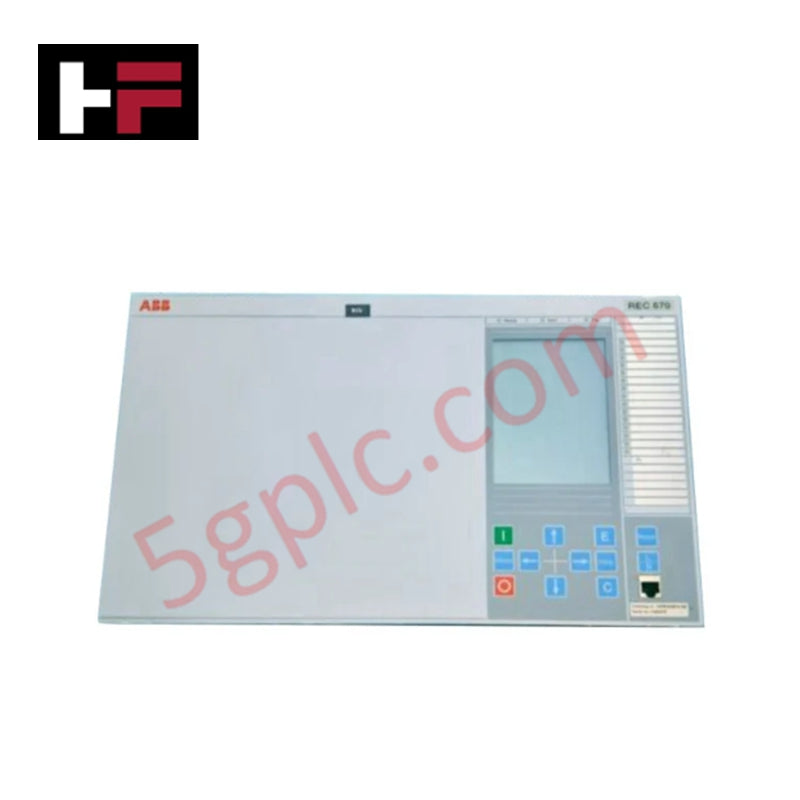
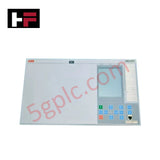
The ABB 1MRK002814-AF, also cataloged as the REC670 Bay Control IED, operates as a dedicated hardware component for switchgear management and integrated protection within high-voltage substation networks. Configured for direct execution of bay control interlocking commands, the unit samples physical binary states and converts raw telemetry inputs into peer-to-peer digital data streams across substation automation buses.
Hardware Specifications
| Parameter | Specification |
|---|---|
| Model | 1MRK002814-AF |
| Brand | ABB |
| Origin | Sweden |
| Primary Function | Bay control, switchgear management, and integrated protection |
| Input Voltage | Universal 100 - 250 V AC/DC |
| Memory Capacity | 8 GB |
| Communication Interface | Dual or redundant Ethernet ports supporting Modbus TCP, DNP3, and IEC 61850 |
| Substation Protocols | IEC 60870-5-101/104, DNP 3.0, and OPC UA |
| Power Consumption | 10 - 15 W (Typical standby) |
| Operating Temp | -40 to +75 deg C |
| Dimensions | Standard Relion 670 series rack footprint |
| Weight | Standard subrack assembly weight profile |
Profinet / EtherNet/IP Deterministic Networks Performance
To sustain high-speed peer-to-peer GOOSE communications for digital substation interlocking, the local network layer interfaces directly with fixed parameters governed by internal backplane bus communication velocity Licences. System modifications that expand current loops utilize standardized I/O density scaling options, which handle multi-channel binary and analog variables. Accurate signal processing under transient conditions requires absolute firmware flash compatibility between the peripheral communication modules and the main CPU card to avoid execution latency.
Frequently Asked Questions
Q: Can the 1MRK002814-AF internal I/O modules be removed or modified while the auxiliary substation loop is live?
A: No. Hot-swapping the primary processing modules or integrated I/O blocks is prohibited. The 100 - 250 V AC/DC power supply and external current transformer secondary wires must be isolated before physical card extraction to prevent electrical flashover.
Q: How is the 8 GB data block protected during an abrupt loss of auxiliary supply?
A: High-resolution disturbance records and event sequences are written straight into integrated non-volatile flash registers, ensuring data recovery after zero-voltage occurrences without external backup power.
Q: What structural faults occur if the communication board firmware version varies from the core base module?
A: A firmware revision mismatch activates an internal watchdog fault, isolating the backplane bus connection, disabling network communication, and placing the protective outputs into a deactivated state.
Field Installation Guidelines
- Low-Impedance Frame Grounding: Bond the chassis ground stud directly to the substation master copper earth bar using a heavy copper braid. Remove non-conductive paint layer treatments at the enclosure bonding locations.
- Redundant Ethernet Route Separation: Direct the dual or redundant network communication cables through separate internal cable paths to prevent common-cause mechanical damage from disrupting the automation bus.
- Analog Measurement Routing Constraints: Maintain physical clearance between secondary voltage tracking loops and high-current AC control paths inside the panel ducting to prevent induced noise on the inputs.
Additional Information
- 100% Genuine Parts: All products are original and authentic, ensuring reliable industrial performance.
- 30-Day Refund Guarantee: Return any in-stock item within 30 days in original, unopened packaging for a full refund (excluding shipping and fees).
- 12-Month Warranty: Covers defects in materials or workmanship; excludes misuse, normal wear, or unauthorized modifications.
- Worldwide Shipping: We ship via USPS, UPS, FedEx, and DHL. Delivery times vary by country and may be subject to customs or import fees.
- Support & Contact: Technical and warranty assistance is available anytime. Contact us here: Contact.
- Purchase Guidance: Check product specifications and compatibility carefully before ordering to ensure proper application.






Tech & Buying Guide

Demystifying the DDE Protocol in Legacy Industrial Automation Systems
Modern control systems rely heavily on seamless interprocess communication to exchange operational data between software programs. Microsoft first introduced the Dynamic Data Exchange (DDE) protocol in 1987 to enable real-time data sharing. In factory automation, DDE served as an early bridge between control software and Windows desktop applications. Therefore, understanding DDE mechanics provides crucial insights into how legacy industrial networks established software-level connectivity.

Demystifying CPU Communication Ports in Siemens PLC Architectures
Industrial automation relies heavily on robust data exchange between devices. Without seamless connectivity, field instruments, network switches, human-machine interfaces, and programmable logic controllers cannot coordinate effectively. Therefore, understanding the various CPU communication ports available in Siemens hardware ensures efficient factory automation design and seamless system integration.

Mastering the Siemens PLC Scan Cycle: How the CPU Executes Automation Programs
Industrial automation relies heavily on programmable logic controllers (PLCs) to manage complex manufacturing processes. Many engineers dive straight into programming without mastering the underlying architecture. However, understanding how a PLC CPU executes a program ensures reliable system design. Therefore, mastering the scan cycle optimizes both performance and troubleshooting in modern control systems.