










Product Details
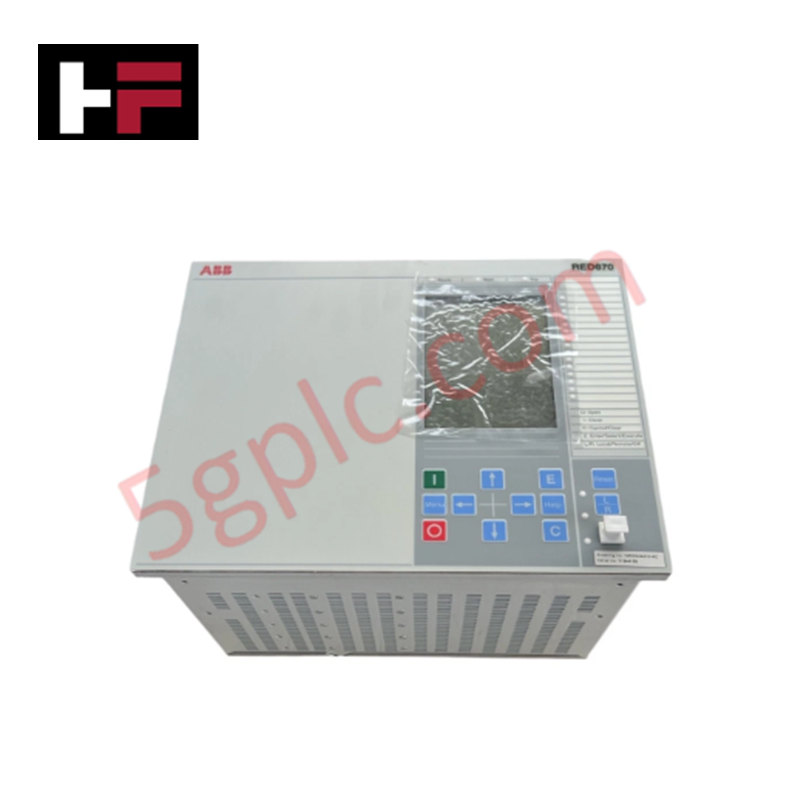
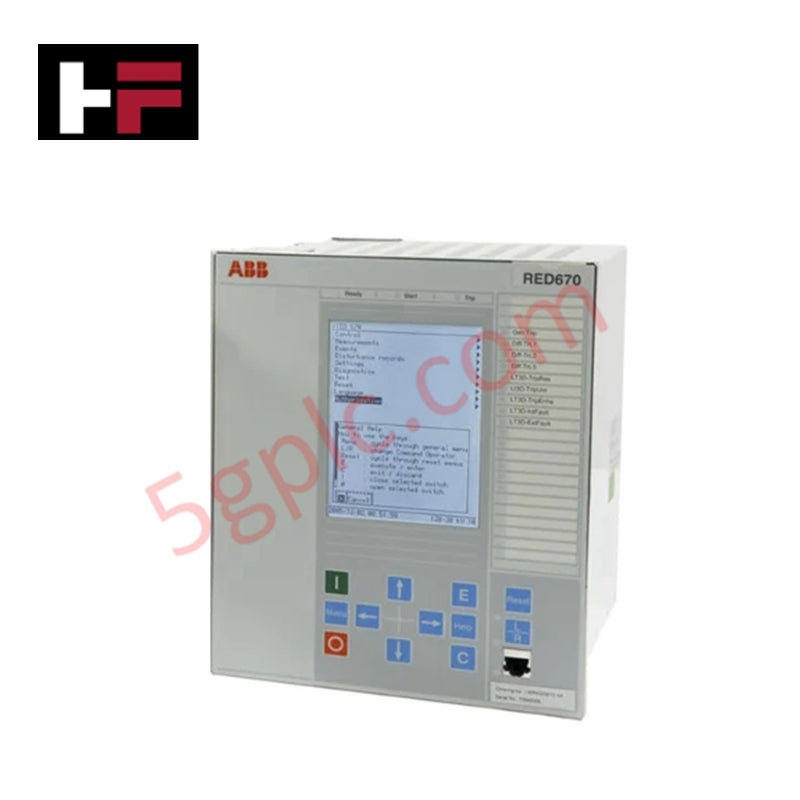
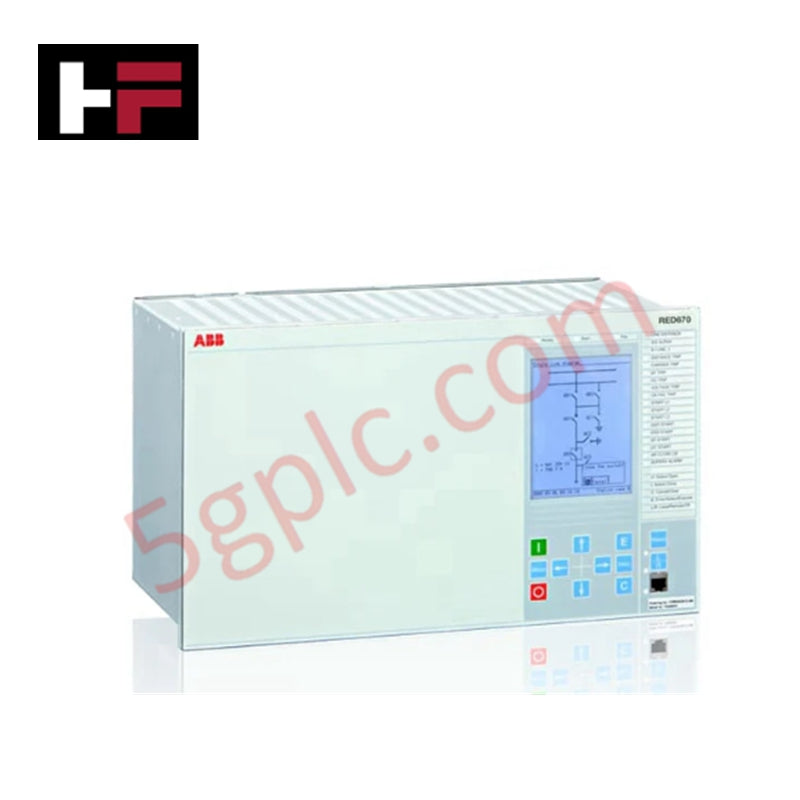
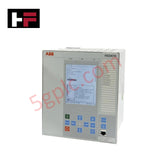
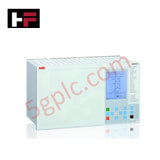
The ABB 1MRK002246-BD, also cataloged as the RET670 Control IED, operates as a dedicated hardware component for power transformer and shunt reactor protection within substation automation networks. Configured for direct electrical monitoring, the unit routes raw current transformer values through internal compensation matrices to perform double-zone differential calculations without interposing physical current transformer components.
Hardware Specifications
| Parameter | Specification |
|---|---|
| Model | 1MRK002246-BD |
| Brand | ABB |
| Origin | Sweden |
| Protection Scope | Power transformers, autotransformers, and shunt reactors |
| Differential Functionality | Dual independent differential protection functions per device |
| Frequency Range | Wide-band operational tracking across shifting power states |
| Configuration Type | Customized variant with adaptable logic mapping |
| Communication Interface | Native IEC 61850 protocol implementation |
| Operating Temp | -25 to +55 deg C (Standard substation industrial profile) |
| Power Consumption | Dependent on active binary output channel counts and loop traffic |
| Dimensions | Standard Relion 670 series subrack enclosure footprint |
| Weight | Standard multi-winding protective chassis weight |
Profinet / EtherNet/IP Deterministic Networks Performance
To sustain simultaneous multi-winding differential calculations across evolving grid metrics, the execution pathways map process variables straight to specific memory registers governed by internal backplane bus communication velocity Licences. The adaptable architecture allows precise channel expansion via standard I/O density scaling profiles. Maintaining complete firmware flash compatibility between peripheral communication cards and the central computational processing engine is mandatory to eliminate execution latency and ensure continuous harmonic restraint tracking during high-speed substation network transfers.
Frequently Asked Questions
Q: Can the 1MRK002246-BD customized module be pulled from the chassis rack under live power?
A: No. Hot-swapping the core computational unit or the analog current transformer input boards is prohibited. The secondary current paths must be short-circuited and the auxiliary supply completely isolated before attempting card removal to avoid severe electrical breakdown.
Q: How does a mismatch in internal firmware flash levels alter the interlocking sequence?
A: Any firmware discrepancy halts the internal bus communication routine, forcing the IED to enter a blocked fault state that deactivates all physical switchgear control outputs.
Q: What mechanism allows the device to operate accurately during variable start-up frequencies?
A: The input tracking subroutines adaptively scale the raw sampling rate to match the measured grid frequency, preventing false trips from software vector shifts.
Field Installation Guidelines
- Low-Impedance Earthing Installation: Bond the rear chassis ground stud directly to the substation primary copper earth rail using a heavy copper conductor. Ensure all paint layers are removed from the mounting point.
- Secondary CT Current Loop Security: Ensure all current inputs pass through external shorting-type test switches. Never allow an active current transformer line to open-circuit during wire rearrangement procedures.
- Optical Network Cable Routing: Route all communication fiber links through independent wireways separated from parallel high-voltage AC execution paths and breaker coil lines to prevent induced signal distortion.
Additional Information
- 100% Genuine Parts: All products are original and authentic, ensuring reliable industrial performance.
- 30-Day Refund Guarantee: Return any in-stock item within 30 days in original, unopened packaging for a full refund (excluding shipping and fees).
- 12-Month Warranty: Covers defects in materials or workmanship; excludes misuse, normal wear, or unauthorized modifications.
- Worldwide Shipping: We ship via USPS, UPS, FedEx, and DHL. Delivery times vary by country and may be subject to customs or import fees.
- Support & Contact: Technical and warranty assistance is available anytime. Contact us here: Contact.
- Purchase Guidance: Check product specifications and compatibility carefully before ordering to ensure proper application.






Tech & Buying Guide

Demystifying the DDE Protocol in Legacy Industrial Automation Systems
Modern control systems rely heavily on seamless interprocess communication to exchange operational data between software programs. Microsoft first introduced the Dynamic Data Exchange (DDE) protocol in 1987 to enable real-time data sharing. In factory automation, DDE served as an early bridge between control software and Windows desktop applications. Therefore, understanding DDE mechanics provides crucial insights into how legacy industrial networks established software-level connectivity.

Demystifying CPU Communication Ports in Siemens PLC Architectures
Industrial automation relies heavily on robust data exchange between devices. Without seamless connectivity, field instruments, network switches, human-machine interfaces, and programmable logic controllers cannot coordinate effectively. Therefore, understanding the various CPU communication ports available in Siemens hardware ensures efficient factory automation design and seamless system integration.

Mastering the Siemens PLC Scan Cycle: How the CPU Executes Automation Programs
Industrial automation relies heavily on programmable logic controllers (PLCs) to manage complex manufacturing processes. Many engineers dive straight into programming without mastering the underlying architecture. However, understanding how a PLC CPU executes a program ensures reliable system design. Therefore, mastering the scan cycle optimizes both performance and troubleshooting in modern control systems.