










Product Details
Product Overview
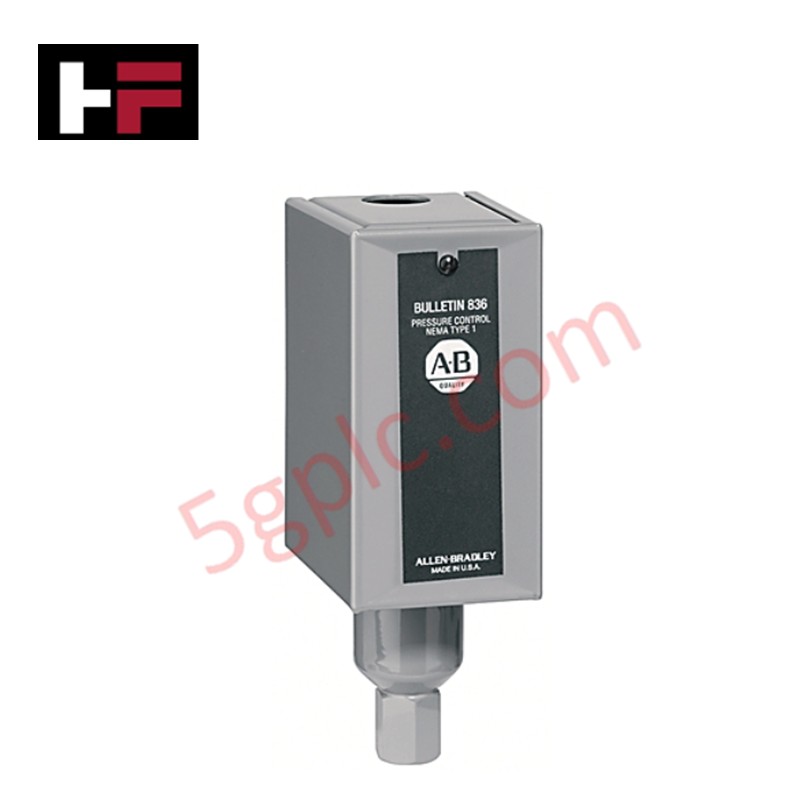
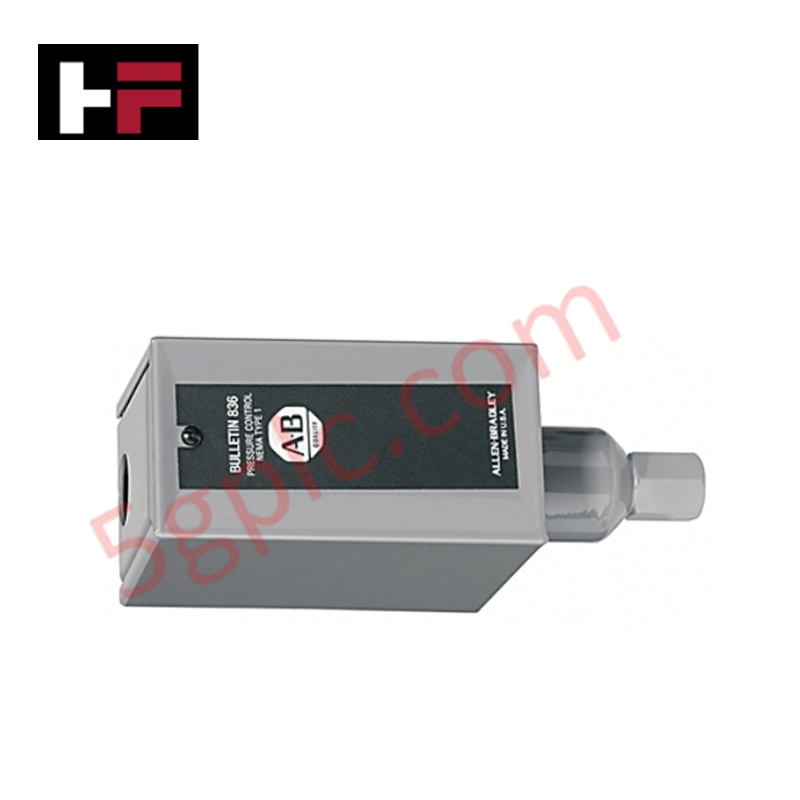
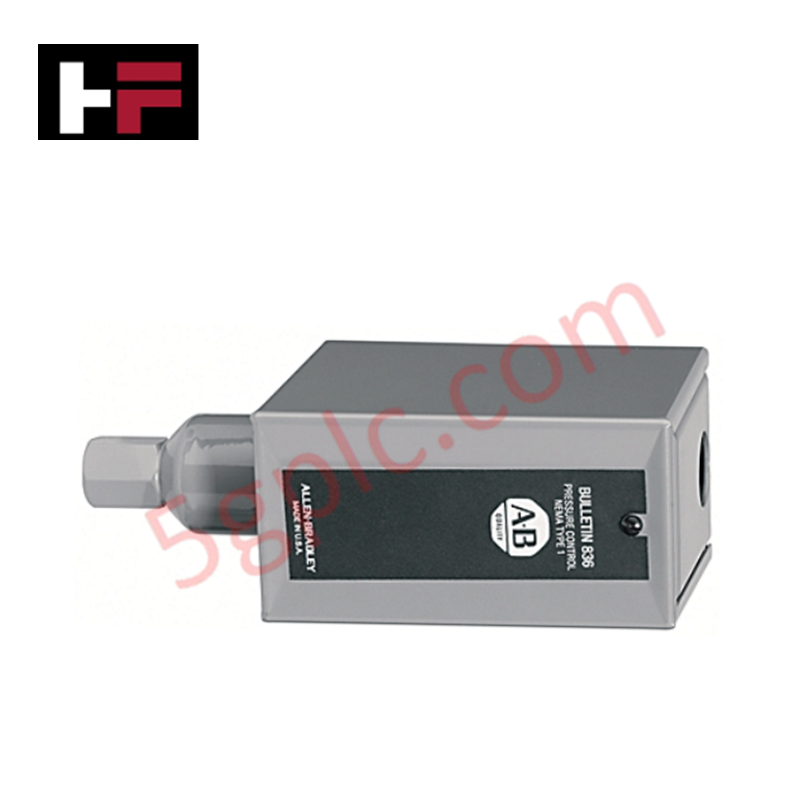
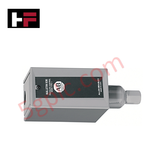
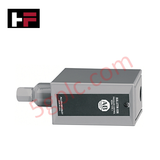
The Allen Bradley 836-P17-ANCHS is a high-performance, definite-purpose electro-mechanical pressure control designed specifically for demanding refrigeration and industrial HVAC applications. This Style P controller manages high-pressure cycles by triggering electrical contacts based on precise refrigerant or fluid pressure setpoints. We supply this unit as 100% Brand New, ensuring factory-calibrated accuracy and long-term mechanical integrity for your thermal management systems.
Technical Specifications
The 836-P17-ANCHS provides a robust interface for high-pressure monitoring with adjustable differential settings.
| Parameter | Specification |
| Manufacturer | Allen Bradley (Rockwell Automation) |
| Product Type | Electro-Mechanical Pressure Control |
| Series/Style | Style P (Definite-Purpose Refrigeration) |
| Operating Range | 50 to 500 PSI |
| Adjustable Differential | 35 to 150 PSI |
| Maximum Line Pressure | 750 PSI |
| Contact Type | Snap-action Electro-mechanical |
| Application | High-Pressure Refrigeration / HVAC |
| Weight | 0.83 lbs (0.38 kg) |
Engineering Advantages
-
Optimized for High-Pressure Refrigerants: The 836-P17-ANCHS handles operating pressures up to 500 PSI and survives surge pressures up to 750 PSI. This specific design accommodates modern high-pressure refrigerants, preventing housing rupture or calibration drift during system pressure spikes.
-
Precision Differential Control: The adjustable 35 to 150 PSI differential allows engineers to fine-tune compressor cycling. By widening or narrowing the gap between "cut-in" and "cut-out" points, this switch prevents short-cycling, which significantly extends the life of expensive compressor motors.
-
Rugged Electro-Mechanical Actuation: The snap-action mechanism ensures clean electrical breaks, reducing arcing and contact pitting. This physical actuation remains immune to the electromagnetic interference (EMI) that often causes electronic sensors to fail in proximity to high-voltage motor starters.
-
Simplified Mechanical Integration: The lightweight 0.83 lbs construction and standard Style P mounting allow for easy installation in compact refrigeration racks or remote manifolds. The mechanical dial interface enables on-site adjustments without requiring specialized digital programming tools or external power.
FAQs
-
Can the 836-P17-ANCHS handle non-refrigeration fluids?
While designed for definite-purpose refrigeration, the 836-P17-ANCHS operates effectively with air, water, and non-corrosive oils, provided the media compatibility aligns with the internal bellows material. Always verify chemical compatibility for non-standard industrial fluids.
-
What is the significance of the 750 PSI rating?
The 750 PSI figure represents the maximum occasional pressure the unit survives without permanent damage. For continuous operation, you must maintain system pressure within the 50 to 500 PSI operating range to ensure setpoint repeatability.
-
How do I adjust the differential setpoint during commissioning?
The unit features independent adjustment screws for the main range and the differential. Use a standard screwdriver to rotate the differential screw until the internal scale aligns with your desired PSI gap. We recommend verifying the final trip points with a calibrated master gauge.
-
Does this switch require an external power supply to operate?
No. The 836-P17-ANCHS uses the physical pressure of the media to actuate the switch. It requires no external voltage for sensing, making it an ideal fail-safe component that operates even during a total control system power loss.
Additional Information
- 100% Genuine Parts: All products are original and authentic, ensuring reliable industrial performance.
- 30-Day Refund Guarantee: Return any in-stock item within 30 days in original, unopened packaging for a full refund (excluding shipping and fees).
- 12-Month Warranty: Covers defects in materials or workmanship; excludes misuse, normal wear, or unauthorized modifications.
- Worldwide Shipping: We ship via USPS, UPS, FedEx, and DHL. Delivery times vary by country and may be subject to customs or import fees.
- Support & Contact: Technical and warranty assistance is available anytime. Contact us here: Contact.
- Purchase Guidance: Check product specifications and compatibility carefully before ordering to ensure proper application.
Tech & Buying Guide

Demystifying the DDE Protocol in Legacy Industrial Automation Systems
Modern control systems rely heavily on seamless interprocess communication to exchange operational data between software programs. Microsoft first introduced the Dynamic Data Exchange (DDE) protocol in 1987 to enable real-time data sharing. In factory automation, DDE served as an early bridge between control software and Windows desktop applications. Therefore, understanding DDE mechanics provides crucial insights into how legacy industrial networks established software-level connectivity.

Demystifying CPU Communication Ports in Siemens PLC Architectures
Industrial automation relies heavily on robust data exchange between devices. Without seamless connectivity, field instruments, network switches, human-machine interfaces, and programmable logic controllers cannot coordinate effectively. Therefore, understanding the various CPU communication ports available in Siemens hardware ensures efficient factory automation design and seamless system integration.

Mastering the Siemens PLC Scan Cycle: How the CPU Executes Automation Programs
Industrial automation relies heavily on programmable logic controllers (PLCs) to manage complex manufacturing processes. Many engineers dive straight into programming without mastering the underlying architecture. However, understanding how a PLC CPU executes a program ensures reliable system design. Therefore, mastering the scan cycle optimizes both performance and troubleshooting in modern control systems.