Understanding SCADA vs. HMI: A Technical Guide for Industrial Automation
- 〡
- 〡 by WUPAMBO
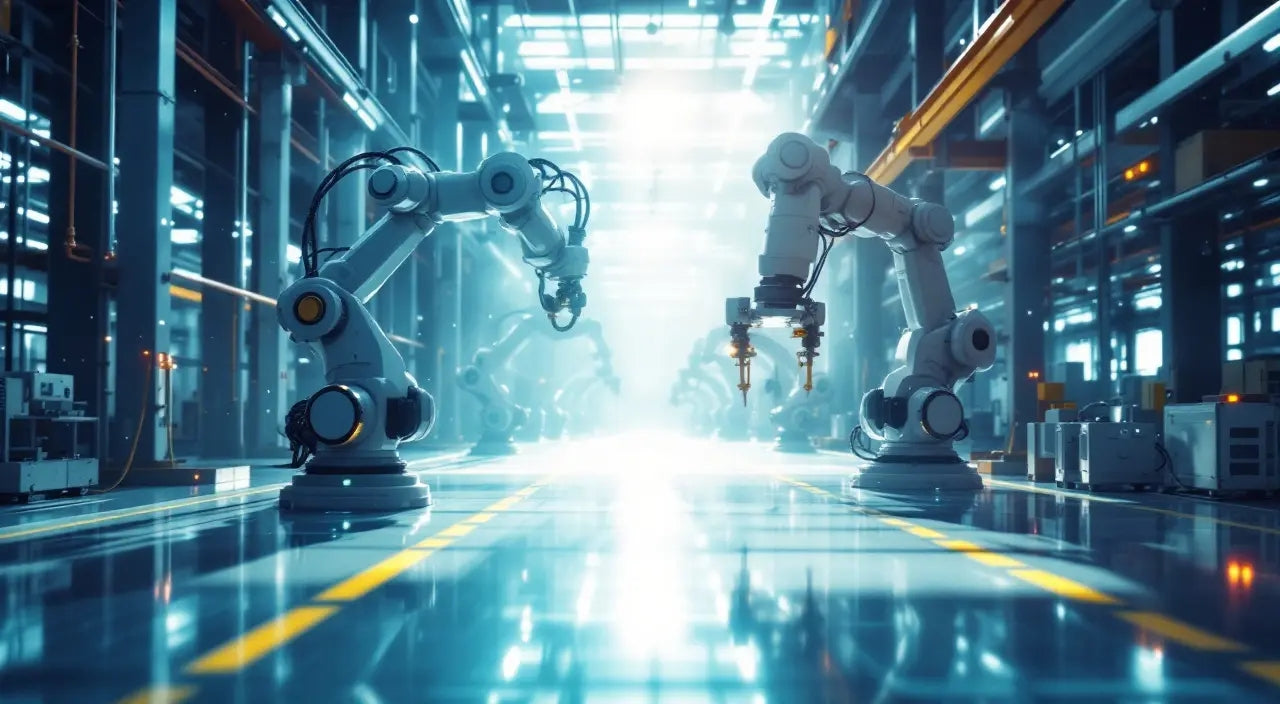
In the world of factory automation, professionals often use the terms HMI and SCADA interchangeably. However, these systems serve distinct roles within a control hierarchy. Understanding their unique functions is vital for designing efficient industrial automation architectures.
Bridging the Gap Between Human and Machine
Modern industrial plants rely on complex binary data from PLCs and sensors. Humans cannot naturally interpret these low-level signals. Consequently, engineers implement HMI and SCADA systems as graphical gateways. These interfaces transform raw data into visual representations. This allows operators to monitor machine states and control hardware safely. Therefore, these systems reduce downtime and improve operational safety across the facility.
Defining the Human-Machine Interface (HMI)
An HMI acts as the primary touchpoint between an operator and a specific machine. It often exists as a dedicated hardware panel attached directly to equipment. HMIs focus on "low-level" operational data, such as motor speeds or valve positions. Moreover, they provide real-time interaction for localized tasks. Most HMIs do not store long-term data. Instead, they provide immediate feedback for localized control loops.
The Role of Supervisory Control and Data Acquisition (SCADA)
In contrast, SCADA is a high-level software system typically residing in a central control room. It supervises multiple machines and entire processes across a plant. SCADA systems focus on "high-level" management data, such as daily production yields and total energy consumption. Crucially, SCADA includes a Data Acquisition component. It utilizes historical servers to store vast amounts of process data over time. As a result, managers can analyze historical trends to optimize long-term performance.
Key Differences Every Engineer Should Know
While both systems provide visualization, their scope and scale differ significantly. An HMI typically manages a one-to-one relationship with a single machine. Conversely, a SCADA system handles a many-to-one relationship, integrating various subsystems. Furthermore, SCADA possesses superior data logging capabilities. While an HMI stays near the "iron" on the factory floor, SCADA operates from a remote workstation.
Exploring Technical Similarities
Despite their differences, these technologies share a common technical foundation. Engineers often develop both HMI and SCADA screens within the same integrated software environment. Additionally, both systems communicate with the PLC using standard industrial protocols like Modbus, Ethernet/IP, or Profinet. Both can also run on standard industrial PCs. This overlap often leads to the confusion found in many B2B discussions.
Expert Insights: The Converging Future
From my 15 years in the field, I see these boundaries blurring. Modern "High-Performance HMIs" now include basic data logging features previously exclusive to SCADA. However, for large-scale DCS (Distributed Control Systems) or complex TSI (Turbine Supervisory Instrumentation) projects, a dedicated SCADA remains essential. I recommend prioritizing SCADA when regulatory reporting or cross-departmental data sharing is required.
Implementation Scenario: Water Treatment Plant
A practical example is a municipal water treatment facility. Here, each pump station features a local HMI for manual maintenance and local status checks. Meanwhile, a central SCADA system monitors the flow rates and chemical levels of all stations simultaneously. The SCADA system logs this data to ensure the facility meets environmental compliance standards.
About the Author
Li Minghao is a distinguished technical expert in global industrial automation with 15 years of hands-on experience. He specializes in the integration of PLC, DCS, and TSI systems for heavy industry and power protection. Minghao is a frequent contributor to authoritative technical journals, providing deep-dive analyses on control system optimization and E-E-A-T compliant documentation for international manufacturers.