Microcontroller vs. PLC: Choosing the Right Controller for Industrial Automation
- 〡
- 〡 by WUPAMBO

Engineers have long sought the perfect balance between flexibility and reliability when controlling complex systems. Today, two primary technologies dominate the landscape: the Microcontroller and the Programmable Logic Controller (PLC). While both serve as the "brain" of a system, they cater to vastly different environments. Understanding their core differences is essential for designing efficient control systems.
Defining the Microcontroller: The Embedded Specialist
A microcontroller is essentially a self-contained computer on a single integrated circuit. It combines a processor core, memory, and programmable input/output peripherals into one compact package. Typically, these chips manage specific, repetitive tasks within consumer electronics or handheld devices. For instance, a microwave or a simple digital thermometer relies on a microcontroller to process button presses and drive displays. Because of their small footprint, they are ideal for high-volume, low-cost applications.
The Power of PLC: Engineered for Factory Automation
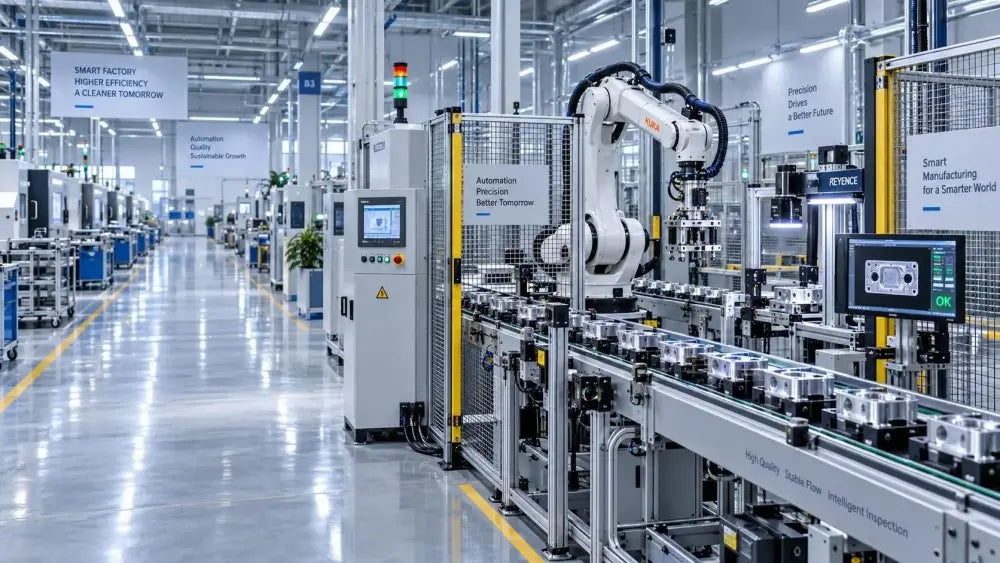
In contrast, a PLC is a ruggedized industrial computer designed for the harsh realities of the plant floor. It acts as an extension of controller technology, featuring a modular architecture that handles hundreds of I/O points. Unlike a single chip, a PLC resides in a robust cabinet and interfaces with heavy-duty sensors and actuators. It supports advanced protocols such as PROFINET, Modbus TCP, and Ethernet/IP. Consequently, it excels in managing large-scale industrial automation projects.
Programming Languages and Engineering Expertise
The barrier to entry differs significantly between these two platforms. Microcontrollers generally require deep knowledge of embedded systems and languages like C or C++. Programming them often involves managing low-level hardware registers. However, PLCs use intuitive languages like Ladder Logic, which mirrors electrical schematic diagrams. This allows maintenance technicians and electricians to troubleshoot code without a computer science degree. As a result, PLCs offer better maintainability in a 24/7 production environment.
Durability and Environmental Stability
The physical environment often dictates the choice of controller. Microcontrollers are sensitive to electromagnetic interference (EMI), extreme temperatures, and vibration. Conversely, a PLC is built to withstand electrical noise and "dirty" power common in factory automation. Most industrial-grade PLCs function reliably in high-temperature settings and dusty environments. This inherent ruggedness makes them the standard for critical infrastructure and safety-instrumented systems.
Expert Insight: When to Use Which?
From 15 years of experience in control systems, I have observed a common misconception that one is "better" than the other. The truth is they are complementary. If you are developing a mass-produced consumer product, a microcontroller is the most cost-effective choice. However, for a one-off manufacturing line where uptime is king, a PLC is indispensable. Moreover, the ease of swapping a modular PLC card compared to desoldering a chip cannot be overstated when a plant is losing thousands of dollars per minute in downtime.
Application Case: Smart Sensor vs. Assembly Line
Scenario 1: Smart Field Instrument
A company develops a new digital pressure transmitter. They choose an ARM-based microcontroller because it fits inside the small sensor housing and consumes minimal power.
Scenario 2: Automotive Assembly Line
A factory installs a new robotic welding cell. They utilize a Siemens S7-1500 PLC to coordinate 50 sensors, 20 safety interlocks, and a high-speed fieldbus. The modularity allows them to add extra safety curtains easily as the project evolves.
About the Author: Han Weidong
Han Weidong is a senior technical expert with over 15 years of experience in the global industrial automation and power protection sectors. He has specialized in the integration of PLC, DCS, and Turbine Supervisory Instrumentation (TSI) for major energy providers. Han is a recognized authority on industrial communication protocols and has led numerous digital transformation projects for high-precision manufacturing facilities. He is passionate about bridging the gap between embedded hardware design and large-scale supervisory control.
- Posted in:
- DCS
- Embedded Systems
- Industrial Automation
- PLC vs Microcontroller
- Remote I/O
- Siemens S7-1500