Mastering Functional Safety Terminology in Industrial Automation
- 〡
- 〡 by WUPAMBO
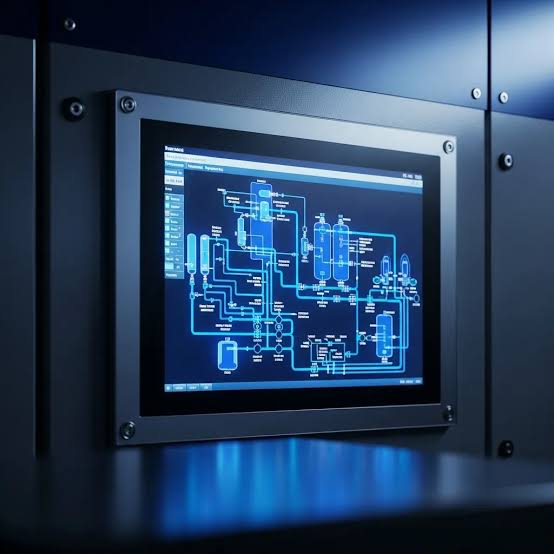
In modern process control and factory automation, managing operational risk is a top engineering priority. High-speed machinery, high-pressure vessels, and continuous processes present constant hazards to personnel and equipment. Modern plant operations rely heavily on functional safety strategies to mitigate these risks. This guide breaks down the essential functional safety terminology that every control systems engineer should master.
Understanding Functional Safety Concepts
Functional safety forms part of the overall safety strategy in an industrial facility. It focuses on the correct operation of electrical, electronic, and programmable electronic safety-related systems. A functional safety system must automatically detect hazardous conditions and initiate appropriate action. Consequently, it prevents dangerous events or minimizes their consequences.
The Fundamental Role of Safety Instrumented Systems
A Safety Instrumented System (SIS) acts as a dedicated protective layer distinct from the Basic Process Control System (BPCS). The BPCS handles daily control tasks, while the SIS monitors critical parameters continuously. If process values exceed safe operational limits, the SIS overrides standard controls to trigger a safe shutdown.
Deciphering Safety Integrity Levels
Safety Integrity Level (SIL) defines the relative level of risk reduction provided by a safety function. International standards classify safety levels from SIL 1 through SIL 4. Higher SIL ratings require lower probability of failure on demand and stricter architectural constraints. Note: While some field literature references a theoretical SIL 5, international standards define SIL 4 as the highest achievable level for industrial automation.
| SIL Level | Availability | Target Failure on Demand (PFDavg) |
|---|---|---|
| SIL 4 | > 99.99% | $\ge 10^{-5}\text{ to }< 10^{-4}$ |
| SIL 3 | 99.90% - 99.99% | $\ge 10^{-4}\text{ to }< 10^{-3}$ |
| SIL 2 | 99.00% - 99.90% | $\ge 10^{-3}\text{ to }< 10^{-2}$ |
| SIL 1 | 90.00% - 99.00% | $\ge 10^{-2}\text{ to }< 10^{-1}$ |
Conducting Quantitative Risk Assessments
Engineers conduct risk assessments during the early design phases of an automation project. This process identifies potential equipment hazards, evaluates failure modes, and estimates financial and human consequences. The risk assessment determines the necessary risk reduction factor and assigns the target SIL for each safety loop.
Navigating the IEC 61508 Standard
IEC 61508 serves as the foundational standard for functional safety across all industrial sectors. It outlines strict requirements for the lifecycle management of safety-related systems. Sector-specific standards like IEC 61511 for process industries and IEC 62061 for machinery derive directly from this umbrella standard. Compliance with these frameworks ensures rigorous design and operational transparency.
Implementing Integrated Safety Functions
Modern variable frequency drives and safety controllers incorporate built-in safety functions. Common features include Safe Torque Off (STO), Safe Stop 1 (SS1), and Safe Operating Stop (SOS). These hardware-integrated functions remove rotational torque reliably without interrupting main power supplies. Therefore, maintenance teams can work safely around moving machinery without tedious electrical isolations.
Designing Redundant Safety Circuit Structures
Safety circuit architecture dictates how hardware components connect to eliminate single points of failure. Engineers frequently deploy voting structures such as 1oo2 (One out of Two) or 2oo3 (Two out of Three). In a 1oo2 setup, two independent sensors monitor a single process variable. The system initiates a safety action if either sensor detects a fault condition.
Maximizing System Diagnostic Coverage
Diagnostic coverage measures the percentage of dangerous failures that internal diagnostic tests detect automatically. High diagnostic coverage allows control systems to identify component faults before they cause unwanted outages. Advanced safety logic controllers utilize real-time diagnostics to flag open circuits, short circuits, and signal drift.
Expert Insights on Industrial Safety Trends
System integrators often make the mistake of treating safety hardware as a drop-in replacement for standard PLC equipment. However, hardware selection represents only a fraction of functional safety engineering. True functional safety relies on rigorous lifecycle management, strict verification protocols, and continuous proof testing. As DCS and SIS systems integrate further, maintaining physical and logical separation remains critical to prevent common-cause failures.
Real-World Application Scenario
In an offshore oil production platform, emergency shutdown systems (ESD) demand SIL 3 protection levels. Pressure transmitters installed on a high-pressure separator utilize a 2oo3 voting structure. The safety PLC compares all three transmitter signals constantly.
If two out of three sensors register pressure above safety limits, the safety controller trips the main isolation valve automatically. This configuration prevents false trips caused by single-sensor drift while guaranteeing robust protection against overpressure events.
About the Author
Viral Nagda is an experienced automation engineer and technical writer specializing in control systems design, PLC programming, and functional safety applications. With extensive hands-on experience across process control and manufacturing environments, he produces technical literature to help engineers design safer, more efficient industrial plants.