The "Whampoa" of Robotics: How Harbin Institute of Technology Shapes China’s Automation Landscape
- 〡
- 〡 by WUPAMBO
A Legacy of Excellence in Industrial Automation
Harbin Institute of Technology (HIT) recently celebrated its 106th anniversary. For four decades, this institution has served as the backbone of China's robotics industry. Beyond academic research, HIT alumni drive innovation in industrial automation, control systems, and embodied AI. Investors recognize this ecosystem as a premier source of high-tech talent and viable engineering startups that prioritize structural integrity.
Pioneering Robotics Through Historical Vision
In 1986, China launched the "863 Program" to advance intelligent robotics. Simultaneously, HIT established its Robotics Research Institute. This strategic move bridged the gap between academic theory and practical factory automation. By integrating mechanical design with advanced PLC logic and DCS architecture, the institute set the standard for modern intelligent systems across the nation.
Building a Complete Industrial Ecosystem
HIT’s influence extends far beyond the lecture hall. The institution fostered a comprehensive lifecycle for technology, moving from basic research to commercialization. Notable success stories include Boshi Automation, which successfully transitioned from university research to a public listing. Moreover, recent IPOs from companies like Leju Intelligence and Stander Robotics highlight the market’s trust in the "HIT pedigree." These firms leverage deep expertise in industrial automation to scale complex robotic solutions for competitive global markets.
The Evolution of Control Systems and AI
Today, the industry shifts toward embodied intelligence and autonomous manufacturing. HIT remains at the forefront by updating its curricula to include AI-driven control systems. Modern graduates blend traditional engineering disciplines with machine learning. Consequently, the next generation of robots performs tasks with human-like precision and reliability. This integration of classical automation and modern intelligence defines the current investment trend in the region.
Expert Perspective: Bridging Academia and Industry
As a veteran in the automation sector, I have witnessed how academic foundations stabilize industrial growth. The success of the HIT circle stems from its rigorous engineering culture. Unlike startups that focus solely on software, these companies prioritize structural integrity and reliable control systems. This balance of hardware craftsmanship and advanced software remains the gold standard for successful deployment in demanding industrial environments.
Practical Application: Intelligent Manufacturing Scenario
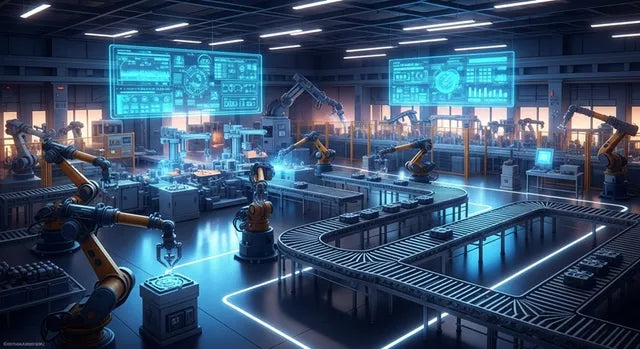
Consider a high-speed production line requiring seamless integration. A solution originating from the HIT ecosystem typically utilizes a robust DCS to manage overall plant processes, while specialized robotics handle material handling. By deploying high-performance motion controllers alongside integrated PLC networks, these systems achieve synchronization levels that significantly reduce cycle times and improve overall output quality.
About the Author
This article was written by Zhang Wei, a senior expert with 15 years of international experience in the industrial automation sector. His expertise spans the technical development and integration of PLC, DCS, TSI, and power protection systems. He provides technical consultancy for leading global automation manufacturers and remains dedicated to analyzing the technical shifts and market trends within the Industry 4.0 landscape. His insights are widely valued by industry engineers and technical decision-makers.
- Posted in:
- Embodied AI
- HIT Robotics
- Industrial Automation
- Industrial Engineering
- Robotics Technology