Chinese Technology Accelerates Cambodia's Industrial Automation and Modernization
- 〡
- 〡 by WUPAMBO

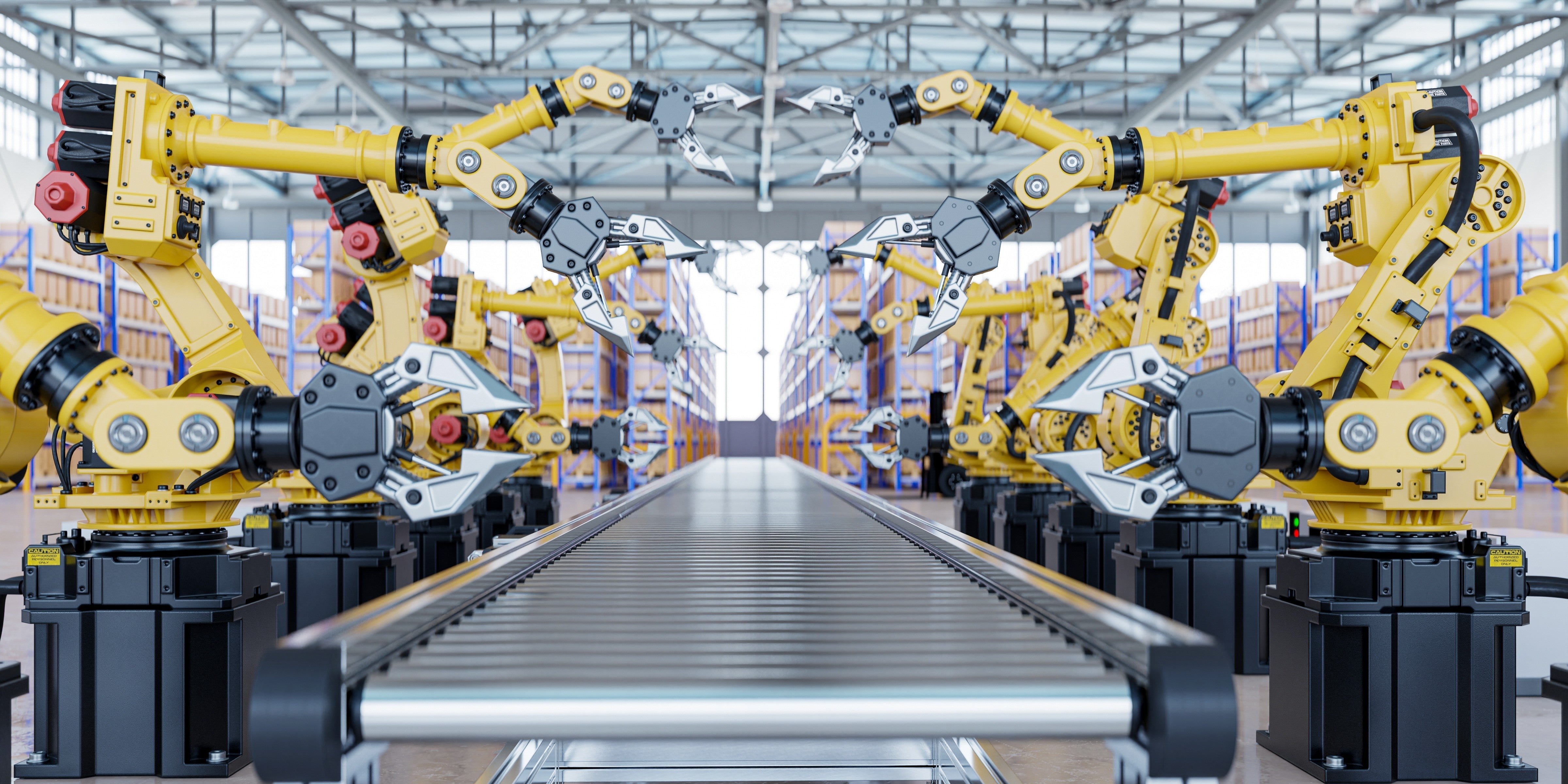
By standardizing digital infrastructure, Chinese technology suppliers are playing a pivotal role in modernizing Cambodia's manufacturing landscape. A recent four-day international trade exhibition in Phnom Penh highlighted this shift. Over 200 exhibitors displayed high-performance industrial equipment, including advanced robotics, automated textile machinery, and smart control hardware.
This event demonstrates how deep technical integration replaces basic manual assembly across Southeast Asia. As global supply chains evolve, integrating modern automation helps local factories boost yield, improve safety, and remain competitive.
The Imperative for Smart Factory Automation
Industrial adoption of modern control architectures is no longer optional for emerging market manufacturers. Hem Vanndy, Cambodia's Minister of Industry, Science, Technology, and Innovation, emphasized this reality during the exhibition opening. He urged local factory managers to adopt artificial intelligence, industrial robotics, and smart manufacturing workflows.
Without automated quality validation and real-time process monitoring, legacy factories face severe operational bottlenecks. Modernizing factory floors directly reduces operational expenses, minimizes downtime, and opens access to demanding global markets.
Key Market Statistics and Economic Growth
Cambodia's manufacturing sector continues to expand rapidly, driven by sustained foreign direct investment. Official figures highlight the growing scale of this industrial evolution:
| Metric | Current Value | Context & Significance |
|---|---|---|
| Operational Factories | 3,357 facilities | Shows growing industrial density across manufacturing zones. |
| Total Workforce | Over 1.35 million | Highlights the need for automated safety and productivity tools. |
| Factory Investment | ~$28 Billion USD | Represents a 29% year-on-year growth compared to 2025. |
| First-Half Output | Over $9.8 Billion USD | Demonstrates steady output expansion in primary export sectors. |
Replacing Manual Systems with Advanced Motion Control
The garment and textile sectors show how targeted automation creates immediate operational value. Historically, manual sewing and embroidery introduced high error rates and material waste. Today, manufacturers are deploying multi-axis motion control systems, automated pattern sewers, and computerized embroidery machines supplied by Shanghai-based automation vendors.
These automated solutions integrate precise servo drives with localized programmable logic controllers (PLCs). By replacing purely mechanical setups, plants achieve higher stitch accuracy, reduce setup times for complex production runs, and protect delicate fabrics from manual handling errors.
Bridging the Technological Gap with Industrial Control Systems
Bilateral technical cooperation has expanded far beyond simple machinery sales. As noted by Thong Mengdavid from the China-ASEAN Studies Centre, partnership efforts now focus on deep technological integration and local capability building.
Implementing standardized control platforms—such as Distributed Control Systems (DCS) for continuous processing and PLCs for discrete manufacturing—offers clear technical advantages:
- Higher Output per Hour: Automated machine cycles run continuously at optimized speeds without operational fatigue.
- Reduced Scrap Rates: Closed-loop sensor feedback prevents human error and material misalignments.
- Workforce Upskilling: Local technicians gain hands-on experience maintaining fieldbus networks, sensor arrays, and human-machine interfaces (HMIs).
Technical Expert Analysis: Building Scalable Infrastructure
From an automation engineering perspective, upgrading greenfield or brownfield facilities requires careful architectural planning. Simply importing standalone machinery is insufficient; facilities must build scalable control networks connecting enterprise systems down to field devices.
To ensure long-term reliability and interoperability, engineers should prioritize three core design considerations:
- Standardized Fieldbus Protocols: Implement open fieldbus networks (such as PROFINET, EtherNet/IP, or Modbus TCP) to allow seamless communication between sensors, drives, and controllers.
- Integrated Safety Systems: Deploy dedicated safety PLCs and emergency-stop networks alongside standard process control to protect line operators.
- Predictive Maintenance Monitoring: Install vibration sensors, temperature transmitters, and power monitors on critical rotating equipment to detect asset failure before unexpected shutdowns occur.
Application Scenario: Upgrading an Automated Plastics Line
Consider a medium-sized plastics extrusion facility in Phnom Penh transitioning from relay-logic machinery to an integrated PLC and DCS control layer.
The Challenge: Manual temperature adjustments and uncalibrated motor speeds caused inconsistent wall thickness in extruded plastic goods, leading to a 12% scrap rate.
The Solution: The facility retrofitted the line with a centralized industrial PLC connected to digital temperature controllers, variable frequency drives (VFDs), and real-time optical measuring sensors over a Modbus TCP network.
The Outcome: Automated closed-loop PID control maintained extrusion temperatures within ±0.5°C. Machine throughput increased by 22%, while scrap rates dropped below 1.5%. Local technicians monitored line metrics in real time through a central HMI panel, improving overall system availability.
About the Author
Zhang Wei is a Senior Industrial Automation Specialist with over 15 years of field experience designing and commissioning PLC, DCS, and safety instrumented systems (SIS) across East and Southeast Asia. He specializes in plant modernization, motion control integration, and industrial communications protocols for discrete and hybrid manufacturing environments.