












Product Details
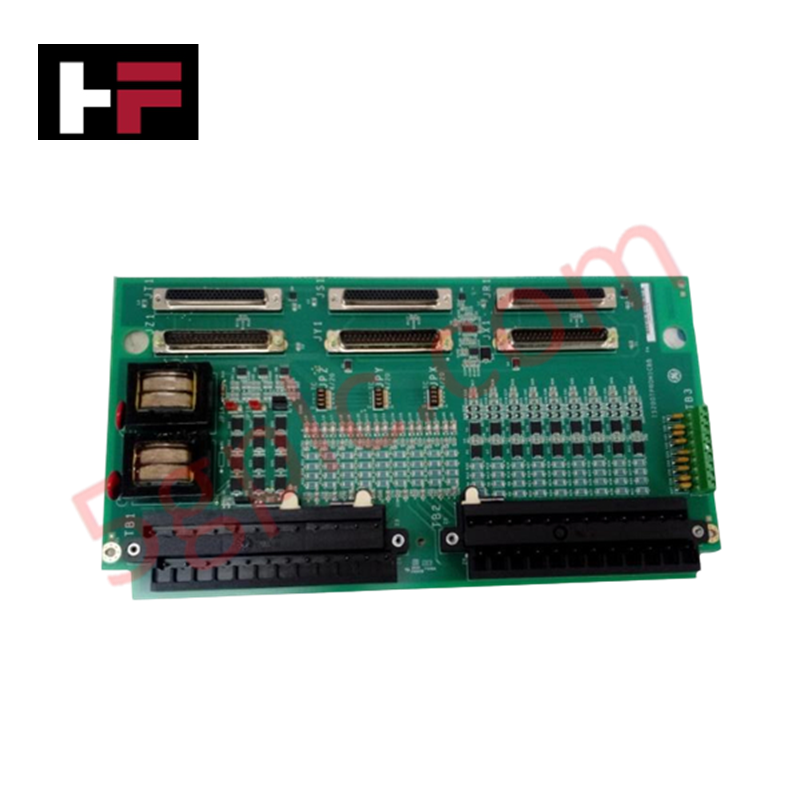
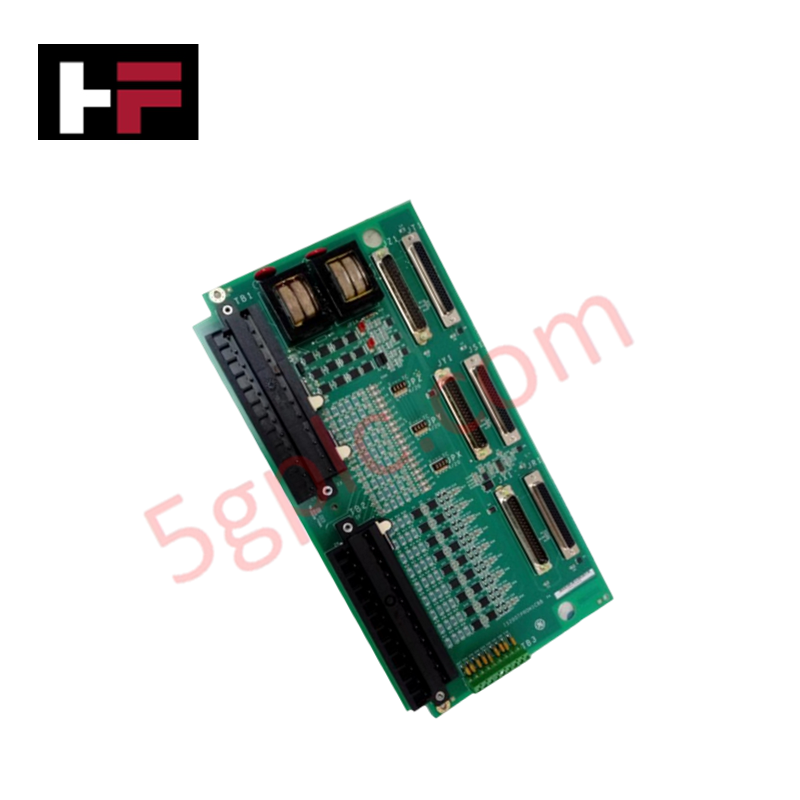
Configured for emergency trip logic and signal conditioning in Mark VIe turbine control architectures, the GE IS200TPROH1C (IS200TPROH1C Emergency Protection Terminal Board) provides direct physical and electrical execution of bus/generator voltage monitoring and speed signal routing.
Hardware Specifications
| Parameter | Specification |
|---|---|
| Model | IS200TPROH1C |
| Brand | General Electric |
| Origin | USA |
| Weight | Standard terminal board assembly |
| Dimensions | Mark VIe standard form factor |
| Operating Temp | Industrial rated range |
| Power Consumption | System-bus dependent |
| I/O Capacity | 3 x PPRO I/O packs |
| Inputs | PT bus and generator voltage, speed signals |
Profinet / EtherNet/IP Deterministic Networks
The IS200TPROH1C integrates into the Mark VIe platform to support high-speed emergency trip sequences. The board facilitates backplane bus communication velocity by interfacing directly with three PPRO I/O packs, ensuring deterministic processing of generator voltage and speed inputs. Firmware flash compatibility is managed via the PPRO packs to maintain alignment with the turbine protection logic. The terminal board architecture supports I/O density scaling through its dual 24-terminal pluggable blocks, allowing for flexible field wiring while maintaining electrical isolation between voltage inputs and the protection circuitry. The onboard metal-oxide varistors (MOVs) provide surge protection; however, users must ensure segregation between 240 VAC and DC potentials to prevent exceeding MOV peak voltage ratings.
Frequently Asked Questions
Q: Can the IS200TPROH1C be hot-swapped while the turbine control system is active?
A: No. Any maintenance or replacement of the TPRO board requires the system to be de-energized to prevent accidental trip signal activation or electrical damage to the PPRO I/O pack interfaces.
Q: What are the risks of cross-connecting 125 VDC and 240 VAC circuits on this board?
A: An inadvertent connection between these potentials causes the sum of the AC peak voltage and DC voltage to be applied across the protection MOVs. This exceeds the specified rating and leads to component failure.
Field Installation Guidelines
- Mounting: Secure the board within the control cabinet. Ensure the chassis ground is firmly connected to provide a return path for surge currents through the integrated MOV protection circuitry.
- Wiring: Terminate field signals to the two 24-terminal blocks. Strictly observe wire gauge limits and segregation requirements to avoid crossing 240 VAC and DC signals.
- Connectivity: Ensure the three DC-37 connectors are fully seated and locked. These cables facilitate communication to the backup trip relay terminal boards.
- Environment: Verify that the cabinet environment is controlled to prevent moisture or corrosive dust from compromising the barrier terminals.
- Verification: Prior to commissioning, perform a point-to-point check of the PT inputs and speed signals. Ensure the PPRO I/O packs correctly interpret the signal scaling as defined in the system toolbox.
Additional Information
- 100% Genuine Parts: All products are original and authentic, ensuring reliable industrial performance.
- 30-Day Refund Guarantee: Return any in-stock item within 30 days in original, unopened packaging for a full refund (excluding shipping and fees).
- 12-Month Warranty: Covers defects in materials or workmanship; excludes misuse, normal wear, or unauthorized modifications.
- Worldwide Shipping: We ship via USPS, UPS, FedEx, and DHL. Delivery times vary by country and may be subject to customs or import fees.
- Support & Contact: Technical and warranty assistance is available anytime. Contact us here: Contact.
- Purchase Guidance: Check product specifications and compatibility carefully before ordering to ensure proper application.


Tech & Buying Guide

Demystifying the DDE Protocol in Legacy Industrial Automation Systems
Modern control systems rely heavily on seamless interprocess communication to exchange operational data between software programs. Microsoft first introduced the Dynamic Data Exchange (DDE) protocol in 1987 to enable real-time data sharing. In factory automation, DDE served as an early bridge between control software and Windows desktop applications. Therefore, understanding DDE mechanics provides crucial insights into how legacy industrial networks established software-level connectivity.

Demystifying CPU Communication Ports in Siemens PLC Architectures
Industrial automation relies heavily on robust data exchange between devices. Without seamless connectivity, field instruments, network switches, human-machine interfaces, and programmable logic controllers cannot coordinate effectively. Therefore, understanding the various CPU communication ports available in Siemens hardware ensures efficient factory automation design and seamless system integration.

Mastering the Siemens PLC Scan Cycle: How the CPU Executes Automation Programs
Industrial automation relies heavily on programmable logic controllers (PLCs) to manage complex manufacturing processes. Many engineers dive straight into programming without mastering the underlying architecture. However, understanding how a PLC CPU executes a program ensures reliable system design. Therefore, mastering the scan cycle optimizes both performance and troubleshooting in modern control systems.