












Product Details
Product Overview
The IS420UCSCS2A serves as the central processing engine for General Electric's Mark VIeS safety control applications. This 100% Brand New original controller executes complex safety logic to protect critical turbine and plant assets in hazardous industrial environments. Built on a powerful dual-core 1.6 GHz platform, it manages high-speed I/O processing and diagnostic routines required for Functional Safety (SIL) requirements. The UCSC module operates as the primary logic solver, ensuring that the system transitions to a failsafe state during detected process excursions or hardware faults.
Technical Specifications
The IS420UCSCS2A utilizes advanced processing architecture to maintain deterministic execution of safety-instrumented functions (SIF).
| Feature | Specification Details |
| Manufacturer | General Electric (GE) |
| Part Number | IS420UCSCS2A |
| Series | Mark VIe / Mark VIeS |
| Processor | Dual-core 1.6 GHz AMD G-Series |
| Redundancy | Simplex, Dual, or TMR (Triple Modular Redundancy) |
| Communication | RS-232, Ethernet Modbus Master |
| Hazardous Ratings | Class 1 Div 2, Class 2 Zone 2, ATEX |
| Operating Temp | -40°C to 70°C (-40°F to 158°F) |
| Power Input | 24 VDC |
| Weight | 0.91 kg (2 lbs) |
| Dimensions | 16.8 cm (H) x 15.0 cm (W) x 5.5 cm (D) |
Engineering Advantages
-
High-Integrity Redundancy Logic: The UCSC controller supports Triple Modular Redundancy (TMR). This architecture utilizes hardware-based voting to eliminate single points of failure, ensuring that the safety system remains online even if a localized internal hardware fault occurs.
-
Dual-Core Processing Speed: A 1.6 GHz dual-core AMD G-Series processor drives the module. This processing power enables the controller to execute large, complex safety logic blocks with minimal scan times, facilitating rapid response to overspeed or emergency trip conditions.
-
Certified for Hazardous Zones: The IS420UCSCS2A carries ATEX and Class 1, Division 2 certifications. This ruggedized design allows for direct installation in environments where flammable gases or vapors may exist, reducing the need for expensive explosion-proof enclosures or long cable runs to safe zones.
-
Wide Thermal Operating Envelope: The hardware maintains rated performance from -40°C to +70°C. This wide temperature range solves the industrial pain point of controller drift or failure in unconditioned control skids located in extreme geographic climates.
-
Versatile Communication Interfacing: The module integrates Ethernet Modbus Master capabilities and RS-232 ports. These interfaces allow the safety controller to transmit diagnostic data and trip status to the primary DCS or HMI without compromising the safety-critical IONet network.
FAQs
-
Is the IS420UCSCS2A compatible with standard Mark VIe non-safety I/O?
While the UCSC shares the Mark VIe platform architecture, it specifically runs the Mark VIeS safety control applications. You must use this controller in conjunction with safety-certified I/O packs to maintain the integrity of your Safety Instrumented System (SIS).
-
Does this unit arrive with pre-loaded firmware?
We supply this unit as a Brand New original component. During commissioning, you will use GE’s ToolboxST software to download the specific application code and firmware revision required for your turbine’s safety configuration.
-
What mounting precautions should I follow for hazardous locations?
Ensure the controller is mounted securely in its dedicated rack frame within a cabinet that meets the ingress protection requirements for your specific site rating. Always verify that the 24 VDC power source meets the ripple and noise specifications outlined in the GEH-6721 system manual.
-
How does the dual-core processor handle safety diagnostics?
The dual-core architecture allows the controller to dedicate processing cycles to background self-diagnostics. The unit continuously monitors its own memory, CPU health, and communication integrity without interrupting the primary safety logic execution.
Additional Information
- 100% Genuine Parts: All products are original and authentic, ensuring reliable industrial performance.
- 30-Day Refund Guarantee: Return any in-stock item within 30 days in original, unopened packaging for a full refund (excluding shipping and fees).
- 12-Month Warranty: Covers defects in materials or workmanship; excludes misuse, normal wear, or unauthorized modifications.
- Worldwide Shipping: We ship via USPS, UPS, FedEx, and DHL. Delivery times vary by country and may be subject to customs or import fees.
- Support & Contact: Technical and warranty assistance is available anytime. Contact us here: Contact.
- Purchase Guidance: Check product specifications and compatibility carefully before ordering to ensure proper application.


Tech & Buying Guide

Essential Best Practices for PLC Wiring and Installation in Industrial Automation
Successful control system deployment begins with thoroughly reviewing manufacturer technical documentation. Controllers from major brands like Allen-Bradley, Siemens, and Schneider Electric feature unique terminal layouts. Engineers must verify voltage requirements before connecting power cables to prevent catastrophic equipment damage. Standard line connections require strict adherence to regional electrical codes and proper wire color coding. Furthermore, panel builders should always establish a robust low-impedance ground connection using at least 16-AWG copper conductor tied directly to the main plant grounding grid.
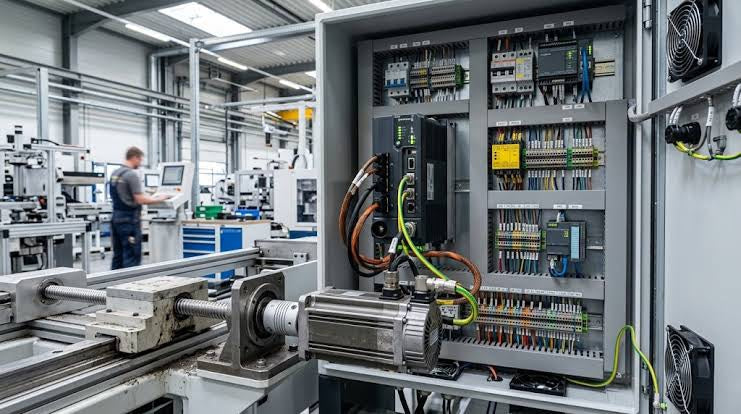
Demystifying Programmable Logic Controllers: Comprehensive Guide to PLC Classification and Selection in Industrial Automation
Modern industrial automation heavily relies on Programmable Logic Controllers (PLCs) to drive factory floor efficiency. Over my 15 years as an industrial automation expert working with DCS, TSI, and control systems, I have seen PLCs evolve into the central nervous system of modern manufacturing. Selecting the right controller requires a deep understanding of PLC types based on physical size, hardware architecture, and power supply configurations.
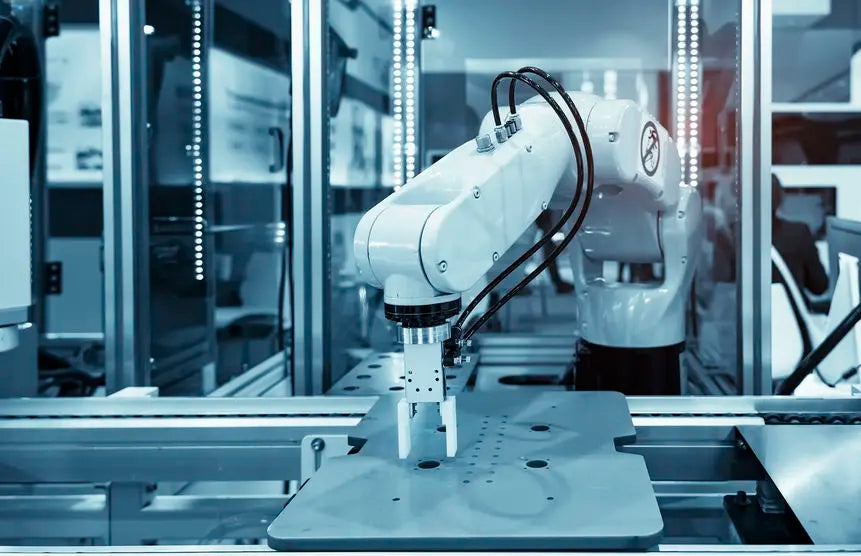
Comprehensive Guide to PLC Types in Modern Industrial Automation
Modern industrial automation relies on programmable logic controllers to govern critical factory operations. System integrators classify PLCs based on scale, hardware architecture, and power supply design. Understanding these core categories enables automation engineers to select the right control system architecture. Consequently, proper hardware selection optimizes performance while minimizing long-term operational costs.