












Product Details
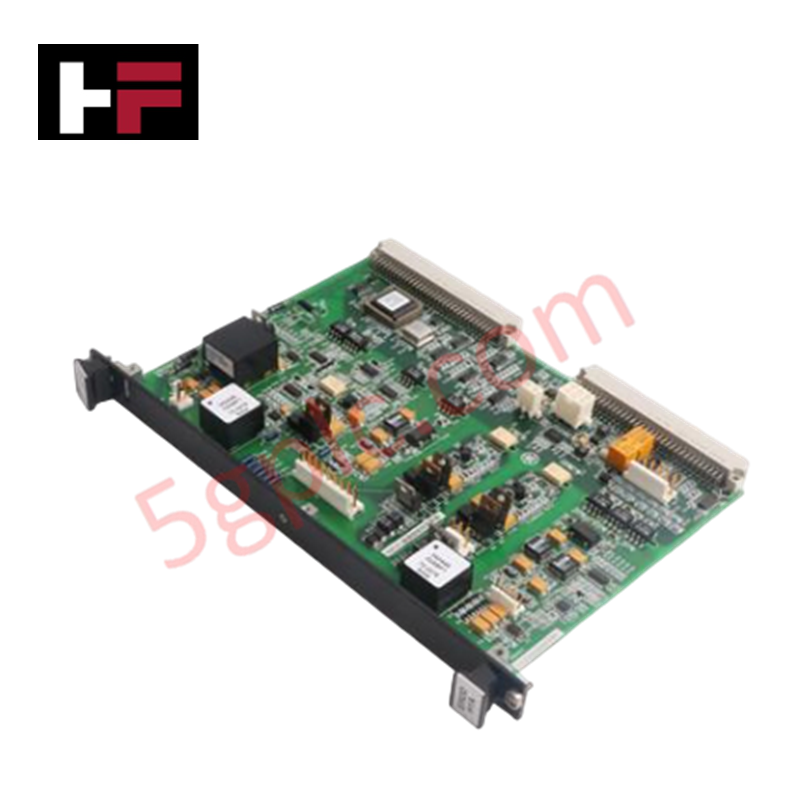
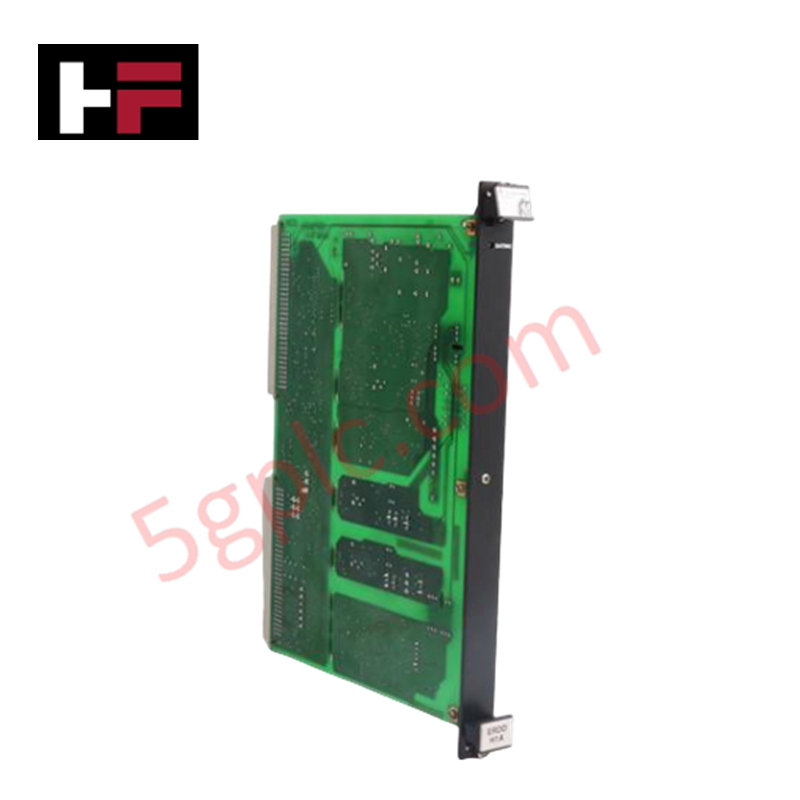
Configured for IGBT gate drive control and DC link voltage regulation in EX2100 and Mark VI excitation systems, the General Electric IS200ERDDH1A (IS200ERDDH1A Exciter Regulator Dynamic Discharge Board) provides direct electrical execution of energy dissipation sequences. This hardware component serves as the primary ERDD interface utilized to execute dynamic discharge control and hardware interlock signaling across excitation control platforms.
Hardware Specifications
| Parameter | Specification |
|---|---|
| Model | IS200ERDDH1A |
| Brand | General Electric |
| Origin | USA |
| Weight | 0.36 kg |
| Dimensions | 6U Double-Height PCB |
| Operating Temp | 0 deg C to 60 deg C |
| Power Consumption | System-dependent |
| Core Performance | IGBT Gate Drive; DC Link Regulation |
Firmware Flash Compatibility and Deterministic Networks
The IS200ERDDH1A module manages field-side energy regulation through integrated IGBT gate drive logic. In simplex configurations, the board mounts to the ERBP backplane and utilizes the K3 charging relay for hardware interlock control. For redundant deployments, the module operates within the ERRB backplane (M2/C position), coordinating with the K41 de-excitation relay to ensure fail-safe energy discharge. The module features one onboard RTD temperature tracking channel, scaled 0-140 deg C via a 0-10 VDC loop, providing real-time thermal monitoring to the excitation controller. Firmware flash compatibility is managed via the system control interface, ensuring that gate drive timings and discharge logic remain synchronized with the primary excitation regulator firmware version. High-density backplane bus communication velocity is utilized to ensure that discharge commands are executed with sub-millisecond latency during fault conditions.
Frequently Asked Questions
Q: Is the IS200ERDDH1A module hot-swappable in an active excitation rack?
A: No. Due to the module's direct interface with DC link voltage regulation and IGBT gate drive circuitry, all system power must be isolated and the DC bus confirmed discharged before attempting module extraction to prevent hardware damage or arc flash.
Q: How does the module handle temperature monitoring?
A: The board features one dedicated RTD input channel that converts sensed temperatures into a 0-10 VDC signal. This signal is processed by the excitation controller to monitor the thermal status of the dynamic discharge components.
Field Installation Guidelines
- Mounting: Ensure the 6U PCB is properly aligned with the ERBP or ERRB backplane slots. Engage the ejector handles fully to ensure the edge connectors are seated against the backplane bus.
- Grounding: The PCB must maintain a secure connection to the excitation cabinet chassis. Verify that all mounting screws are tightened to provide a stable reference for the DC link voltage measurement circuits.
- Interlock Connections: Verify the correct wiring of the K3 (simplex) or K41 (redundant) interlock relays. Loose terminations on these relays will result in a failure of the de-excitation command sequence.
- Thermal Management: Ensure that cooling air flow through the excitation rack is unobstructed. As a high-energy discharge component, the module relies on convective cooling to maintain operational temperature within the rated 60 deg C limit.
Additional Information
- 100% Genuine Parts: All products are original and authentic, ensuring reliable industrial performance.
- 30-Day Refund Guarantee: Return any in-stock item within 30 days in original, unopened packaging for a full refund (excluding shipping and fees).
- 12-Month Warranty: Covers defects in materials or workmanship; excludes misuse, normal wear, or unauthorized modifications.
- Worldwide Shipping: We ship via USPS, UPS, FedEx, and DHL. Delivery times vary by country and may be subject to customs or import fees.
- Support & Contact: Technical and warranty assistance is available anytime. Contact us here: Contact.
- Purchase Guidance: Check product specifications and compatibility carefully before ordering to ensure proper application.


Tech & Buying Guide

Spatial Computing in Industrial Automation: Elevating PLC and DCS Operations with AR and VR
Industry 4.0 integrates digital intelligence into field operations, transforming factory automation landscapes worldwide. Spatial technologies—specifically Augmented Reality (AR) and Virtual Reality (VR)—redefine how engineers interact with industrial control systems. By bridging computer-generated CAD models with real-time operational technology (OT) data, immersive displays enable intuitive monitoring, rapid diagnostics, and safer maintenance across complex processing facilities.

Master Acceptance Testing: Understanding FAT and SAT in Industrial Control Systems
Factory Acceptance Testing (FAT) and Site Acceptance Testing (SAT) serve as critical quality assurance gateways in complex industrial control systems. Both procedures verify that programmable logic controllers (PLCs), distributed control systems (DCS), and associated field devices meet strict functional specifications. However, executing these tests effectively requires clear delineation between off-site staging and final field commissioning.

Industrial Networking Essentials: Demystifying Hubs, Switches, and Routers in Control Systems
Industrial automation relies heavily on robust networking infrastructure to connect programmable logic controllers (PLCs), distributed control systems (DCS), and human-machine interfaces (HMIs). Modern factory automation environments generate vast amounts of real-time operational data across deterministic networks. Understanding the structural differences between hubs, switches, and routers ensures optimal traffic segmentation, minimizes latency, and maintains high network availability.